

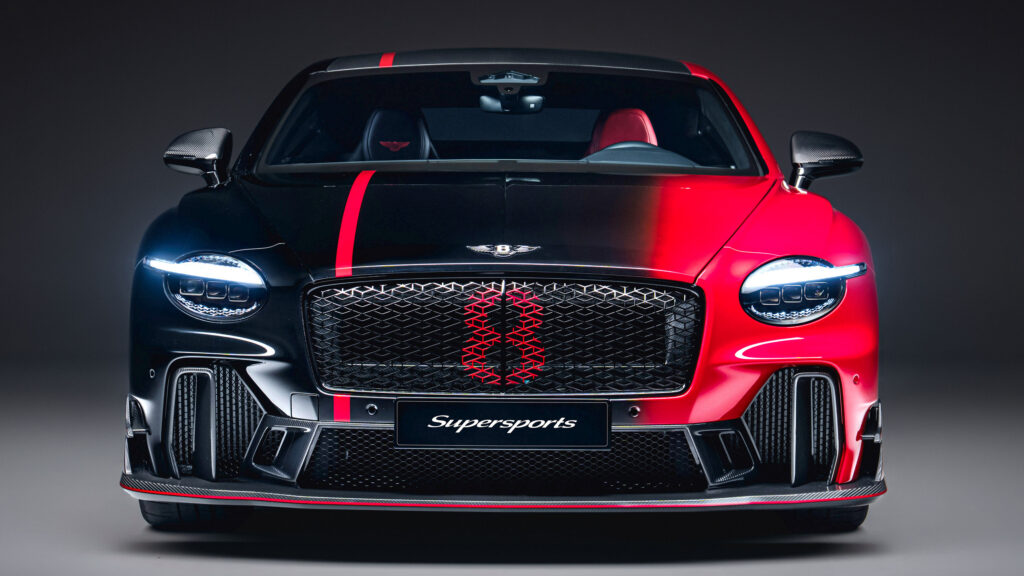
Bentley Mulliner Pushes Customization Boundaries with Asymmetric Supersports Design Theme

Geely EX2 Launch Signals Aggressive UK Expansion and Intensifies Small EV Competition
 New small electric hatch will be instrumental in brand's plan to hit 100,000 sales in the UK by 2030
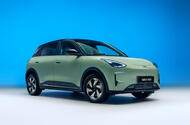
China’s best-selling car, the Geely EX2, will go on sale in the UK in August.
It will be the third model the Chinese brand has launched here, after the EX5 EV and Starray PHEV.
The EX2 is a small electric hatchback sized to compete with the forthcoming Hyundai Ioniq 3 and Volkswagen ID Polo, with seating for five.
In China, where it's known as the Xingyuan, it's powered by a single rear-mounted motor with an output of either 78bhp or 114bhp.
It has a lithium-iron-phosphate battery with a capacity of either 30.1kWh or 40.2kWh. Those yield ranges of either 193 miles or 255 miles, although these figures are according to China’s CLTC test, which is more lenient than the WLTP standard used in Europe.
For reference, the Renault 5 has a WLTP range of either 192 or 252 miles, while the ID Polo will offer 204-283 miles.
It remains to be seen whether Geely will revise the EX2’s specifications to make it more competitive with similarly sized competitors or whether it will look to undercut them on price.
The EX2 will be instrumental in Geely’s ambitious plan for dramatic growth in the UK: it will have a portfolio of 10 models by 2029 and aims to reach 100,000 annual sales by 2030.
For reference, it took Korean marque Kia decades to reach the same milestone, having finally crossed the 100,000-car milestone in 2022.
Geely sold a total of 450,000 EX2s in China last year.

New Car Sales Face Long-Term Decline as Demographic Shifts and Mobility Trends Reshape US...

BYD’s Market Surge Reshapes Global Auto Competition and Challenges Western Carmakers in China

Fiat Weighs Dual-Track Future for Panda as Italy’s EV Shift Lags Combustion Demand
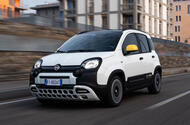
Panda was pulled from UK sale in 2024 but survives in Italy as the PandinaItalian brand is mulling the hallowed name for its new city car but 'won't abandon the ICE Panda population'
Fiat is committed to offering an affordable combustion-powered successor to the current Panda alongside its future affordable city car project.
While the current Panda, which dates back to 2012, is no longer sold in the UK, due to the ZEV mandate, it remains the best-selling car in Italy and accounted for more than 70% of Fiat’s sales last year.
With EV uptake dramatically lower in Italy than in Northern Europe, Fiat’s European boss Gaetano Thorel said the firm is committed to continuing to serve those customers in the future.
Fiat is currently working on an affordable sub-£15,000 city car that will be twinned with the forthcoming Citroën 2CV revival from its fellow Stellantis brand, intended to take advantage of the EU's planned E-car rules.
This will naturally form the entry point of Fiat’s electric car range, sitting above the Topolino and new Multiplina quadricycles.
But Thorel said the firm “hadn’t decided yet” if it would take the Panda name, due to the passionate following for the current model.
“The E-car could be the next-gen Panda, but we haven’t decided yet,” Thorel told Autocar. “It depends first on future regulations and second that we as Fiat have a duty, particularly in Italy, to think of the millions of Panda owners and give them a solution in the future.
“We have a duty to this popola di Panda [Panda population], which alone has a 7% share of the Italian market every month, to give them an answer for today and tomorrow that is based on their needs and not based regulations.”
Thorel didn’t rule out branding both models as Pandas, as Fiat previously did with the technically unrelated combustion and electric versions of the 500.
He wouldn’t specify whether Fiat is considering a new ICE Panda or continuing to update the existing model, but he said: “One thing is clear: I need to find a proper answer for my Panda population. We need to find a multi-energy solution.”
Thorel noted that the commitment by Stellantis to build the two E-cars are its plant in Pomigliano was “important for us because small cars are Italian territory and it means Pomigliano will have a future”.

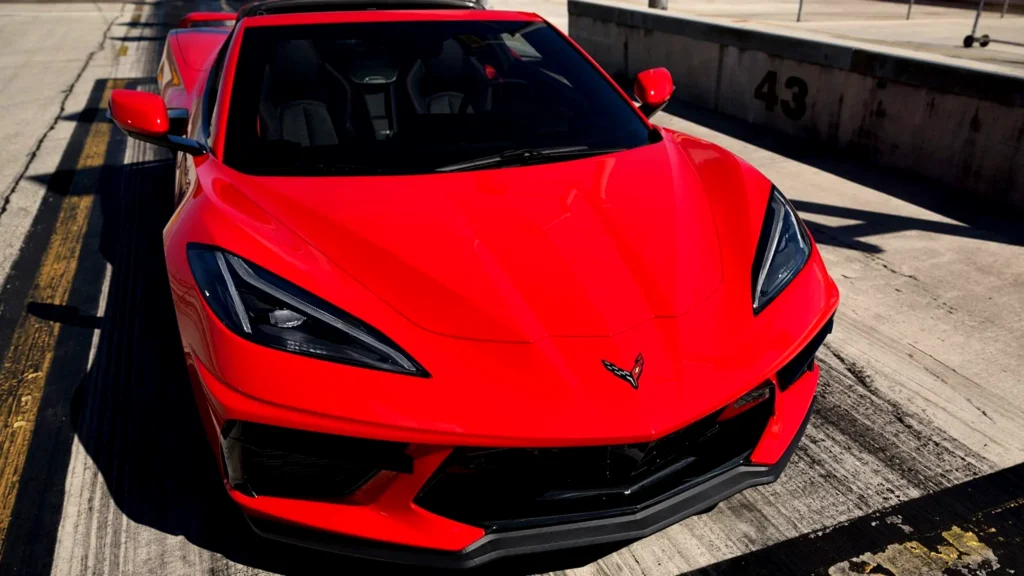
Corvette Stingray Redefines Affordable Speed with 200 MPH Benchmark and New 6.7-Liter V8

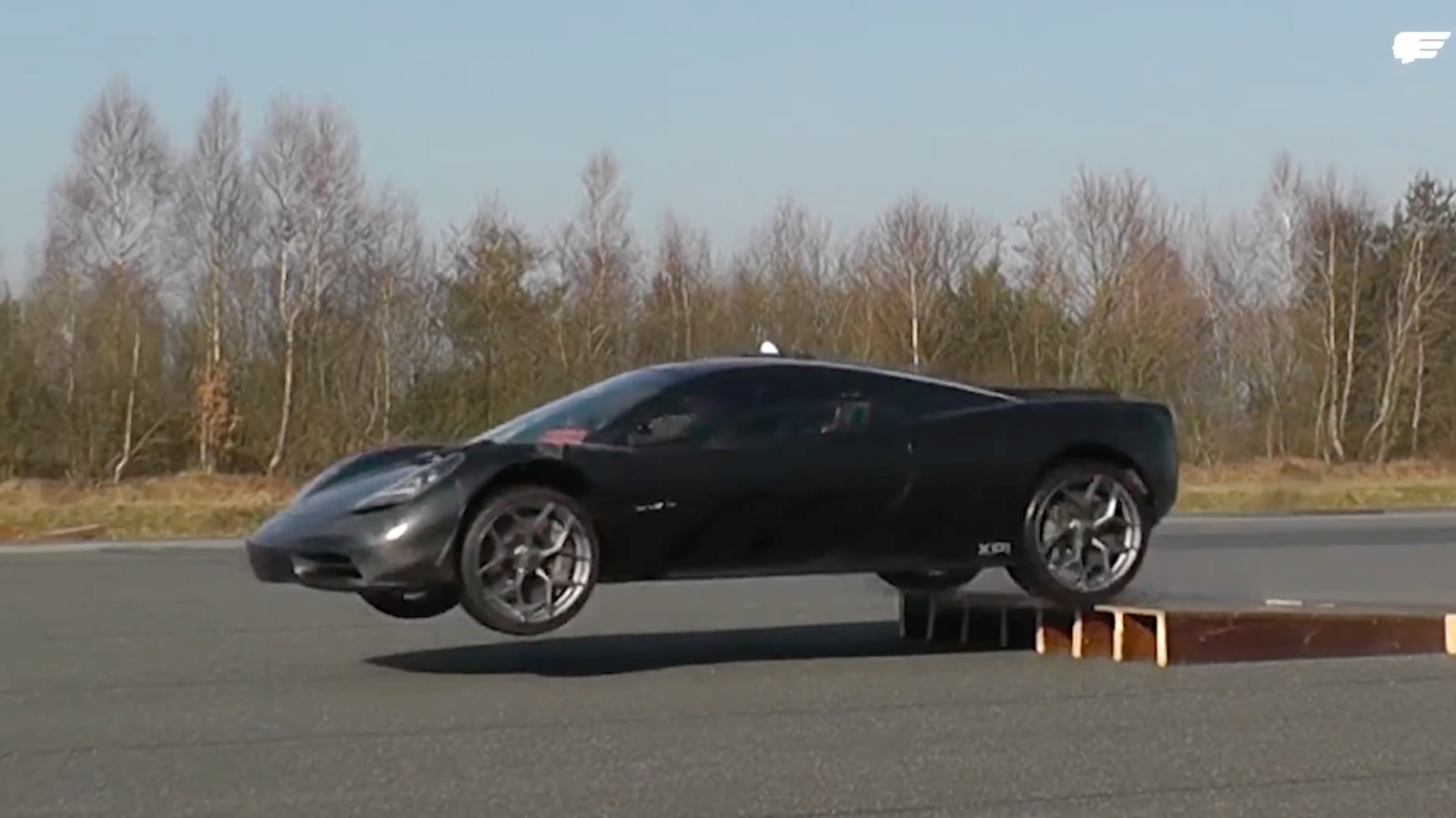
Automotive Durability Testing and Its Role in Ensuring Long-Term Vehicle Reliability

Alpine A110 Ends Production as Electric Successor Signals Brand’s Strategic Shift
 Renault-engined sports coupé bows out a week before new A110 EV breaks cover at Goodwood
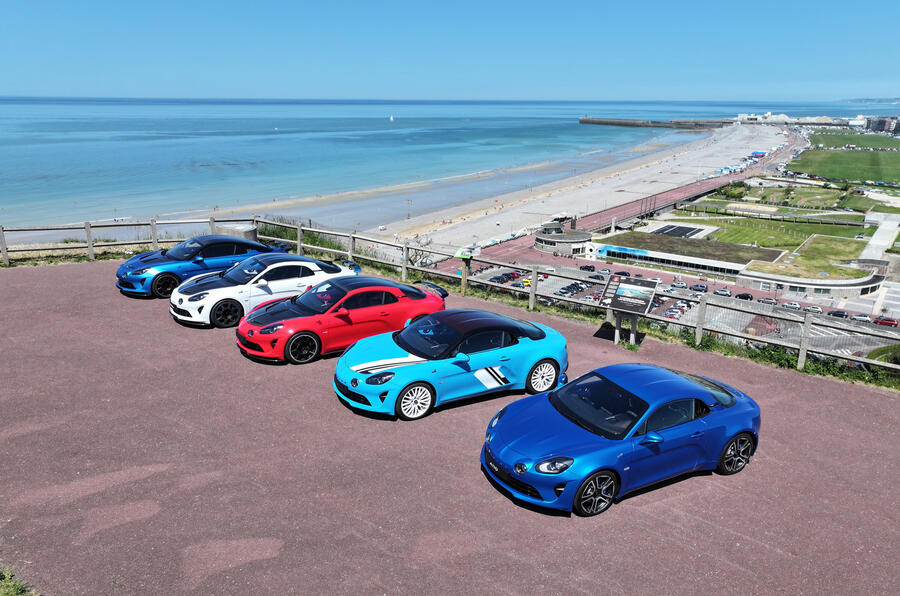
The Alpine A110 has ended production after nine years, as the French firm gears up to launch its long-awaited electric successor.
The last of 28,701 A110s rolled off the line at Alpine's factory in northern France today, specified in a commemorative 70th-anniversary trim.
Overall, Dieppe has produced more than 35,000 A110s, including the original iteration – Alpine's first production car – that ran from 1963 to 1977.
It isn't an end to A110 production at the Normandy site, however, as the third-generation car is set to start running down the line next year.
Based on the new Alpine Performance Platform (APP), the new A110 will launch with an electric powertrain but has been engineered so that it could take a combustion engine in the future.
The first variant will be a traditional two-seat coupé, but a four-seater and a convertible will follow in the coming years, as Alpine seeks to broaden its portfolio and expand its share of the sports car market.
The new A110 will make its dynamic debut in prototype form – most likely with the current car's body shell – at next week's Goodwood Festival of Speed, before Alpine reveals more details and components at the Paris motor show in October.

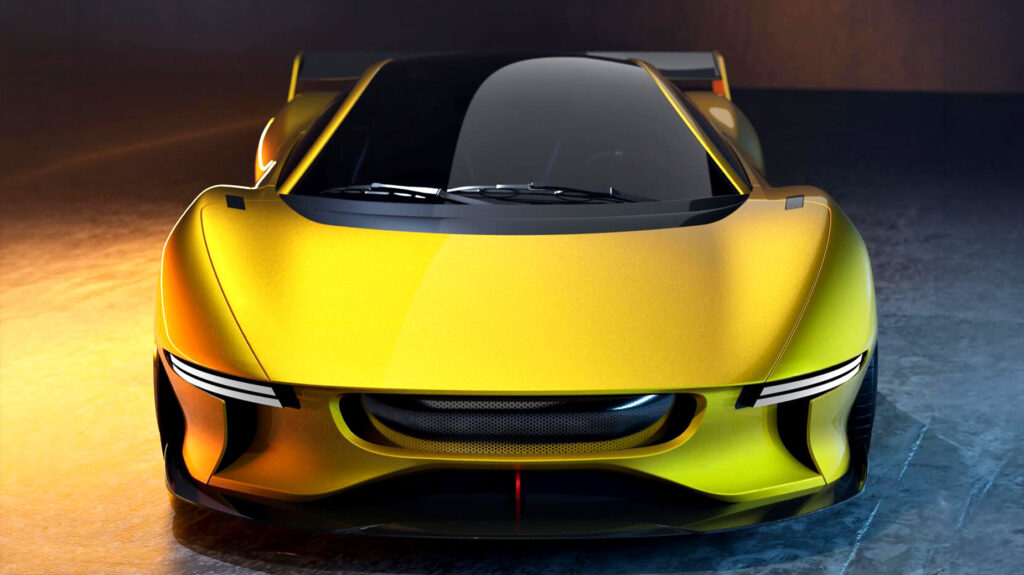
Jaguar XJ220 Reimagined as Callum GT1 Design Study Challenges Supercar Heritage with Modern Aerodynamics

Lamborghini Urus SE Performante Redefines Hybrid SUV Performance With 800bhp and Advanced 6D Chassis...
 Plug-in hybrid SUV packs 800bhp and Lambo's latest 6D chassis tech
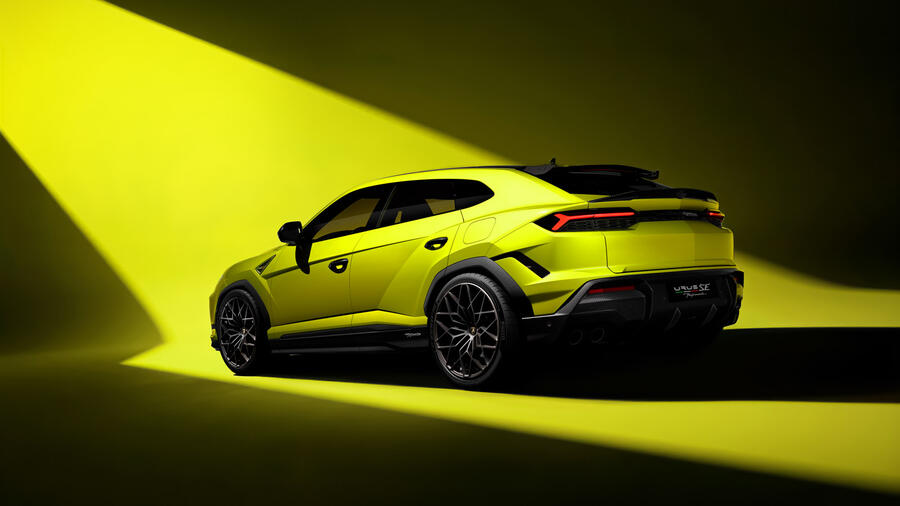
Lamborghini is vying for the performance SUV crown with the new Urus SE Performante, the hottest derivative yet of its exuberant family hauler.
Its plug-in-hybrid powertrain pairs the venerable 4.0-litre twin-turbo V8 with a single electric motor, boosted to combined outputs of 800bhp and 737lb ft. This represents an increase of 11bhp, thanks to a free-flowing exhaust set-up and reworked engine management software.
A new Akrapovic exhaust swaps the SE's cross-pipe set-up-with which header pipes from each cylinder bank meet at a cross section, before running through the length of the car to split silencers - for two separate exhausts, with one per bank. This improves the flow of exhaust gases out of the engine while creating what Lamborghini claims to be a "more powerful" tone. The new pipes are made from aluminium, so the revised system also results in a 10kg weight saving.
Shedding yet more mass is the extensive use of carbonfibre, which is used for the bonnet, roof, wings, side skirts and rear diffuser. A new one-box brake and stability controller saves 4kg, lightened sound deadening cuts 3kg; and swapping leather for the new 'Corsa Tex' Dinamica upholstery saves a further 2.7kg. All combined, it makes the Performante 32kg lighter than the regular SE, at 2473kg.
The Performante also features the '6D' drive computer that was introduced with the Temerario supercar. This measures acceleration over the X, Y and Z axes, along with pitch, roll and yaw, to allow for finer control over the dynamic state.
Completing the package is an outlandish new look intended to maximise the tall, wide SUV's aerodynamic performance. Thanks to an array of chunky splitters, skirts and spoilers, the Performante produces 23% more downforce than an Urus SE. Key to this is the integration of an S-duct through the front bumper and bonnet, to push the nose down as speed builds. Despite this, the Performante also produces 5% less drag than a regular SE, helped by reworked underbody cladding that includes the largest rear diffuser yet fitted to a Urus.
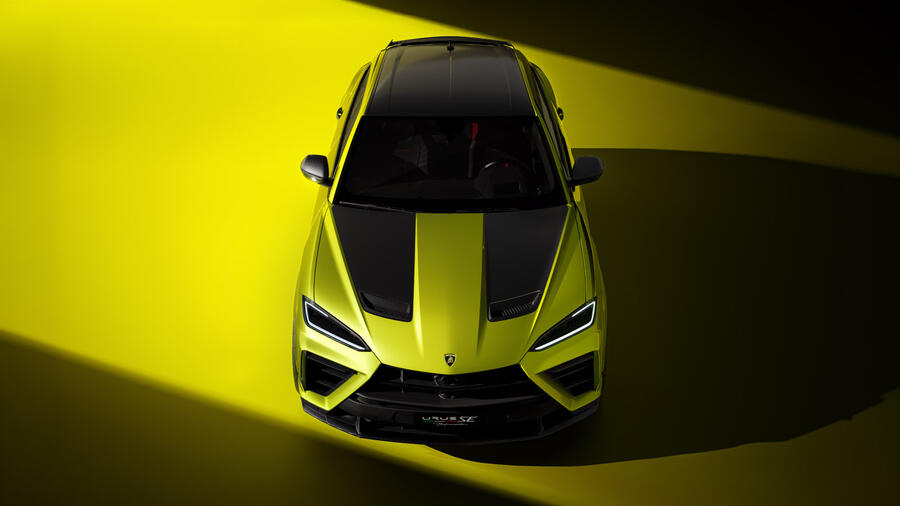
Lamborghini design director Mitja Borkert told Autocar the new look was intended to inspire awe. "We are not form follows function," he said. "We are form follows adrenaline. "As a brand, we want to Inspire future generations. When you look at the design you can park the car anywhere, and it looks like a spaceship, it looks like something outlandish, really different from what else is on the street. For me, this is my personal motivation."
Borkert accepted that even more aggressive styling may be polarising but added: "It's a Lamborghini. We have a clear design DNA that we don't want to compromise."
Borkert said his goal was to make the driver "feel Ilke a pilot" once inside the Performante. Much of the cabin is trimmed in black, with the suede-like Dinamica textile used on the dashboard to reduce reflections on sunny days. Alongside a new 12.3in infotainment touchscreen is an array of buttons intended to dial up the sense of tactility, "This [buttons], for me, is the key," said Borkert. "You always need to have a mechanical experience, you need to feel the machine."