Dacia Spring Undercuts Rivals to Regain Title as UK’s Most Affordable Car Amid Shifting...
 Baby hatchback can now be had for £1000 less than the Leapmotor T03 – and £3000 less than the Sandero
Dacia has trimmed the price of its Spring city car to just £11,990 – undercutting the similarly sized Leapmotor T03 to become the UK's cheapest car.
The move comes a day after Leapmotor slashed the entry price of its own tiny EV to £12,995, giving the T03 the cheapest car crown for just 24 hours.
The cheapest Spring, though, is the entry-level Expression model, which with just 70bhp and a range of 140 miles is outpaced and outdistanced by the T03.
The uprated Spring 100, with specs that more closely match the T03, is also priced to match it at £12,990.
The more expensive Spring also adds a 10.1in touchscreen with smartphone mirroring, electric rear windows and a reversing camera over the sparsely equipped standard car.
For reference, the UK's cheapest petrol car is the Dacia Sandero, which starts from £14,765.
Leapmotor's discount comes in the form of a self-titled 'Leap Grant' – a manufacturer-backed alternative to the government-funded Electric Car Grant that certain European-built EVs can claim – which gives a saving of £3000 off the T03's original list price of £16k.
The Spring is also built in China and therefore excluded from the government incentives, which effectively reward local manufacture and low-emission shipping, so Dacia's discounting is likewise self-subsidised.
However, the next-generation Spring, due to be unwrapped in a few months and on sale early next year, will be built in Europe (probably alongside the closely related Renault Twingo in Slovenia) so is more likely to qualify for state incentives.
Lina Ribeiro, Dacia's UK boss, said the discounts have been enabled by "production efficiencies and a strong drive to continue to offer real value to our customers", which "have helped us to pass on the savings".

GM’s American Identity Claims Falter as Foreign Brands Dominate Made-in-USA Rankings

Slogans as Persuasion How Memorable Phrases Drive Consumer Choice

Fleet Management Strains Intensify as EV Transition Drives Burnout and Skills Shortage Risks
 Fleet managers have never had to take on more – and that's having an impact on their health
Overtime and stress-related sick days are an industry-wide issue for teams spearheading the UK’s transition to electric vehicles.
Fleet management has become so complex that it’s causing staff burnout and risks a skills shortage without urgent change, the Association of Fleet Professionals (AFP) has warned.
Lorna McAtear, the organisation’s vice chair, told Autocar that fleet managers are “trailblazing” new technology, requiring new expertise in areas such as battery chemistry, electricity supply and volatile regulations, while spending additional time bringing drivers up to speed with EVs.
“The days of giving out a key to a diesel and saying 'here you go, your vehicle's parked over there’ have absolutely gone,” she said.
“There’s a convergence of technology, transport and energy as three separate industries, and the fleet manager is smack bang in the middle having to deal with it.
“We’ve become more strategic fleet managers, and yet the expectation is we still do the traditional service, maintenance, repairs, purchasing and other admin that goes with [managing a fleet].”
With generous company car tax breaks in place until 2030, fleet adoption of EVs is comfortably ahead of the wider UK market.
Almost half (47%) of all business contract hire (BCH) cars operated by members of industry body the British Vehicle Rental and Leasing Association (BVRLA) were battery electric at the end of 2025.
That’s almost half a million electric cars and doesn’t include salary sacrifice vehicles, which are even more heavily influenced by the CO2-weighted benefit-in-kind tax regime and almost all EVs or PHEVs as a result.
However, McAtear added, with shorter product launch cycles, AFP members are increasingly finding themselves “beta testing” new vehicle software, often facing long waits for over-the-air updates to fix faults and dealing with increased out-of-hours driver enquiries.
Fleets’ EV strategies are also at risk of falling out of alignment with regulations that can change with little warning. That’s doubly complicated if they're managing vehicles across countries with different timelines, she said.
Against the backdrop of “yearly” crises, including the Covid pandemic, volatile energy prices and semiconductor shortages, AFP members report workloads that are often spilling over into evenings and weekends, resulting in increased cases of burnout and sick leave – without necessarily having someone who can cover for them.
“Salaries aren’t necessarily moving with the level of responsibility and workload. There’s a genuine problem that we haven’t got enough fleet managers coming through, so we have a skills shortage coming up.” McAtear continued.
The AFP is trying to attract new staff and advises having at least one administrative staff member per 500 cars, in addition to the fleet manager, to deal with the complexity of the role.
It is raising fleets’ concerns with policy makers; is offering members advice about managing workloads, career development and speaking up internally' and provides a WhatsApp group where managers can talk privately about the issues they face.
“We all love our job, we love the industry, we’re proud to be making this change and being part of the history books. But we’re victims of our own success, where we’ve been too good at delivering all the time, no matter how complicated the problems are,” said McAtear.
“We’re all racing through the transition. It's not a marathon or a sprint; it's more like an obstacle course. Each time we get over an obstacle [we need to] turn around and help the person behind, because we will only win when we all cross the line.”

Fiat Micromobility Concepts Signal a Strategic Shift Toward Urban Customization and Socially Relevant Design

BMW X5 Redefines the Luxury SUV with Neue Klasse Design and Unmatched Powertrain Versatility
 Bold new X5 gets reinvented inside and out - and an EV with the biggest battery around
BMW has reinvented its seminal X5 SUV for its fifth generation, applying its bold new-generation design language and adding the option of pure-electric power for the first time.
The latest iteration of Munich's big family hauler is the third model to enter the Neue Klasse era. It follows the iX3 and the i3 saloon, but while the forthcoming combustion siblings of those will sit on a different platform, the X5 is the first to be offered with a full gamut of powertrain options.
The new X5 will offer a wider spread of powertrain options than any BMW yet, with the choice of petrol, diesel, plug-in hybrid, battery-electric and hydrogen options being added over the next two years.
Production of the new X5 will get under way at BMW's Spartanburg plant in South Carolina in August. The ICE versions will roll off the line first, with the EV and PHEV following early next year. UK pricing will be announced in October, said the firm.
The ICE version is expected to start at around £80,000, with the EV commanding a small premium over that - as per the X3 and iX3.
BMW has told Autocar the pure-petrol model will not be offered in the UK but the diesel will. That bucks a trend across the firm's other models but the move is in line with evolving customer demand in the big-SUV segment.
Of the circa-7500 X5s sold in the UK last year, around a third were diesel, with the plug-in hybrid accounting for the vast majority. Just under 250 were petrol-powered.
The X3 and iX3 are sold as separate model lines with similar styling yet different platforms, but the X5 follows the lead of the 5 and 7 Series by packaging all of its powertrain options into the same car using the same architecture.
As with those low-slung executive models, the new SUV's platform is an evolution of the Cluster Architecture (CLAR) that has underpinned all of the Munich firm's larger models over the past decade. Using the same fundamental structure for ICE and EV derivatives of a car can lead to technical compromises that in particular dent the electric version's performance and packaging.
But while BMW has introduced bespoke EV and ICE platforms for smaller models, it says the larger platform used for the X5 is versatile enough to accept multiple powertrains without compromise.
This means that all versions can be built on the same line, enabling BMW to respond flexibly to changes in market demand for each without any drop in output. This is particularly important in the large-SUV segment, which is proving slower to transition to electric power - especially in the EV-sceptical US, which has historically been the X5's biggest market.
Big stats for electric X5
Despite using a different architecture from that of the iX3, the electric X5 is equipped with the same 'Gen6' cylindrical battery cells, 800V charging hardware and latest-generation motors as its smaller sibling, so it offers on-paper performance attributes that are more than competitive with rivals.
Crucial to that is a huge, 140kWh battery pack - the largest yet fitted to a production EV in Europe – which enables the 2890kg iX5 to offer 497 miles of WLTP-certified range. That almost matches the iX3's headline-grabbing 503-mile range, despite the iX5 weighing half a tonne more.
The increase in capacity has been achieved largely through the use of taller individual cells, which are 25mm higher than those in the iX3, at 120mm.
The 140kWh battery can charge faster than almost any other EV in Europe, at 450kW, and is capable of bi-directional charging. It is fitted to the range-topping 60 xDrive, which will be the first iX5 variant on sale, but BMW is likely to introduce a smaller-capacity and cheaper battery option down the line.
The 60 xDrive has a 325bhp motor at the rear and a 245bhp motor on the front, giving punchy combined outputs of 570bhp - more than today's full-fat X5 M performance flagship - and 593lb ft. That's enough to shift the iX5 from 0-62mph in just 4.7sec, making it as quick off the mark as the outgoing plug-in hybrid, and on to a top speed of 130mph.
There is no word yet on a single-motor, rear-driven derivative, which could trim the price while significantly boosting range, as is the case with the iX3.
Six-cylinder engine lives on
True to form, the X5's combustion powertrain line-up revolves around BMW's trademark 3.0-litre straight-six engines.
BMW UK won't take the petrol version, with the mildly hybridised 'B58', but it will continue to offer a non-plug-in option in the form of the 40d xDrive, which uses a twin-turbo diesel six to drive both axles.
Also a MHEV, the diesel sends 282bhp and 479lb ft to both axles through a ZF eight-speed automatic gearbox. It is good for 0-62mph in 6.2sec, a top speed of 143mph and combined efficiency of up to 40.4mpg. Crucially for a big diesel SUV, it can tow up to three tonnes - sufficient for horse boxes, caravans and car trailers.
After the diesel comes the petrol plug-in hybrid. It uses a set-up familiar from the outgoing PHEV, combining the six-cylinder engine with an 18.7kWh battery under the boot floor and a 194bhp electric motor ahead of the gearbox.
There have been tweaks to the battery chemistry and electric motor, and the system has been retuned with the aim of improving refinement, but combined outputs are unchanged at 483bhp and 516lb ft - and performance is roughly in line with its predecessor's.
BMW claims 0-62mph in 5.0sec, a top speed of 150mph and combined consumption of between 67.3mpg and 88.3mpg for the lower-powered 50e xDrive. The battery is good for a claimed electric range of up to 63 miles.
Unlike the outgoing car, the X5 PHEV will also be offered in M-fettled M60e xDrive form, with outputs boosted to 604bhp and 590lb ft to trim the 0-62mph time to 4.5sec and nudge the top speed to 155mph.
Charging for both plug-in hybrid variants is still limited to 11kW top-ups, while rival PHEVs such as the Range Rover Sport and Mercedes GLC can fast-charge at 50kW-plus.
Top of the Klasse
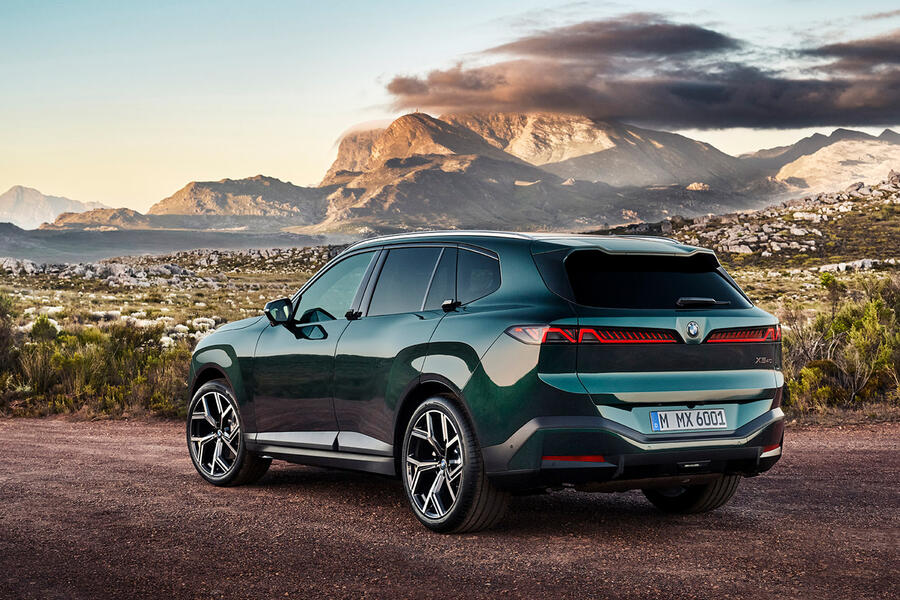
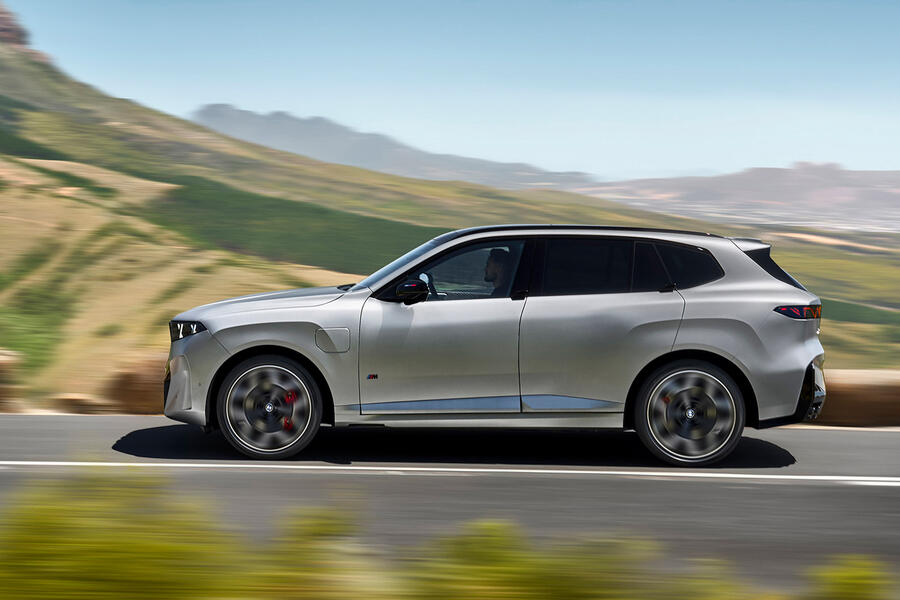
The new X5 is the largest model yet to adopt BMW's Neue Klasse design language, which was introduced with the iX3 and i3. Visually, it makes the new model a complete departure from the X5 it replaces, despite the semi-familiar underpinnings.
The form language and defining signatures are familiar from the X3 - including the minimalist, monolithic silhouette, muscular rear haunches, wraparound front light panel and distinctive vertical kidney 'grilles' - which will be a shared characteristic of all BMW SUVs going forward.
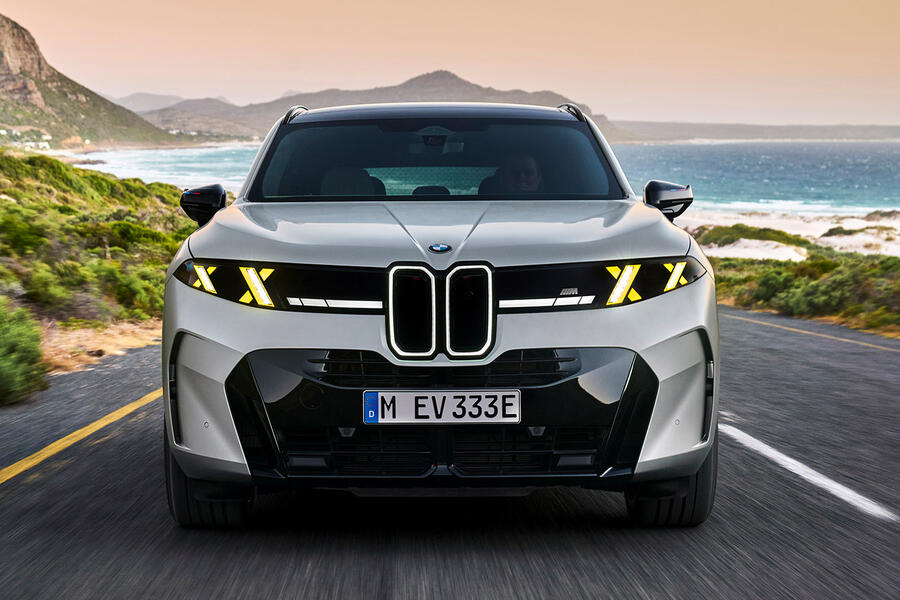
However, the X5 introduces a raft of bespoke cues that mark it out. Most obvious of these are the double-X LED light graphics that, says BMW, make it "instantly recognisable during both day and night". These distinctive cross-shaped clusters incorporate the headlights, daytime-running lights and indicators. They can be switched at the press of a button for the iX3's simpler diagonal arrangement.
Notably, the M60e xDrive PHEV will be the first model to feature M division's new trademark yellow headlights, which were introduced on the M Concept Neue Klasse that was revealed earlier this month. Wheels will be 21in as standard on all cars, while the range-toppers will be available with 23in rims for the first time.
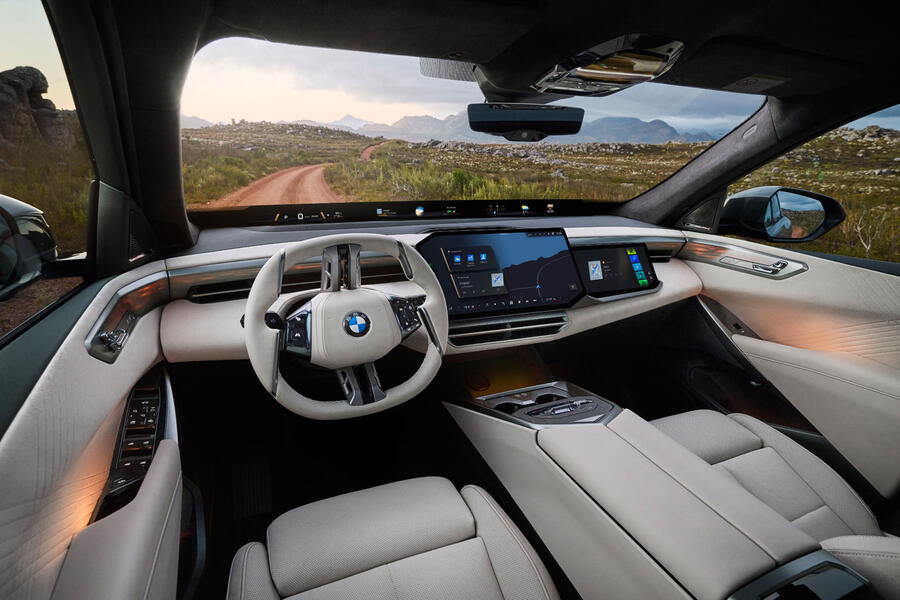
Inside, the new X5 is similar to the iX3, with the cockpit dominated by the unusual diagonal central touchscreen and a full-width panoramic driver display at the base of the windscreen.
The bulk of the switchgear is shared too, as is the unusual multifunction steering wheel. Unlike the existing Neue Klasse models, however, the X5 adds the option of a second touchscreen for the front passenger - with an array of streaming and entertainment apps to keep them entertained when on the move.
While it uses an evolution of the older CLAR architecture, the iX5 has been equipped with the same electronics and software stack as the iX3, which means it uses BMW's 'Heart of Joy' control unit to offer what the firm calls "unrivalled driving dynamics" via rear-biased, four-wheel torque vectoring and lightning-quick suspension, throttle and braking interventions.
All versions of the iX5 will ride on air suspension (the system will be available as an option on the ICE car), and active anti-roll bars and rear-wheel steering will be among the chassis-enhancing options offered.
Hydrogen iX5 on the horizon
The iX5 Hydrogen is set to be launched in 2028, powered by a fuel cell powertrain developed under a partnership with Toyota.
The system will be evolved from that which powers the experimental FCEV version of the outgoing X5, but with significant advances in packaging, power density and performance. The current system produces a combined 396bhp and offers 313 miles of range from its pair of 700-bar hydrogen tanks.
Chief among the upgrades is a new 'flat storage' design, which compresses the tanks themselves into a container that's the same size as the battery in the pure-electric iX5 - enabling the two cars to be built alongside each other and offer the same interior space.
BMW has not yet said in what volumes it plans to build the FCEV, nor which markets it will target. The UK is unlikely to be a focus region, because hydrogen refuelling infrastructure remains extremely limited and earlier FCEVs, including the Hyundai Nexo and Toyota Mirai, have sold in very low numbers.
Hot iX5 spied, but no X5 M just yet
BMW has been spotted testing what looks like a performance-focused M version of the iX5, but there is no word on plans to bring back the snorting X5 M with pure-petrol power.
The previous X5 M shared its 616bhp V8 with the M5. Any successor model would be likely to use the 717bhp PHEV powertrain - based on the same 4.4-litre V8 - that powers the latest generation of Munich's super-saloon, especially given that the X5's fundamental architecture has been retained.

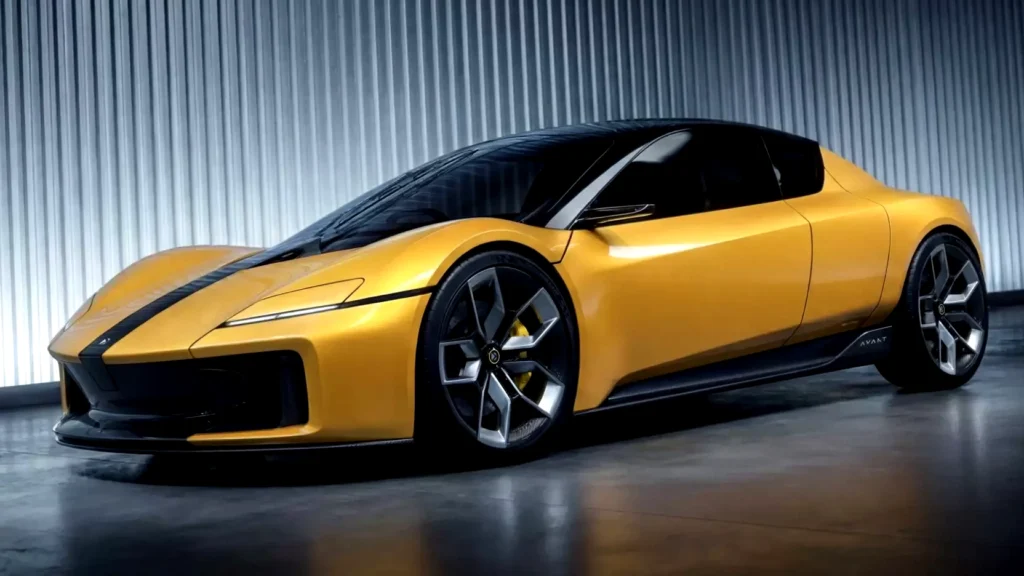
Lotus Reinvention Accelerates as Avant Design and Watt Unveil Lightweight, Multi-Powertrain 2+2 Sports Car...

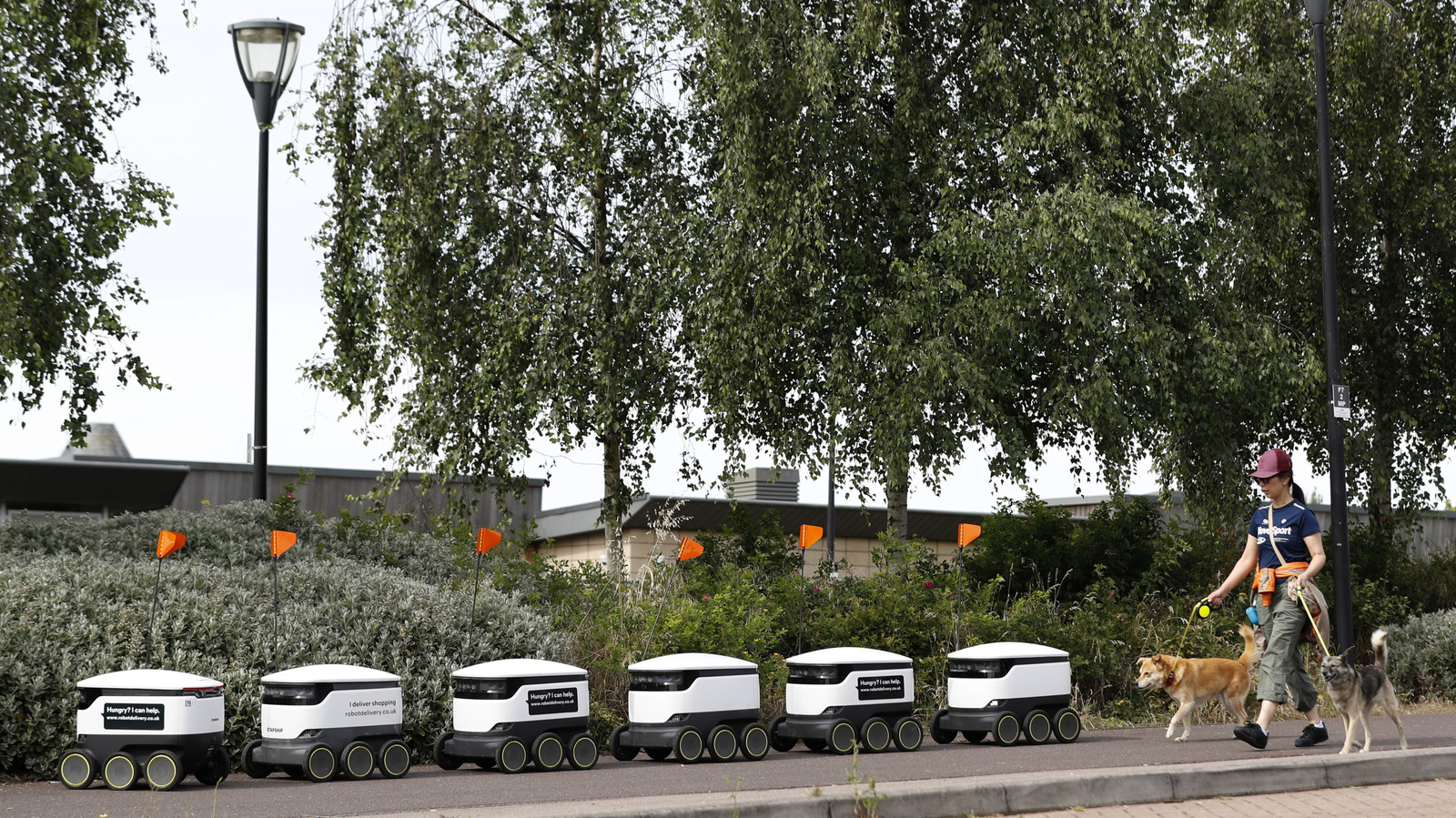
Starship Technologies Shifts Delivery Robot Fleet from College Campuses to Urban Centers

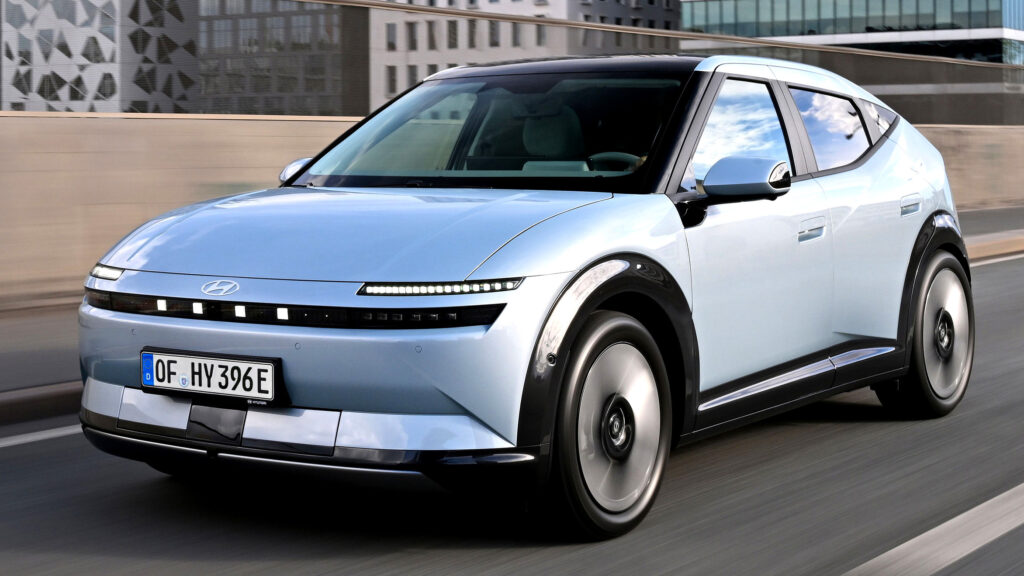
Hyundai Ioniq 3 Prioritizes European Tastes With Subtle Design, Brighter Cabin, and Practical Range

F-35 Deliveries Highlight Critical Radar Shortfall and Flight Stability Risks