

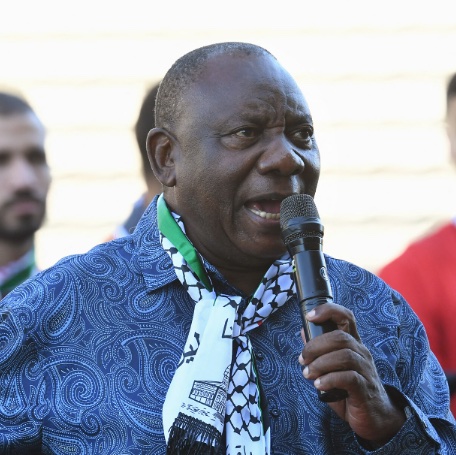
Since taking office, Cyril Ramaphosa’s attention to global affairs has raised conflicting opinions across South Africa. Though certain citizens praise his outreach abroad as a way to try and improve the country’s world position, quite a few believe local problems matter more – like a faltering economy, high unemployment rates, uneven access to resources, and poor public services and delivery. Among younger adults and everyday workers hit hardest by financial struggles, the sense grows that Ramaphosa puts international matters before real-life struggles. That shift in priorities feels most visible where people can least afford it. Still, some people in South Africa keep believing that global diplomacy might indirectly benefit South Africa’s long-term economic and development goals
Mixed Public Sentiment
Frustration grows among young people in South Africa, where joblessness hits hardest and inequality remains deep-rooted. Unemployment weighs heavily on those just starting out, leaving many skeptical about change happening fast enough. Data from the South African Youth Development Index reveals broad challenges – long lines at job centers, dim hopes for stable work. Some feel their futures are being traded in favour of global economic interests, like Ramaphosa’s overseas meetings. For some, they are just empty promises.
Opposition groups like the EFF (Economic Freedom Fighters) and DA (Democratic Alliance) often question Ramaphosa’s priorities. Instead of tackling local problems first, they say he spends too much energy on global matters, like Palestine, and conflict between Russia and Ukraine.
Since 7th October 2023, conflict between Israel and Hamas, a known terrorist organization, in the Gaza Strip has escalated resulting in South Africa taking a high-profile legal position by filing a case at the International Court of Justice against Israel.
Even bigger, attention drifts from domestic struggles: fixing housing shortages, creating jobs, handing over promised land. The message is clear: what happens locally gets ignored while international headlines grab his time.
There appears to be a split inside the ANC regarding how much attention Ramaphosa’s international strategy and foreign policy truly deserves. One group views his efforts as fitting into a larger plan to improve South Africa’s standing worldwide. Yet elsewhere, doubts linger about diverting focus away from domestic issues piling up unresolved. On the left-wing of the party, along with the unions with close ties to labour organizations, pressure builds for bolder changes in economics – ones aimed at radical economic reforms that focus on poverty and inequality.
Public Opinion Polls
Lately, public opinion polls suggest Ramaphosa remains widely backed by middle-class and elite citizens and leaders in South Africa because of his approach to commerce and global diplomacy. Still, trust in him has slipped as people see little change on homefront matters. One study in 2021 found growing irritation among ordinary citizens about how slowly the economy bounced back following the COVID-19 pandemic. On top of that, talk centered less around jobs or growth, more on stolen funds, rising theft, and broken promises to provide basic delivery service.
Nowhere is Ramaphosa’s handling of corruption seen more clearly than in how it affects public trust. His approach to fighting corruption has hurt his popularity and raises doubts among many whether his efforts are aimed at fixing South Africa’s economy or simply maintaining a clean image internationally.
Criticism of Prioritizing Foreign Policy
Even though Ramaphosa attempts to improve South Africa’s standing worldwide, a significant part of the local population feels that his focus has slipped from urgent domestic issues. Poverty remains deep, inequality runs wide, jobs stay scarce, and protests and social unrest flare up. The way he balances foreign and domestic policy is drawing attention.
- Economic Struggles: Economic struggles define much of life in South Africa today. Persistently high rates of unemployment – between 30 – 35 percent over years – weigh heavily on households. Poverty grows alongside it, with fewer opportunities reaching black communities more than others. Even after Ramaphosa stepped into leadership, hoping to attract foreign investment and foster economic diplomacy, efforts have not created jobs or economic growth for ordinary South Africans. Focusing on foreign engagements and prioritizing global relations, while cost of living rises and instability increases locally, have led people to believe that the government cares more about world matters than national problems close to home.
- Unmet Expectations: After Ramaphosa stepped into power in 2018, hopes increased among South Africans – believing he’d fix what went wrong under Jacob Zuma, whose leadership was tainted by corruption scandals. Still, well into his term now, expectations linger unanswered. People talk about stalled economic shifts, fewer jobs made available, promises on fighting corruption slowly fading. Disappointment grew, some say, because attention seems pulled elsewhere – to global gatherings such as BRICS, the African Union, the United Nations – rather than staying close to hometown struggles.
- Service Delivery Issues: When it comes to getting services, South Africa is hit hard by significant challenges. Basic needs like school, health care, housing, and electricity often stay out of reach for too many people. Outages happen daily because of a failing electricity system – known as load shedding – tied closely to mismanagement, corruption, and electricity crises at state-owned companies such as Eskom. People feel the government has been slow at addressing these domestic problems, while Ramaphosa’s attention has been diverted to foreign relations and international matters.
Empty Promises
Still, even if Ramaphosa’s diplomatic moves aim to improve South Africa’s world reputation, they seem to ignore what his citizens need most right now. A country stuck with long-term chronic unemployment, deepening inequality, and widespread poverty, his focus on international relations might be seen as a diversion from real issues at home. Many ordinary South Africans, especially the youth and the marginalized, ask themselves whether the President’s global engagements are actually helping them – or just preserving his own public image. The confidence and optimism once placed in Ramaphosa’s leadership has faded in the realization that instead of turning words into change, he seems fixated on keeping South Africa visible at global tables: a priority shift that dims whatever hope election once carried.