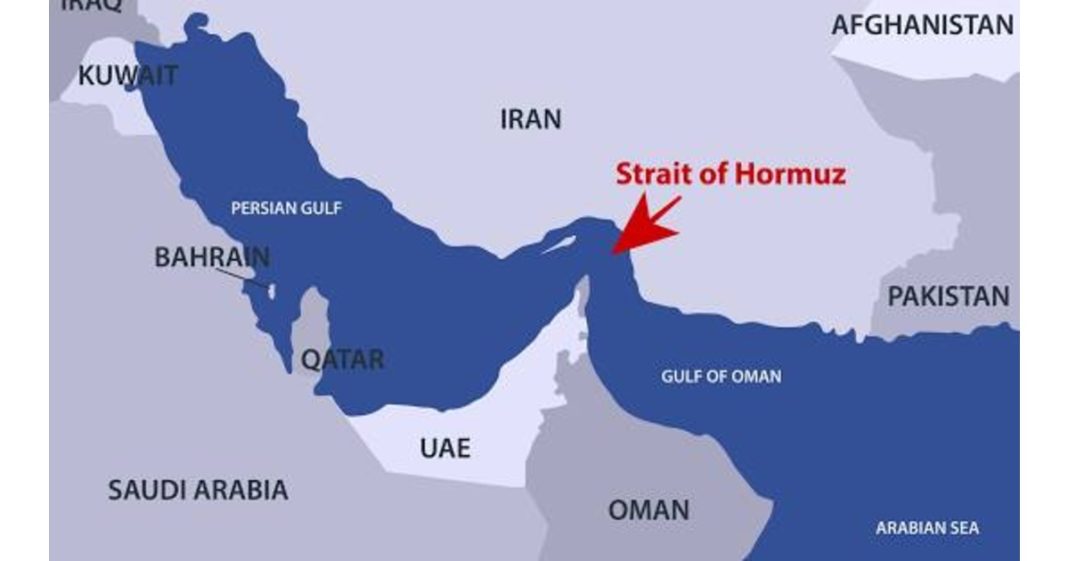
A blockade of Iranian ports that President Donald Trump said began Monday could further disrupt oil prices, has spurred questions about international law and leaves doubts about whether the pressure tactic will force Tehran to reopen the vital Strait of Hormuz.
Trump threatened to impose the blockade after talks to further a fragile ceasefire ended without a deal this past weekend. Iran had previously halted nearly all tanker traffic through the key waterway, allowing only some ships perceived as friendly to pass while charging considerable fees.
Enforcing the blockade is likely to demand significant resources from the U.S. Navy and could prompt concerns about military force and international law, experts say. Supply chain analysts, meanwhile, stress that the restrictions could undermine the flow of oil, fertilizer, food and other goods to consumers already facing higher prices.
How the US could enforce a blockade of Iranian ports
Successfully enforcing the blockade will require a sustained commitment of U.S. Navy ships and personnel, as well as clear guidance from the Trump administration and the Navy’s legal department, experts say.
American military officials have offered few details. The U.S. has 16 warships in the Middle East, a defense official said. A second defense official said no warships are in the Persian Gulf — the body of water that forms most of Iran’s coastline. Both spoke on condition of anonymity to discuss sensitive military operations.
The second official pointed to a notice to mariners as a more accurate representation of the military’s plans. It says access to Iranian ports is being restricted, but the ways these measures “will be applied in practice … are in development.”
The biggest challenge will be the enormous volume of shipping traffic that usually transits the Strait of Hormuz, where nearly 20% of the world’s traded oil passes in peacetime. A considerable number of ships may be needed to enforce the restrictions, said Sidharth Kaushal, a naval power expert at the Royal United Services Institute, a defense and security think tank in London.
“A lot depends on the early days of the blockade, how many vessels the Americans can seize, how much they can convince vessels attempting to slip through a cordon that they’re likely to be seized,” Kaushal said. “But in all likelihood, I’d say it will prove difficult for the U.S. to enforce.”
The strait’s narrow confines at least will make the geographic area of concern a limited one, said Todd Huntley, director of Georgetown University Law Center’s National Security Law Program. Still, the amount of traffic that goes through “is going to be a challenge,” he said.
The U.S. may have to consider whether to allow humanitarian aid to reach Iranian ports, Huntley said, a decision that could determine the blockade’s legality under international law. International rules also require that any nation enforcing a blockade do so impartially, after issuing an advisory to mariners.
“How it is carried out will determine whether it is lawful or not,” said Huntley, a retired Navy captain and judge advocate general. “You can’t enact a blockade with the goal of starving the civilian population. Even the DOD law of war manual states that neutral vessels carrying relief supplies should be allowed to pass.”