There are certain phone calls that overseas Pakistanis learn to fear long before the conversation even begins.
The voice on the other end is hesitant & unusually careful. A cousin has occupied the land. A housing file has been transferred quietly. Someone has produced a power of attorney no one remembers signing. An inheritance mutation has been altered. A tenant refuses to vacate. A brother has “managed matters” with the local patwari. And in that instant, a person sitting thousands of miles away – in Riyadh, London or Dubai – feels something shift beneath them. Not merely property but something deeper. The terrifying realization that distance, in Pakistan, can become a form of dispossession.
What follows is rarely just litigation
Years disappear into procedural corridors. Cases migrate from courtroom to courtroom. Jurisdictional objections become weapons. Adjournments accumulate with precision. Relatives weaponize proximity. Lawyers promise progress “at the next hearing.” Meanwhile, the overseas Pakistani watches helplessly from afar, discovering that in the architecture of Pakistan’s civil justice system, physical absence has too often been treated as weakness.
That being said, no constituency in Pakistan is praised more ceremonially than overseas Pakistanis.Governments invoke them with almost ritual affection. Politicians celebrate remittances as acts of patriotism. Conferences are organised in their honour. Investment schemes are unveiled in their name. They are described as the nation’s ambassadors and indispensable stakeholders in Pakistan’s future.
But nations reveal their true priorities not through speeches, but through institutions.And for decades, the experience of many overseas Pakistanis before Pakistan’s legal system has stood in painful contradiction to the rhetoric surrounding them. They have remained economically celebrated but legally vulnerable.
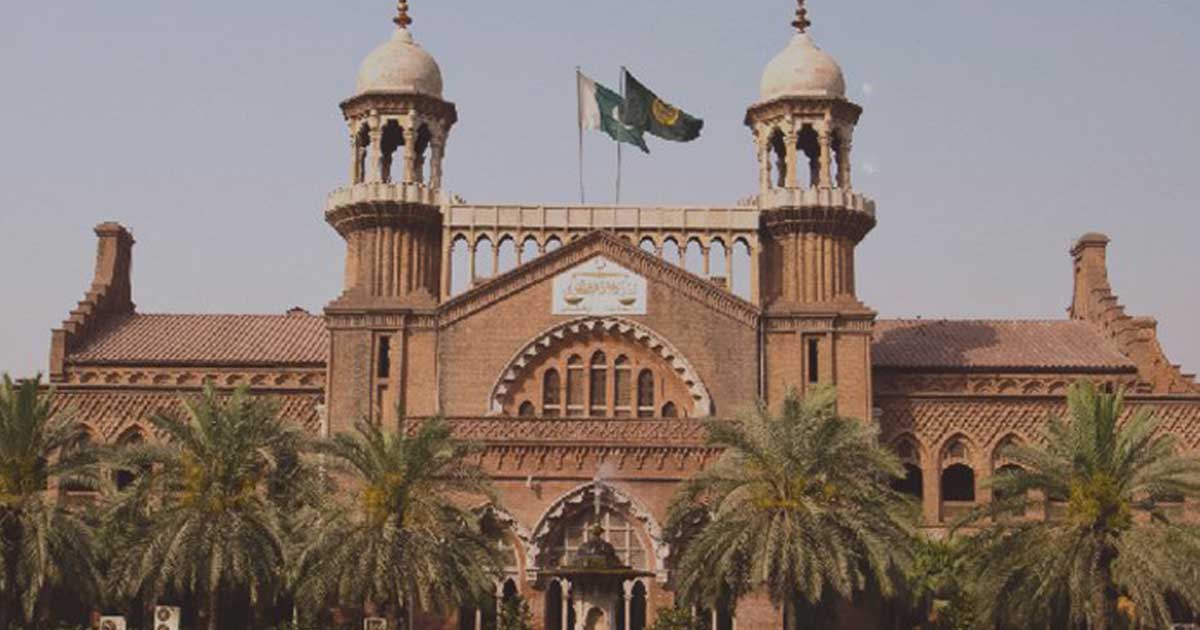
It is against this backdrop that the Lahore High Court’s recent judgment authored by Honourable Justice Anwaar Hussain, interpreting the Punjab Establishment of Special Courts (Overseas Pakistanis Property) Act, 2025, acquires significance. The case concerned the scope of special courts constituted for overseas Pakistanis. In substance, however, the judgment grapples with a larger question: whether Pakistan’s legal system finally understands the peculiar vulnerability of citizens who love their country from a distance.
The controversy before the court emerged from an interpretive failure that was legal yet unmistakably human in its consequences. Several special courts established under the 2025 Act had begun reading their jurisdiction narrowly. They confined themselves to straightforward disputes involving possession or ownership. Cases involving inheritance disputes, fraudulent transfers, specific performance, cancellation of powers of attorney, succession-related claims and connected property disputes were being sent back to ordinary civil courts.
Read more: At least 14 martyred in blast near railway track in Quetta: Balochistan govt
The result was not merely procedural confusion but an institutional incoherence bordering on cruelty.
The very litigants for whom these special courts had been created found themselves trapped in a jurisdictional torment. Cases bounced endlessly between civil courts and special courts. Overseas Pakistanis were told, astonishingly, that the courts specifically established for their protection lacked authority to hear the disputes that most commonly facilitate property fraud in Pakistan.
The Lahore High Court rejected this approach with clarity and held that property disputes in Pakistan do not unfold in tidy doctrinal compartments. Fraud does not announce itself dramatically through open dispossession at the outset. It arrives quietly. Through forged signatures. Through manipulated inheritance records. Through fabricated powers of attorney. Through coercive family arrangements concealed beneath the language of kinship and trust.
By the time possession is finally lost, the architecture of dispossession has often been operating invisibly for years.This recognition animates the judgment’s most important jurisprudential contribution: its insistence that the 2025 Act is fundamentally “status-specific” legislation rather than narrowly “claim-specific” legislation. That distinction is not just semantic.
Read more: Key US-Iran negotiator Munir in China with PM Sharif: Pakistan TV
The court correctly held that the legislation was enacted not merely to create a specialized procedural forum for a narrow category of lawsuits, but to protect a vulnerable class of citizens whose physical absence renders them uniquely susceptible to exploitation within Pakistan’s litigation culture. The Act, therefore, is triggered by two conditions alone: first, that the dispute concerns immovable property, and second, that one of the parties qualifies as an overseas Pakistani under the Act. Once those conditions exist, the jurisdiction of the special court extends to all connected and incidental matters including inheritance disputes, title questions, contractual enforcement proceedings, cancellation of transfers and ancillary claims.
To lawyers, this may appear a matter of statutory interpretation. But to overseas Pakistanis, it feels closer to recognition and embrace.
It means that a widow living in Birmingham will not spend years trapped between procedural objections while relatives manipulate succession proceedings. It means that a son working in Dubai will not be forced to restart litigation because courts themselves cannot decide where his case belongs. It means that families abroad may finally possess something they have long been denied in Pakistan’s property disputes i.e. a forum capable of understanding the nature of their vulnerability.
The judgment is equally outstanding for its refusal to disguise institutional dysfunction beneath technical language. The LHC openly acknowledged the confusion that followed the enactment of the 2025 Act. Some cases had been transferred to special courts while others had not. Some special courts refused jurisdiction while some civil courts continued hearing matters despite the new statutory regime. The result was a fragmented procedural landscape in which similarly situated litigants received radically inconsistent treatment.
Instead of forcing litigants to suffer because courts themselves misunderstood the law, the Lahore High Court held that such cases should continue from the stage already attained rather
than beginning afresh. This aspect of the ruling reflects an important moral intuition embedded deep within legal philosophy: courts exist to reduce injustice/
But beneath all its technical sophistication, the judgment ultimately succeeds because it understands something larger about citizenship itself.There exists within parts of Pakistan’s legal and political culture an unspoken suspicion toward overseas Pakistanis,the subtle assumption that those who leave somehow become less entitled to belonging. Yet millions of overseas Pakistanis continue to inhabit Pakistan emotionally with extraordinary intensity. They finance siblings’ education, support ageing parents, preserve ancestral homes, return every summer, argue passionately about politics and sustain entire local economies through remittances sent quietly each month.
Distance Without Disconnection
While distance changes geography. it does not diminish affinity.For many overseas Pakistanis, property is never merely property. A house in Lahore, a plot in Gujranwala, agricultural land in a village, an apartment purchased after decades of labour abroad all carry emotional weight beyond market value. They represent memory, inheritance, continuity and the hope, however distant, of eventual return. To lose such property through fraud or procedural paralysis is not experienced merely as economic injury but rather, it feels like estrangement from home itself.
That is why this landmark judgment to the Lahore High Court matters. This is not because it solves every structural failure of Pakistan’s civil justice system. One judgment cannot eradicate delay, corruption or procedural abuse. But some judgments matter because they restore moral coherence to the law. They remind institutions what they were created to protect.
Above all, this judgment tells lower courts that beneficial legislation protecting overseas Pakistanis cannot be interpreted grudgingly or mechanically. It affirms that the law protects people, not merely procedural categories. And most importantly, it acknowledges a truth often forgotten beneath technical arguments and jurisdictional objections: overseas Pakistanis are not absentee inconveniences drifting at the margins of the republic. They are citizens attempting, across oceans and time zones, to hold on to a fragment of home.
The law cannot shorten the distance between them and Pakistan.But at the very least, it should not turn that distance into vulnerability.In recognising this, the Lahore High Court has done more than settle a question of jurisdiction. It has articulated something deeper, a jurisprudence of belonging. A recognition that citizenship does not fade with geography, that constitutional protection cannot stop at the airport terminal, and that justice, if it is to mean anything worthy of the name, must remain
Hassan Aslam Shad is an international law practitioner and a graduate of Harvard Law School, U.S.A. Email: veritas@post.harvard.edu
The views expressed in this article are solely those of the author and may not necessarily reflect the position or editorial policy of the publication.