

Tesla Robotaxi Ambitions Contract as Fleet Shrinks Amid Safety Concerns and Regulatory Barriers

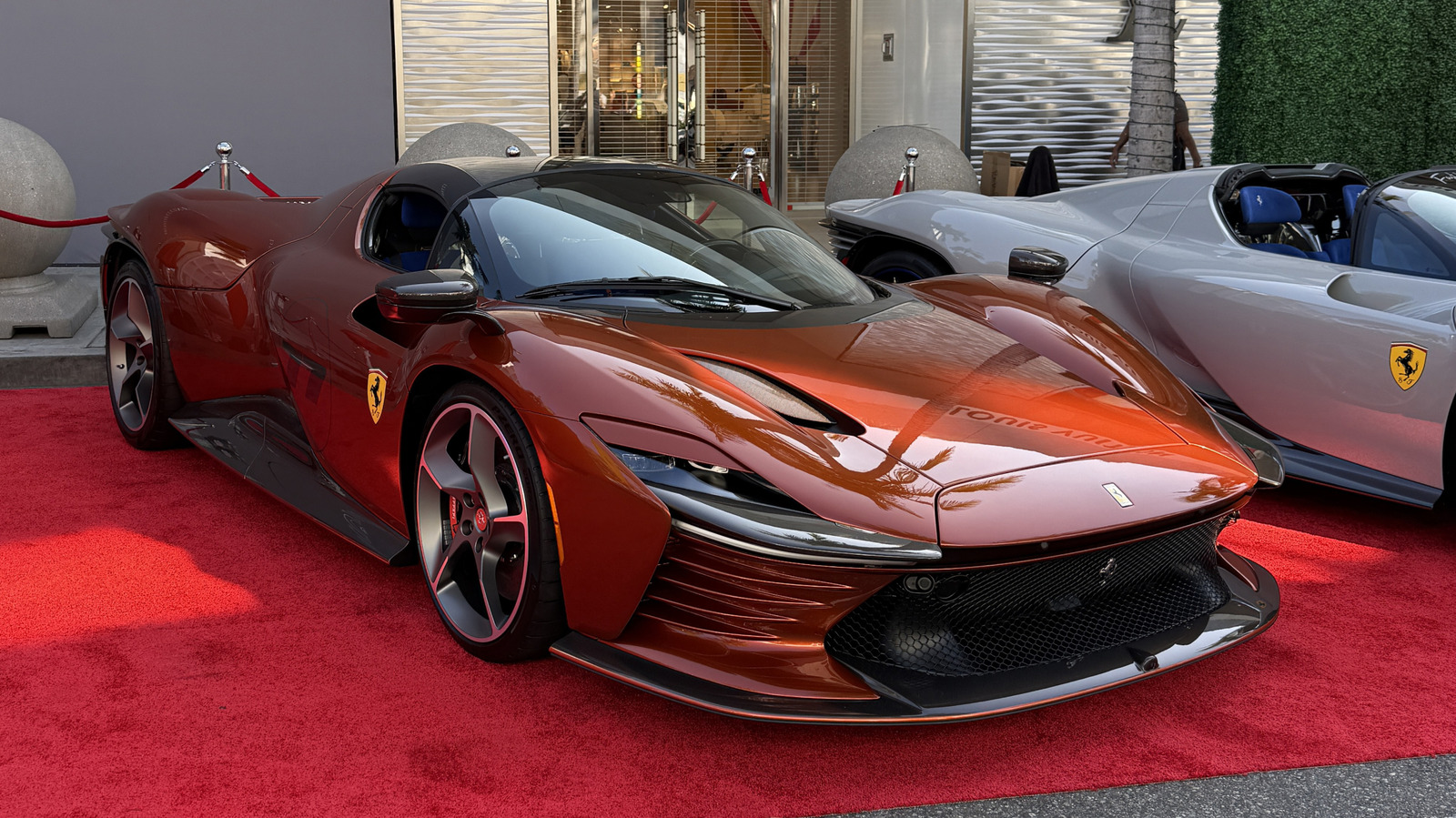
Ferrari Branding Excess and the Debate Over Iconography in Automotive Design

Gucci’s Strategic Entry into Formula 1 Sponsorship Signals a New Era for Alpine and...
 Legendary Italian fashion house now run by Luca de Meo has signed up as Alpine team's title sponsor for 2027
Luxury fashion brand Gucci – which is headed up by former Renault Group boss Luca de Meo – will serve as the title sponsor of the Alpine Formula 1 team from next season.
It will replace BWT as the title sponsor of the Enstone-based outfit, which from 2027 onwards will be known as the Gucci Racing Alpine Formula 1 Team.
The team will adopt the Italian brand's colours, marking a departure from the French Racing Blue and pink livery it has run in recent years.
De Meo, who left his role as Renault Group CEO last year to take up a position as boss of the Kering Group, which owns numerous high-end brands including Gucci, was understood to have been key to the deal.
During his time at the helm of Renault, de Meo was one of the biggest proponents of the firm’s involvement in F1 and a driving force behind the decision to rebrand its team from Renault to performance brand Alpine.
Notably, the new deal showcases Renault’s commitment to keeping the team in F1 despite the decision to scrap its own engine programme at the end of last year in favour of a supply of customer Mercedes-AMG engines.
As part of the agreement, Gucci will create a new Gucci Racing brand, which it describes as a “business and experiential platform”.
De Meo said Gucci felt F1 provided “a unique platform for a luxury brand to push boundaries, spark meaningful connections and build long-term value and brand desirability”.
Flavio Briatore, who was brought in by his friend de Meo to serve as executive advisor to the Alpine F1 team, said that he was “excited about the possibilities” that the partnership would provide.
He added: “The Enstone team has a history of doing things differently to others and has previously shown that fashion can finish first in Formula 1.”
That is a reference to the fact that the current Alpine enjoyed some of its biggest success when funded by another Italian fashion brand, Benetton.
The Enstone-based squad began as Toleman in 1981 but was bought by Benetton – which has previously sponsored the Tyrrell and Alfa Romeo F1 teams – in 1985.
As Benetton and led by Briatore, the team claimed 27 race wins, with Michael Schumacher clinching back-to-back drivers’ titles in 1994 and 1995. Benetton then sold the team to engine supplier Renault for the 2001 season.
Since then, the team has undergone numerous rebranding and changes of ownership. It was known as Renault from 2001, then became the Lotus F1 Team in 2012, before Renault bought the outfit back in 2016. It was subsequently rebranded it as Alpine in 2021.
The team currently ranks fifth in the 2026 constructors’ championship.

Ferrari’s Luce Launch Reveals a Shift Toward Tech Influencers and Unprecedented Secrecy in Supercar...

Ferrari Design Evolution Highlighted by the Unveiling of Its Latest Model

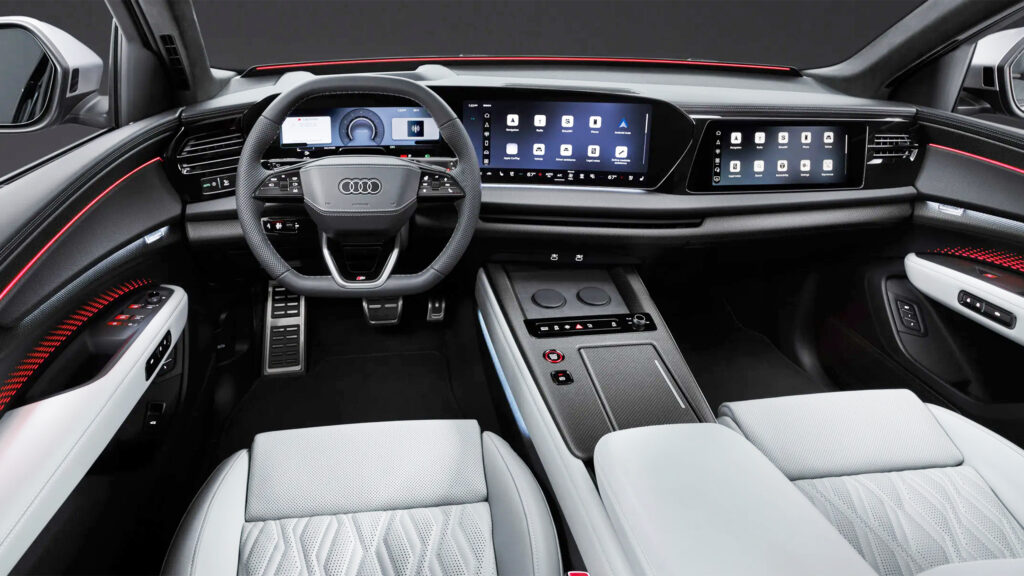
Audi Q9 and the Limits of Luxury: Why Audi Rejects a Horch Revival in...

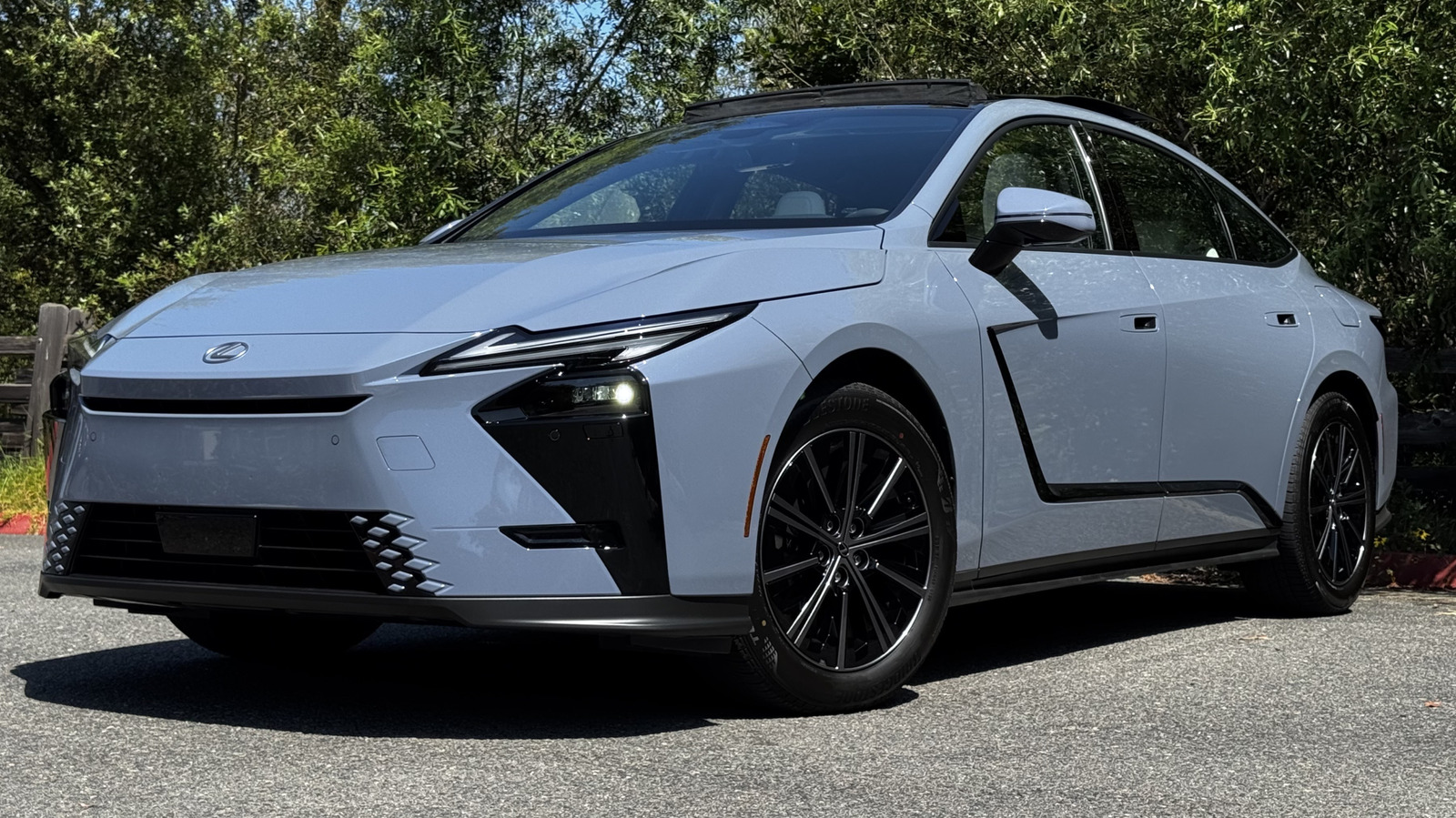
Lexus ES Redesign Delivers Accessible Luxury Through Comfort, Efficiency, and Expansive Space

Cyber Attacks in the Automotive Industry Expose the Cost of Neglected Digital Housekeeping and...
 Sector urged to focus on basic housekeeping to tighten digital security and safeguard sensitive data
A cyber security specialist has described the automotive sector as “an industry under attack” in which hacks have become “business as usual”.
Mark Rodbert, CEO at Idax Software, told Autocar Business that the industry was attractive to cyber criminals because of its high staff turnover, which created weak spots when permissions and access from former employees remained active, and the number of finance applications processed by dealers, which were obvious targets for ransomware attacks due to high volumes of customer data.
“Somebody, somewhere, has decided that there’s a vulnerability in automotive,” he said. "The car industry has a huge staff turnover – particularly dealer groups. Whenever you have that kind of churn, it creates vulnerability around personnel and makes it easier to get malicious insiders into an organisation.
"The second thing is that dealer groups, particularly, are now basically financial institutions where a car is the physical asset, because most cars are now sold with a financial product attached."
Alistair Wesson (below), director of Mongoose Cyber Security, explained why old login details were such a risk. He said: “The more you leave forgotten, the bigger your attack surface. You basically want the lowest possible number of things to attack, so that means having the fewest permissions and web servers you possibly can.

“Microsoft accounts are held on something called Active Directory. In layman’s terms, that means that you can sit at one computer and log in, then sit at another computer and log in and still get to your stuff. That is the number one target – the holy grail for all hackers. If you can compromise a company’s Active Directory, you’re in.”
According to Rodbert, advances in technology and AI had dramatically increased the scale of attacks but done little for their sophistication.
Rodbert said: “Hackers will contact help desks and use a combination of psychological techniques. That includes bullying: ‘Do you know who I am? I’ve got a really important thing to do. I’m working from home and need access. This has got to be done in the next 10 minutes or the board will sack me.’ They play on that position to get to somebody in a lower-status job.
“I’m a firm believer that all of these attacks and breaches are just pretty old-fashioned con artistry with new technology, but what that new technology gives you is enormous scale. Think of three-card monte: that’s exactly what they’re doing. It’s the urgency, and all the psychological tricks that go along with it. The difference is they’re doing it to 100,000 people at a time… but the great big trawler doesn’t care what size the fish is.”
In April, a judge ruled that around 15,000 Scottish motorists could pursue compensation claims against dealer group Arnold Clark after their data was leaked on the dark web following a cyber attack in December 2022. The ruling was made in the Scottish Court of Session, which heard evidence that the group failed to protect customers’ personal details.
Citing comments from former Arnold Clark chief executive and managing director Eddie Hawthorne, who stepped down in March 2025, Rodbert (below) said of the attack: “You can protect the wall all you like, but the bad guys are already in the building. Eddie said he reckoned they were ‘in his closet’ for about six months before they attacked.

“Their attack happened over Christmas, and two weeks afterwards, they still hadn’t heard anything from the ransomware attackers. When they did, they even sent over an FAQ page… [Hacking] is an industry and the reason it took them two or three weeks to get in touch was because their sales function – the people who’d done the attack – had written to too much business. They’d been too successful with too many companies over that Christmas period, and the customer support function couldn’t keep up.”
Cyber attacks often increase over Christmas, when hackers take advantage of lower staffing levels and longer response times.
But the risk is real at all times and the potential cost high. The JLR cyber attack in August 2025 caused the manufacturer to cease production in September. It reportedly led to the manufacturer posting a £485 million loss before tax and exceptional items, a 24% drop in revenues for the quarter and a 0.17% reduction in the UK’s economic output in September, according to the Office for National Statistics.
In October, Bloomberg reported that two cyber security companies alerted JLR when they discovered breaches in its data weeks before the attack. A similar report in the Jerusalem Post said Deep Specter – one of the firms that allegedly flagged the breach – received no response from the manufacturer after contacting it both before and after the hack.
Rodbert’s advice to dealers and OEMs was regular vigilance around IT permissions and access.
“Every time you take away access from a single person, you are reducing the risk,” he said, “not by much, but by a little bit… There’s no silver bullet or technology you can buy – not even ours – that will protect you. It’s about doing the simple things well.
“You might just have to take Friday mornings to do your security stuff and make sure Fred, who moved departments last month, had his access taken away. You might end up selling just a few fewer cars, but [if you don’t] you might end up not being here.”

BYD Shark 6 Redefines the Midsize Pickup Segment with Enhanced Towing Power and Strategic...

Controversy and Innovation Intertwined: How Mercedes-Benz’s Most Polarizing Models Shaped the Brand’s Legacy
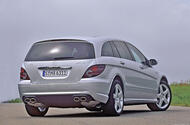 Mercedes-Benz was the first to put the automobile into production, but that doesn’t mean all its cars since have been such a success…
Mercedes is not a brand particularly known for controversy, at least compared with some we could mention.
It has, however, had its moments, producing cars which certainly gave people pause for thought.
Here, then, are 30 models which could, using the term very broadly, be described as at least partly controversial, arranged for your pleasure in chronological order.
Mercedes 35hp (1900)
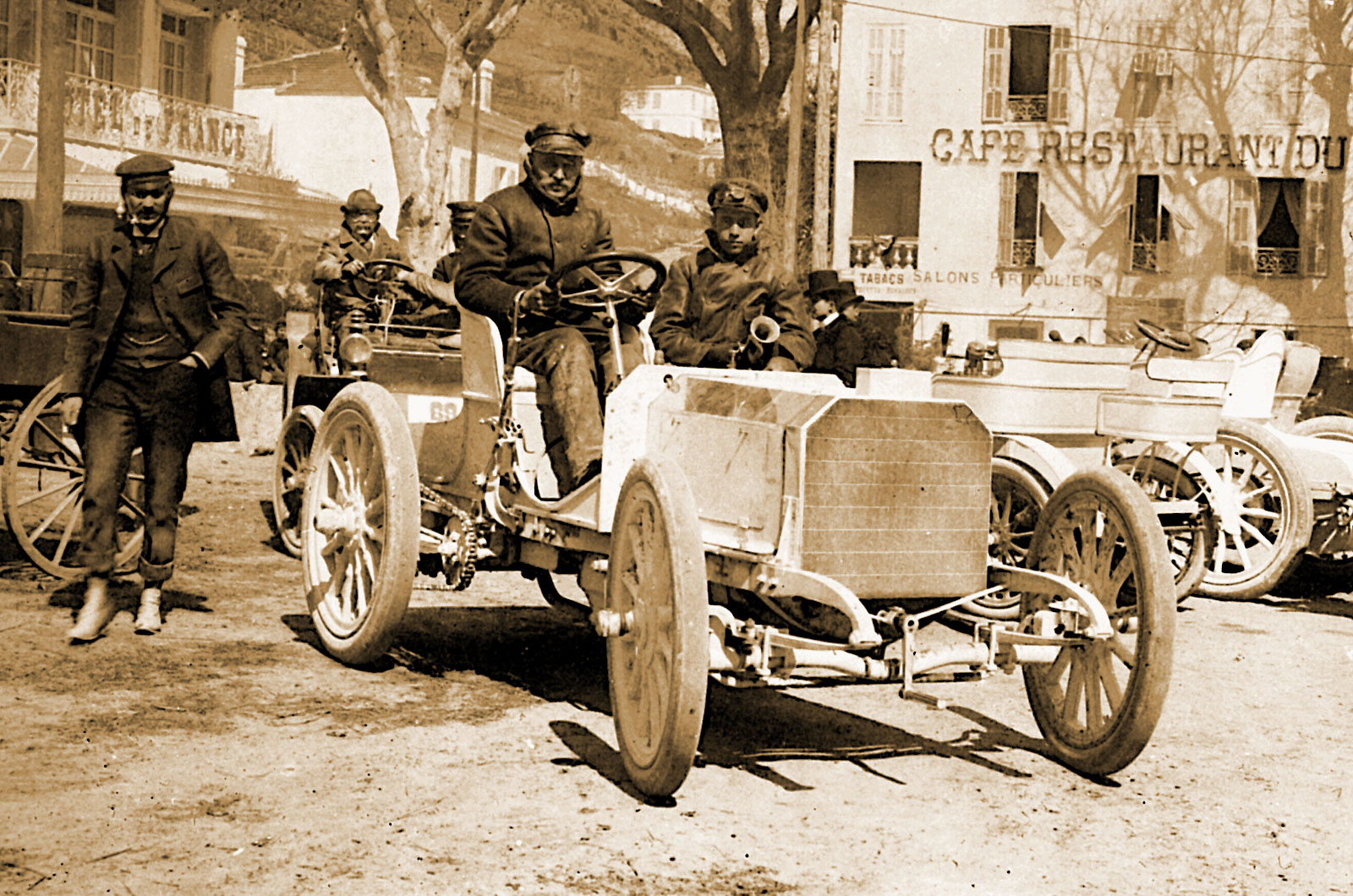
The very first Mercedes was proposed to Daimler by one of its dealers, Emil Jellinek-Mercedes (1853-1918), who named it – and his race team and even, weirdly, himself – after his young daughter (1889-1929).
Designed by Wilhelm Maybach (1846-1929), the 35hp was light and powerful, and had a remarkably low centre of gravity for the time. It was such a fast road car, and did so well in competition, that the French journalist and motorsport pioneer Paul Meyan (1852-1938) was moved to write, “We have entered the Mercedes era.”
Mercedes-Simplex (1902)
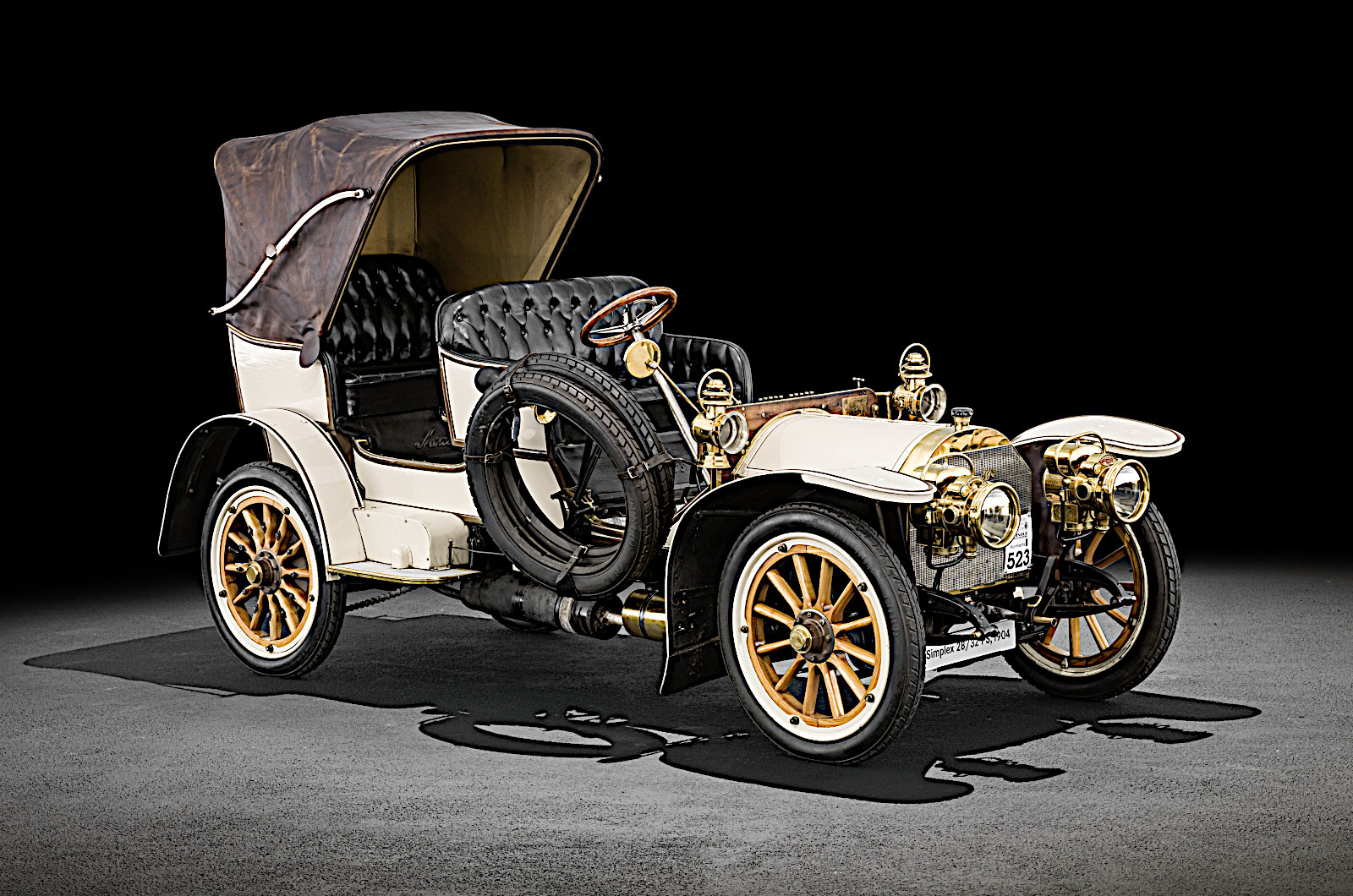
Wilhelm Maybach followed up the 35hp with the first of several Simplex models, so named because they were simpler to operate than their predecessor. With 40hp, it was even faster, and although less powerful versions were later added the last, introduced in 1909, was rated at a mighty 65hp.
Emperior Wilhelm II (1859-1941) was an enthusiast, joking with Maybach that his new model was “not as simple as that, you know,” while American tycoon William K. Vanderbilt (1849-1920) owned a Simplex which still exists, and is believed today to be the oldest Mercedes in existence.
Mercedes 75hp (1907)
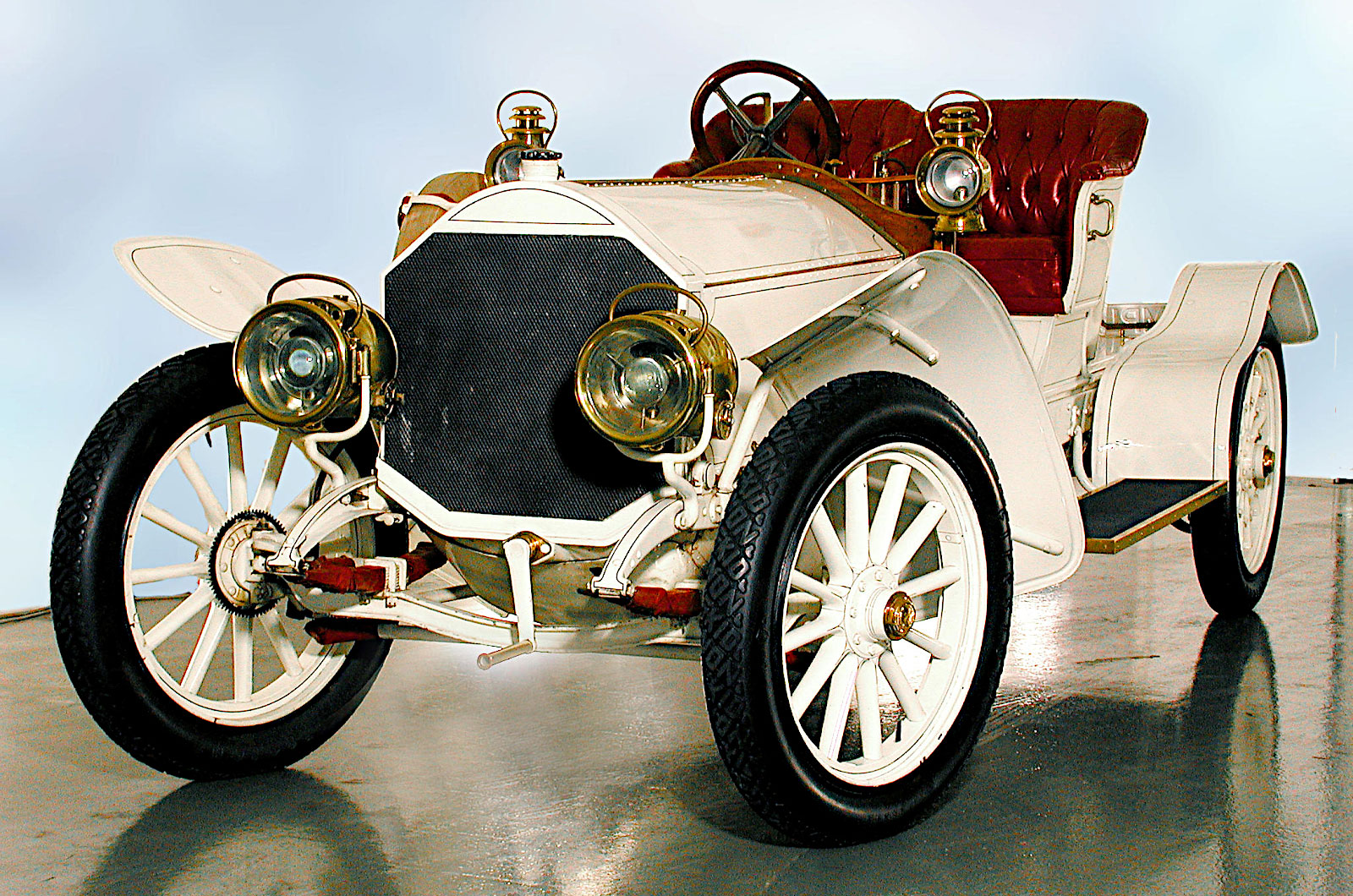
The first big controversy within Daimler was the departure of Wilhelm Maybach. After a dispute, he left the company he had joined before it started building cars and was replaced as technical boss by Paul Daimler (1869-1945).
Maybach’s final contribution to the firm was the design of its first six-cylinder engine. In 10.2-litre form, it first appeared in January 1907 in the car then known as the 75hp, though two years later it was renamed 39/80hp. A 9.5-litre version appeared later in 1907 in the 65hp, which became the 37/70hp.
Mercedes-Knight (1910)
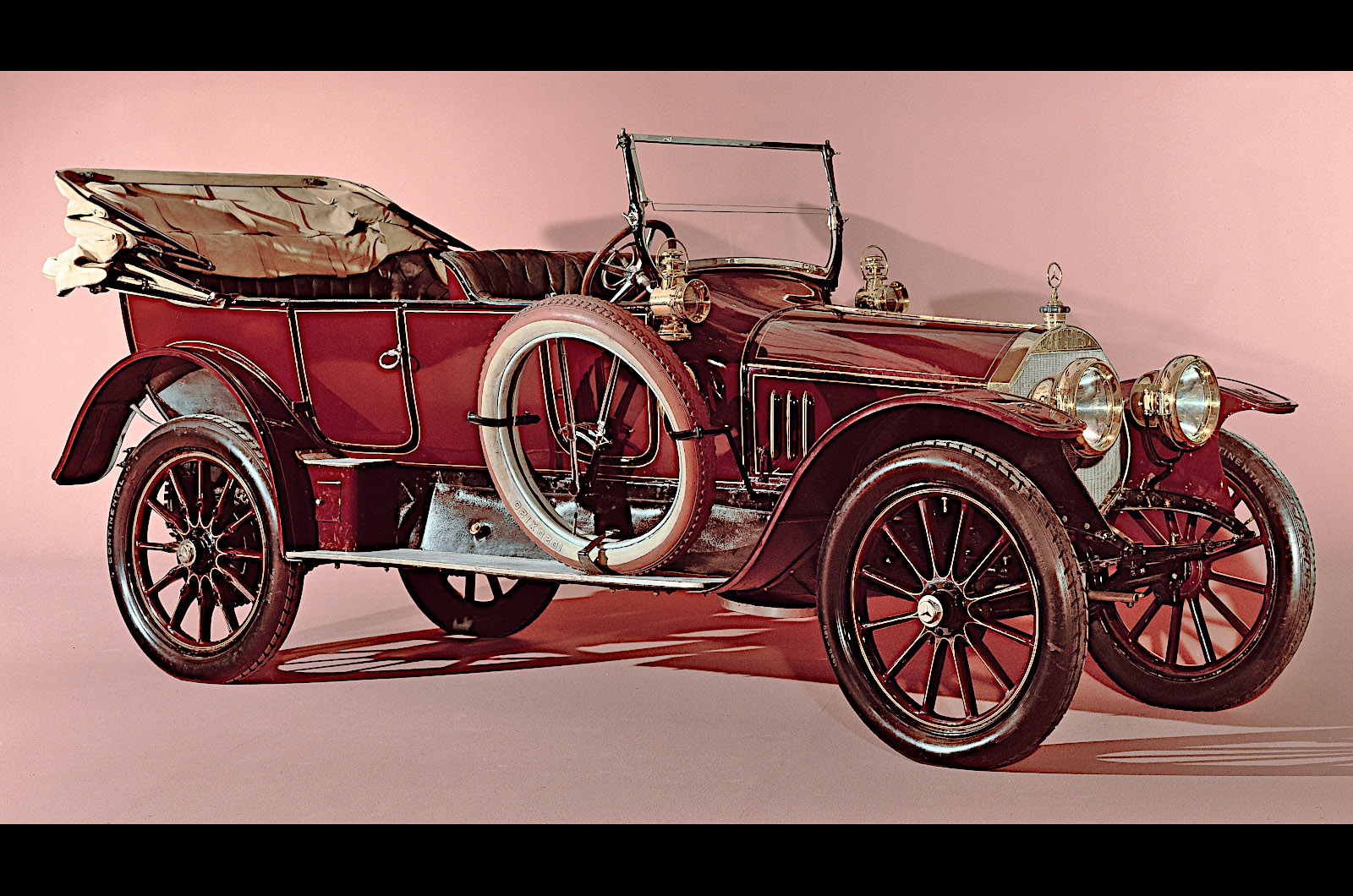
After a decade of producing Mercedes models with its own engines, it must have seemed shocking when Daimler introduced a car with a unit developed by someone else. The someone else in question was the American Charles Yale Knight (1868-1940), whose sleeve-valve design was highly favoured at the time, and used by several manufacturers.
The first Mercedes-Knight was the 4.0-litre 16/40hp of 1910, and was followed two years later by the similar 10/30hp and 25/65hp. Their engines were very quiet, but they were also hard both to build and to maintain. This, along with limited development potential, led to Daimler giving up the idea in 1924.
Mercedes 18/100 (1914)
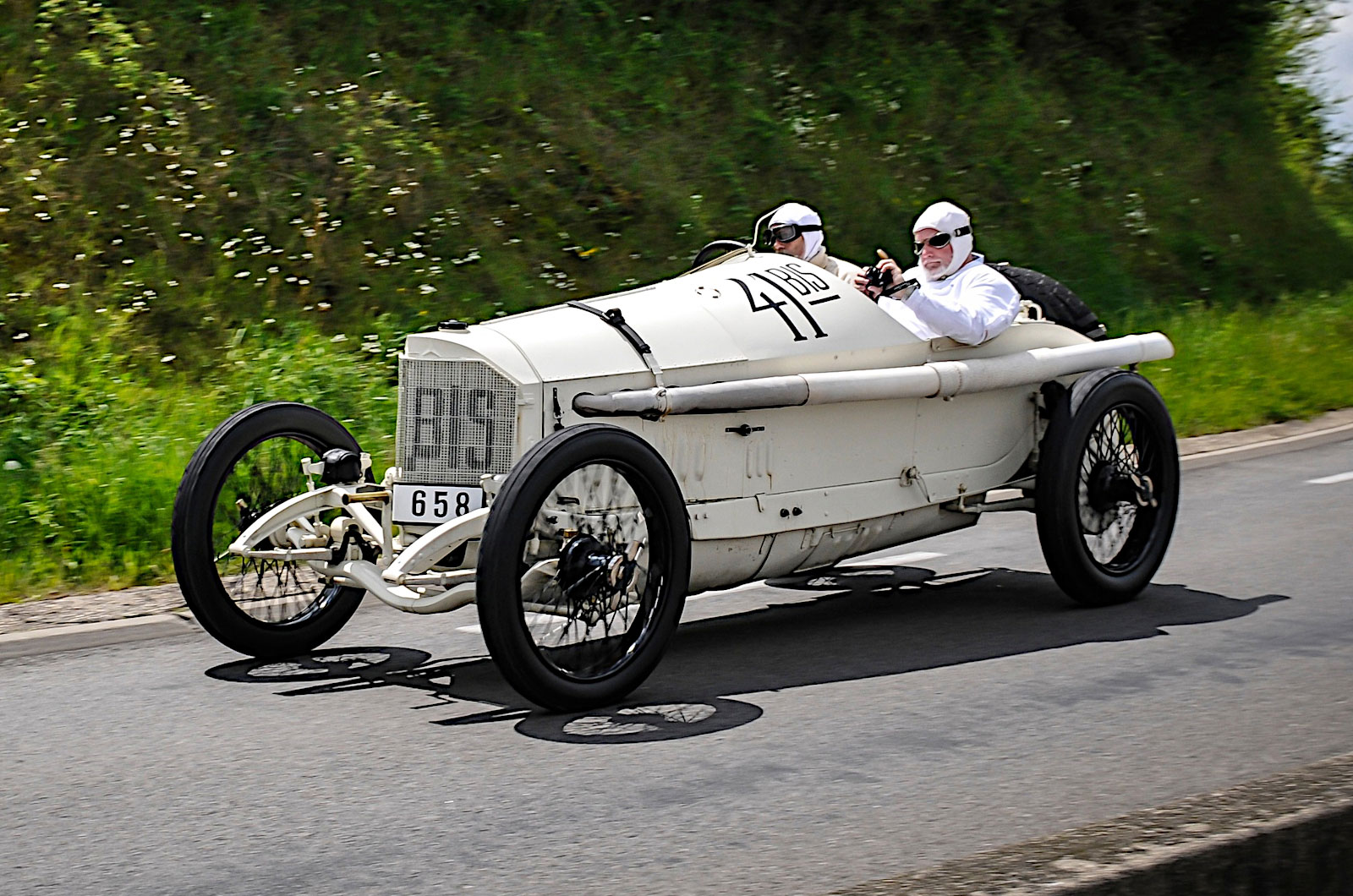
Although we are concentrating mainly on cars developed largely for road use, it seems to make an exception in the case of the 18/100 racer which competed in the French Grand Prix in July 1914. This event was essentially a battle between France and Germany, represented by Peugeot and Mercedes respectively.
Peugeot put up a magnificent fight, but in the end all the honours went to Mercedes, which took the top three places. The home crowd was chastened by defeat at the hands of a nation which would become its wartime enemy less than a month later.
Mercedes 28/95 (1914)
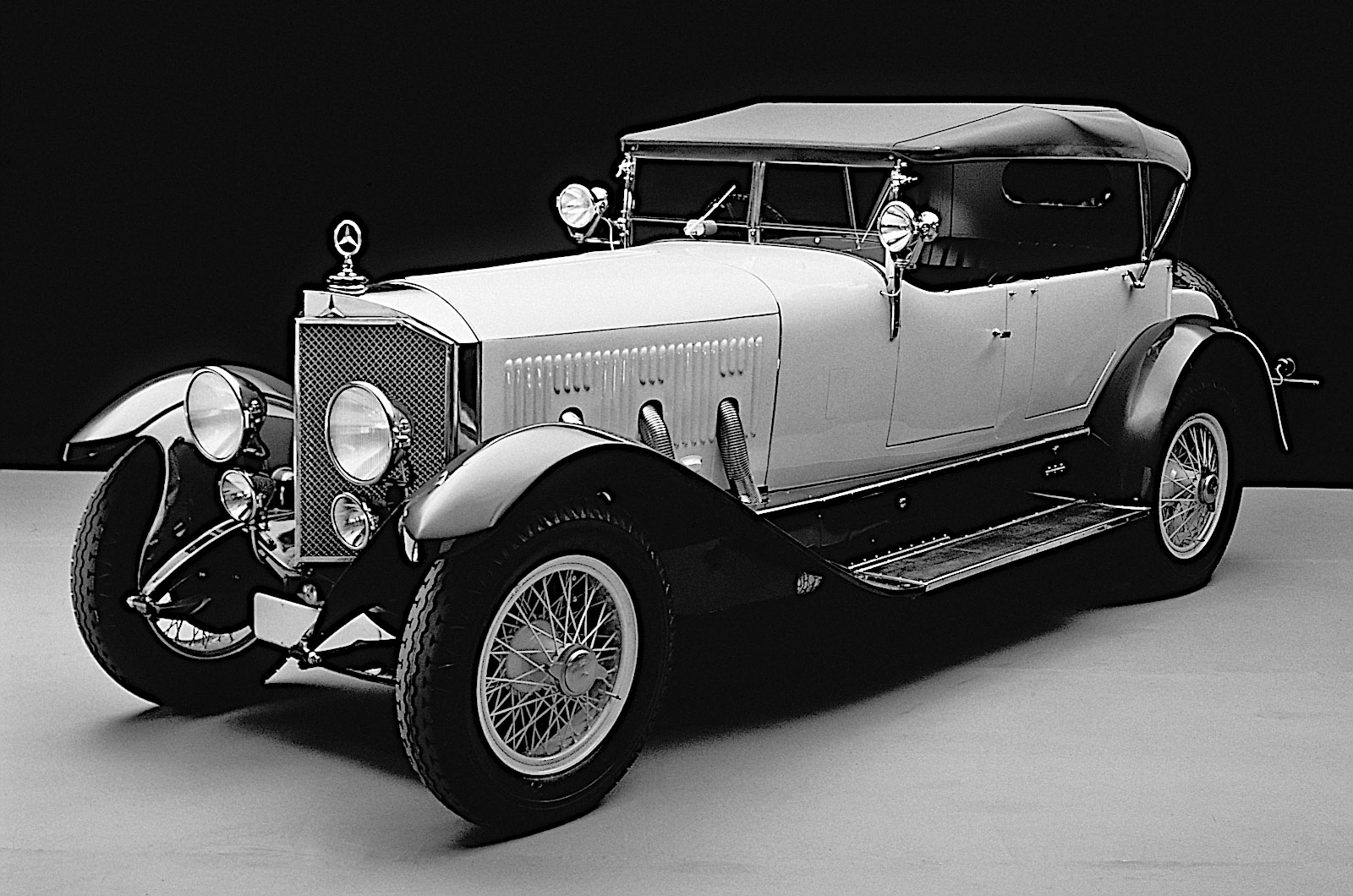
Appropriately enough for the builder of the car which won Europe’s greatest race of 1914, Daimler introduced an innovative and very powerful road-going model in the same year. Its 7.3-litre straight six engine had an overhead camshaft (not exactly new, but still very unusual at the time) and produced no less than 90bhp.
Production was abandoned during the First World War, but resumed when peace returned, and continued until 1924.
Mercedes 24/110/160hp (1924)
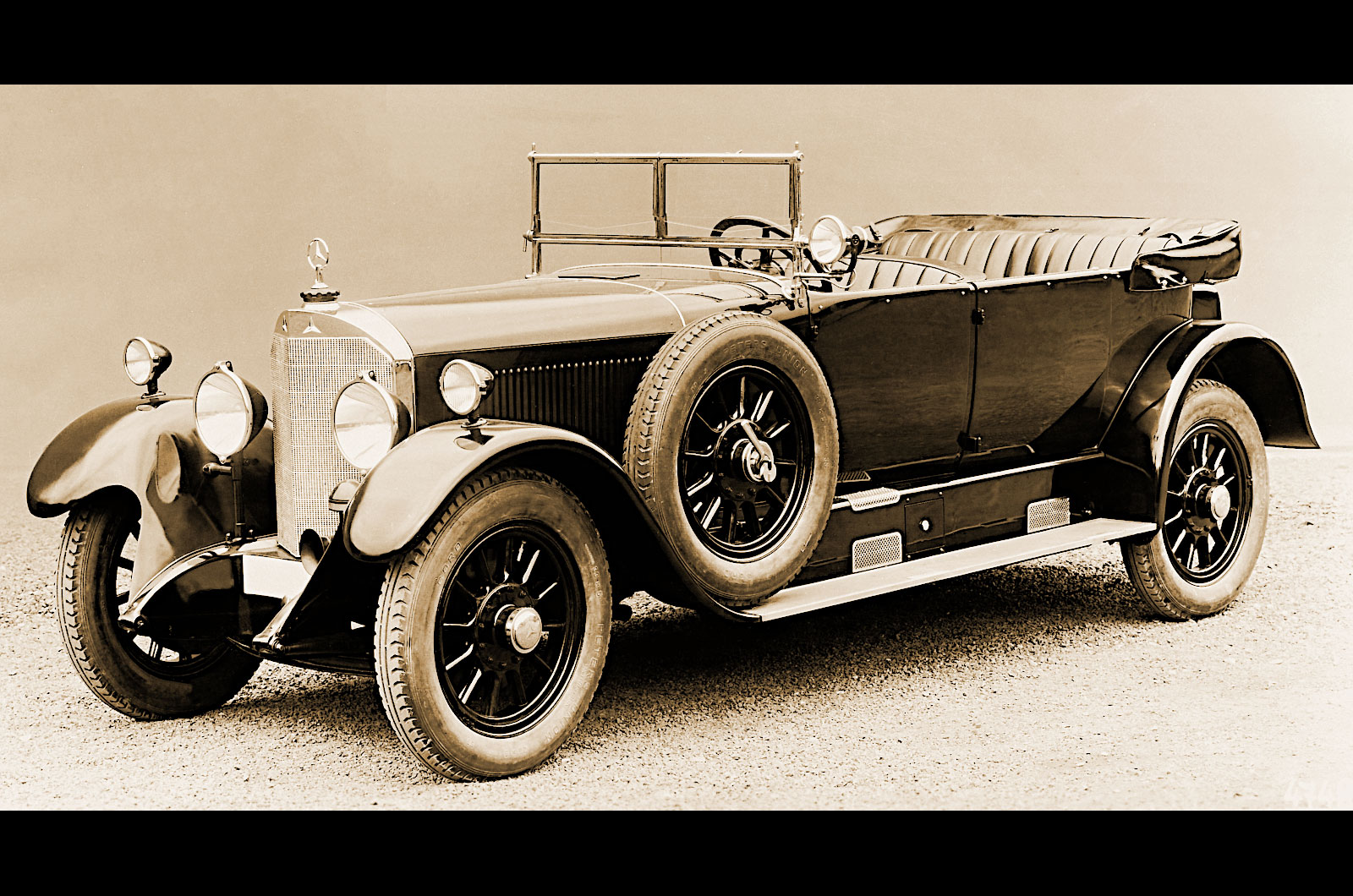
Having taken over from Wilhelm Maybach many years before, Paul Daimler resigned in 1922 and was replaced by Ferdinand Porsche (1875-1951). Porsche’s early work in the top technical role included developing two very grand cars. The complicated names of the 6.3-litre 24/110/160hp and the 3.9-litre 15/70/110hp were based on their taxable horsepower, their actual horsepower without supercharging and their actual horsepower with supercharging.
But it wasn’t just about the engines. According to a rather bumptious Daimler press release of the time, the “design and technical execution of both chassis and coachwork represent a tremendous step forward in terms of the series production of the motor vehicle”.
Mercedes 8/38hp (1926)
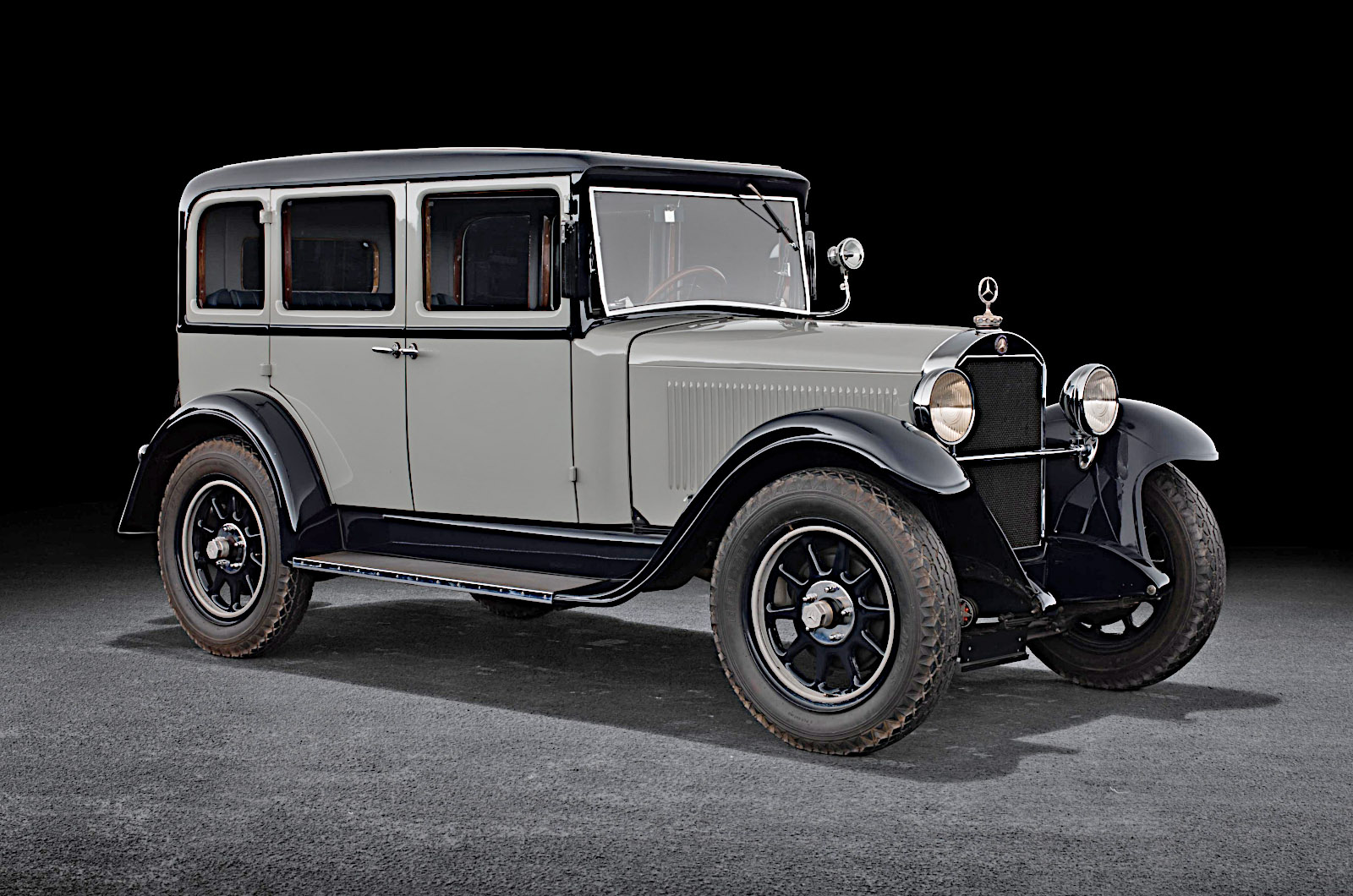
Daimler and Benz, the great rivals in the German motor industry, established a ‘community of interest’ in 1924, and merged two years later. The combined company was called Daimler-Benz, but from now on its cars would be called Mercedes-Benz.
The first model with this name was the 8/38hp, and in view of what had gone before it was amazingly conventional, with a 2.0-litre sidevalve (or flathead) engine. Customer choice, however, was considerable. Offered initially as a two- or four-door saloon or an open tourer, the number of available body styles would reach 13 in 1928.
Mercedes Nürburg (1928)
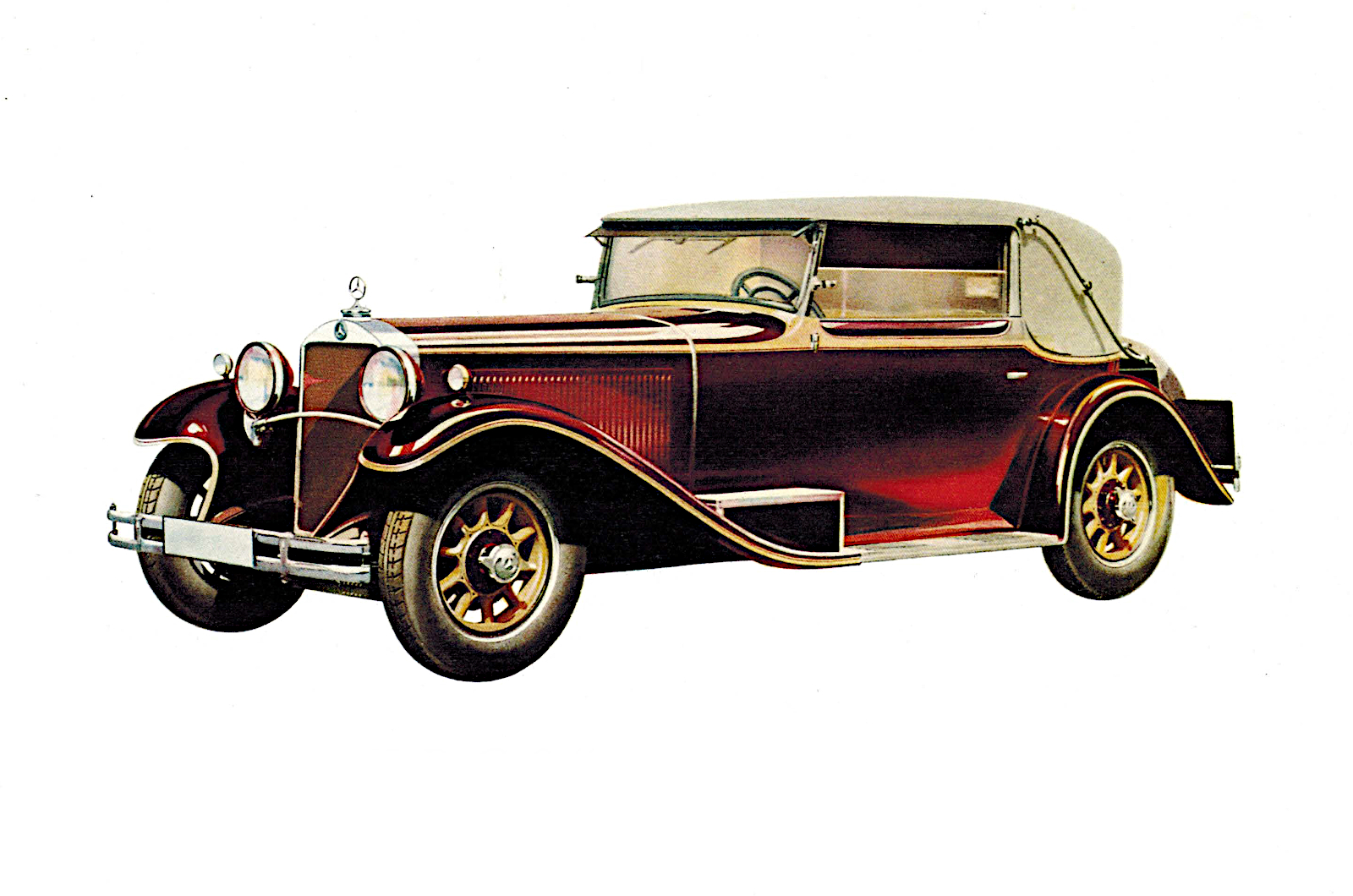
The Nürburg models were named after the recently completed Nürburgring race track, where a prototype had been driven for 20,000km in just 13 days. Despite this, and the fact that their engines in some cases measured as much as 5.0 litres, they were not performance cars but grand luxury vehicles a world away from the little 8/38.
They were also the first series-produced Mercedes cars with eight-cylinder engines, and were sometimes referred to as Nürburg 8 (the figure being embossed with gold on the cover page of early catalogues).
Mercedes SSK (1928)
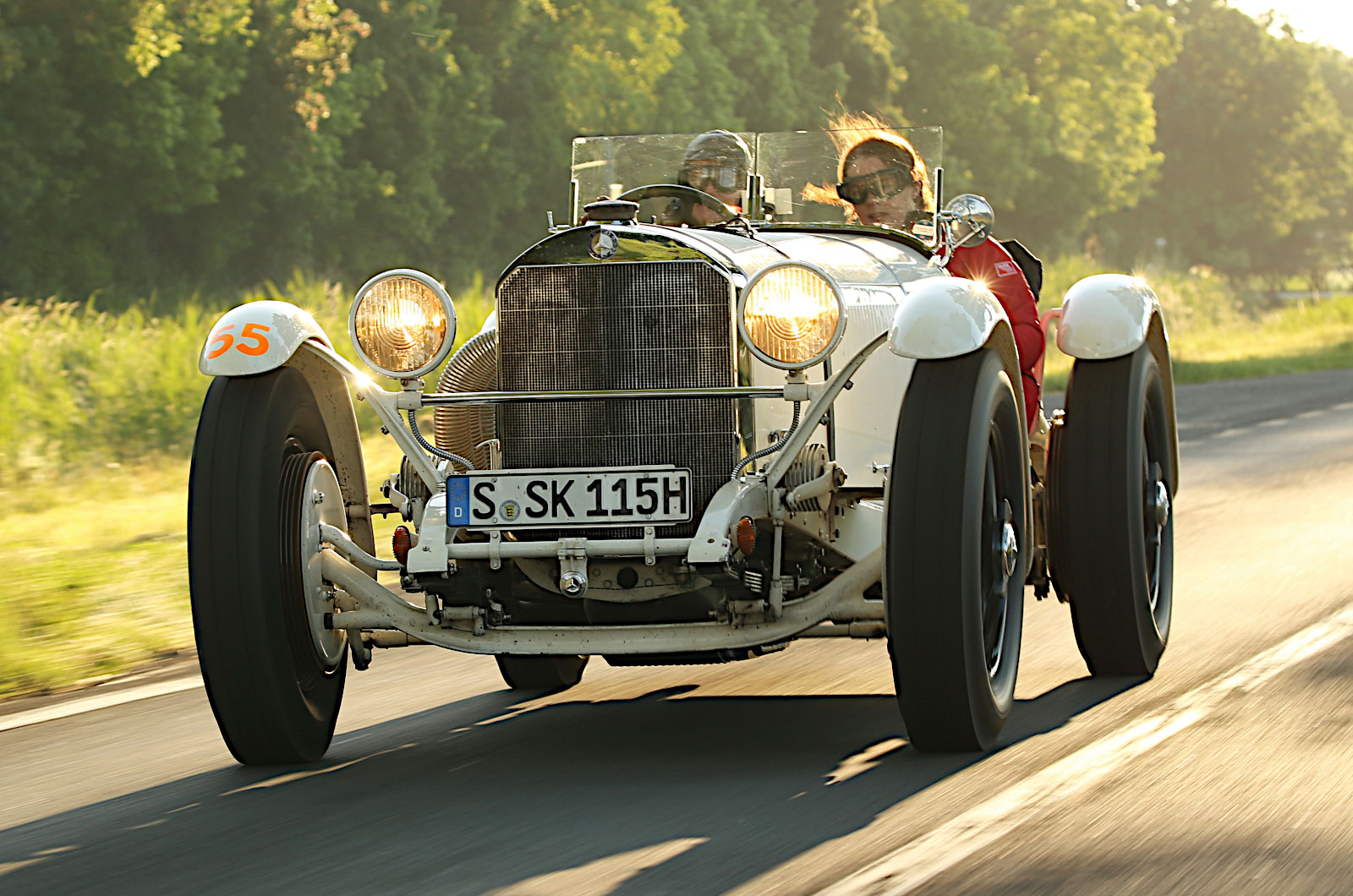
The SSK (for Super Sport Kurz, the last word meaning ‘short’ in reference to its wheelbase) was the ultimate road-going version of the Model S, a series intended for both private and competition use. Its supercharged 7.1-litre straight eight engine was steadily developed to the point where it produced around 250bhp in 1929, and it was wondrously successful in motorsport.
The SSKL, a lighter derivative of the same car with up to 300bhp, was developed primarily for racing, and achieved victory in the hands of such heroes as Rudolf Caracciola (1901-1959), Hans Stuck (1900-1978) and Manfred von Brauchitsch (1905-2003).
Grosser Mercedes 770 (1930)
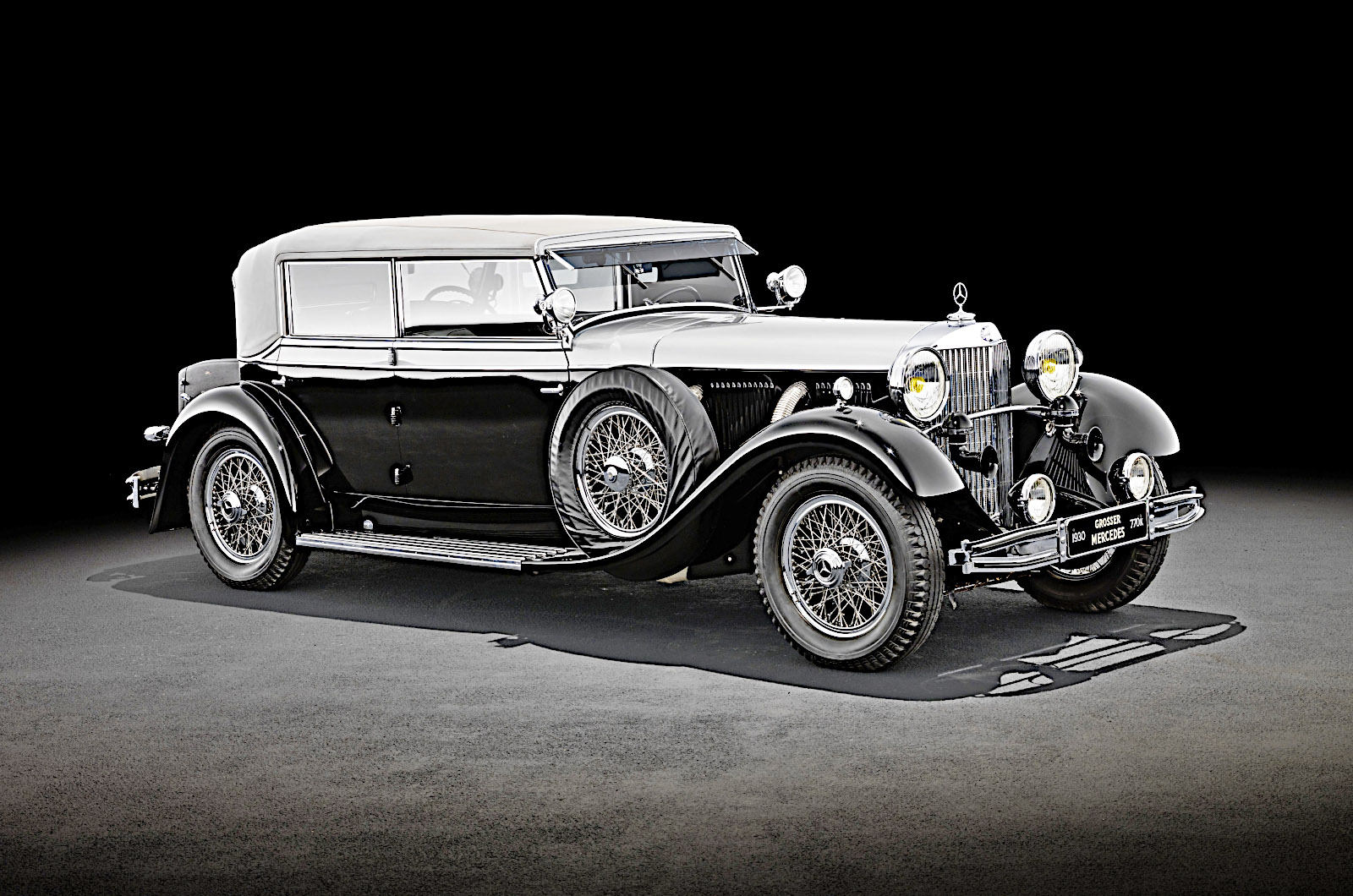
The first Grosser, or ‘Grand’, Mercedes was powered by a 7.7-litre engine which produced 150bhp in naturally-aspirated form, or 200bhp for the benefit of those who were prepared to extra for a supercharger, as 104 of the car’s 117 wealthy buyers did.
For rather more money, customers could even specify armour-plated bodywork, an offer taken up by Japan’s Emperor Hirohito (1901-1989). His car was returned in 1971 and put on display in the Mercedes-Benz Museum in Stuttgart.
Ponton Mercedes (1953)
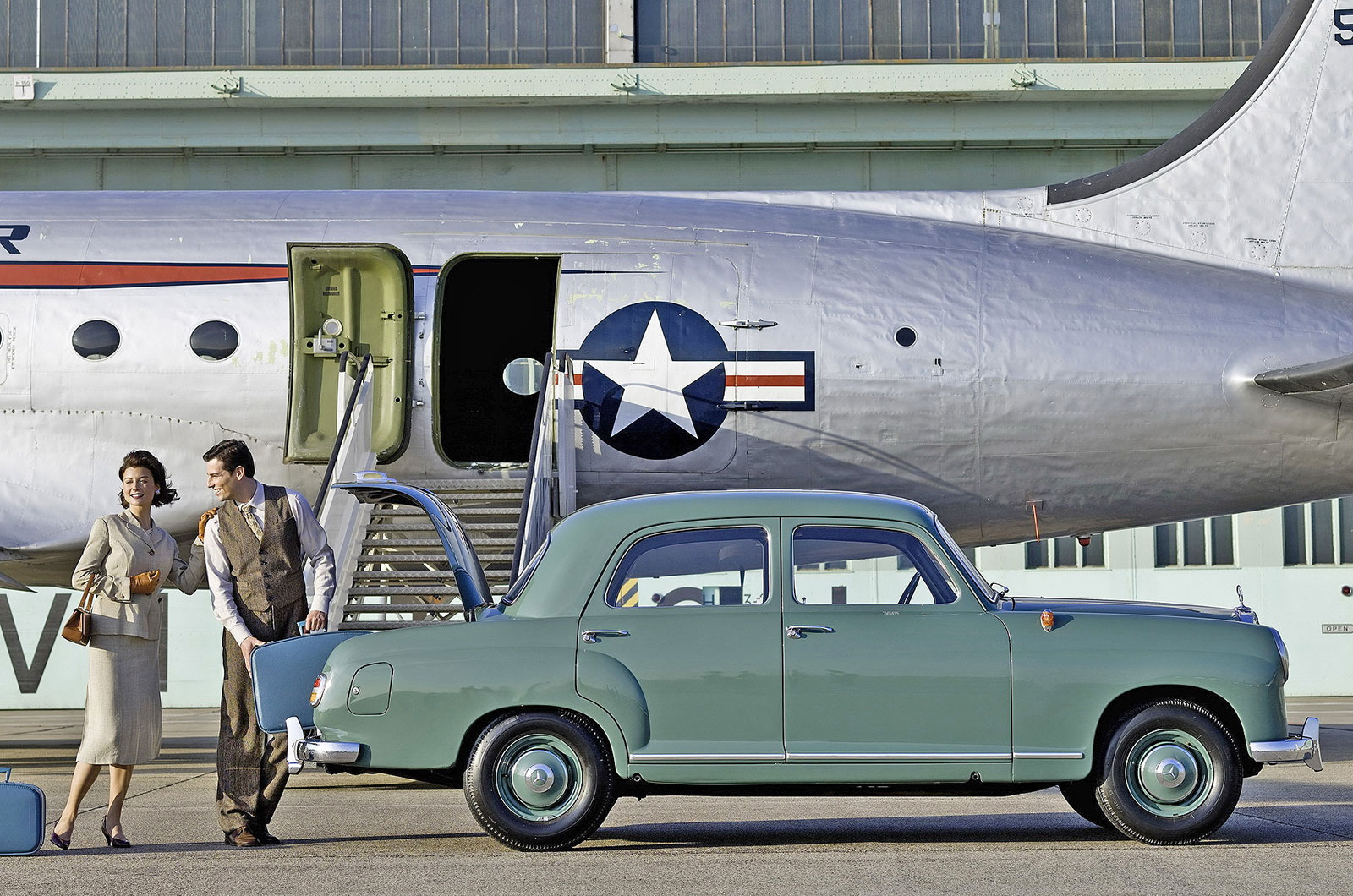
Mercedes cars of the immediate post-War era looked more or less as they would have done if they were sold in the 1930s. This tendency was blown out of the water in 1953, when Mercedes introduced the series codenamed W120. It’s nicknamed ponton because of its body style, which had what might unkindly be described as slab sides, and nothing resembling the running boards of the past.
The 180 D of 1954 had a diesel engine, which was unusual at the time but not new. The pre-ponton 260 D launched in 1936 had one too, as had earlier commercial vehicles. The Ponton Mercedes was a key model in helping the company return to success after the war years.
Mercedes 300 SL (1954)
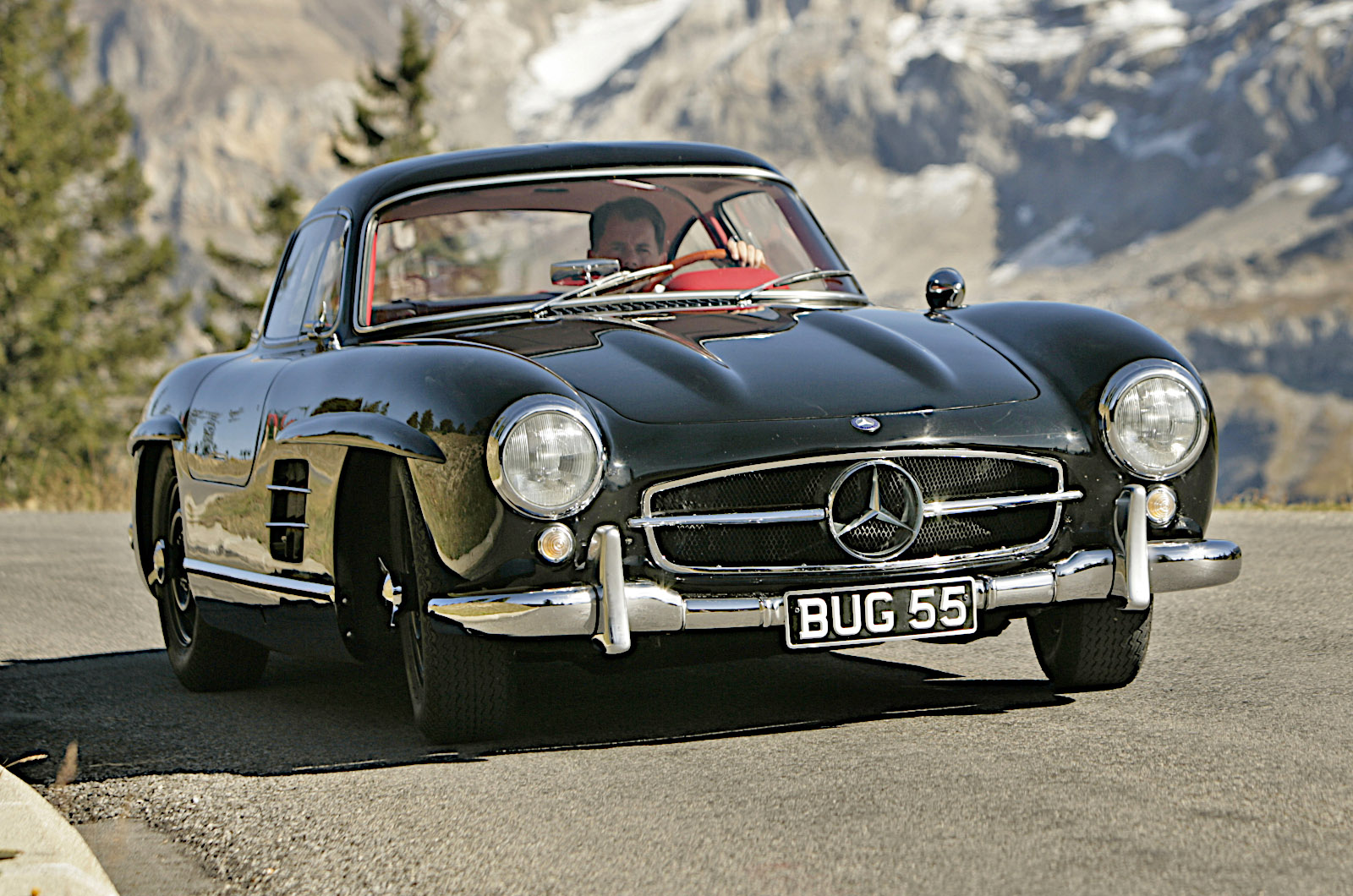
Developed at the suggestion of the American Mercedes importer Max Hoffman (1904-1981), the 300 SL caused a sensation. This was largely because of its coupé body, and particularly the gullwing doors attached to it, but the close mechanical resemblance to the W194 sports race which made its debut in 1952.
The coupé bodywork was abandoned in favour of a roadster in 1957, and from 1955 to 1963 Mercedes also produced the 190 SL, which was nearly as pretty as the 300 SL but very much slower.
Mercedes Fintail (1959)
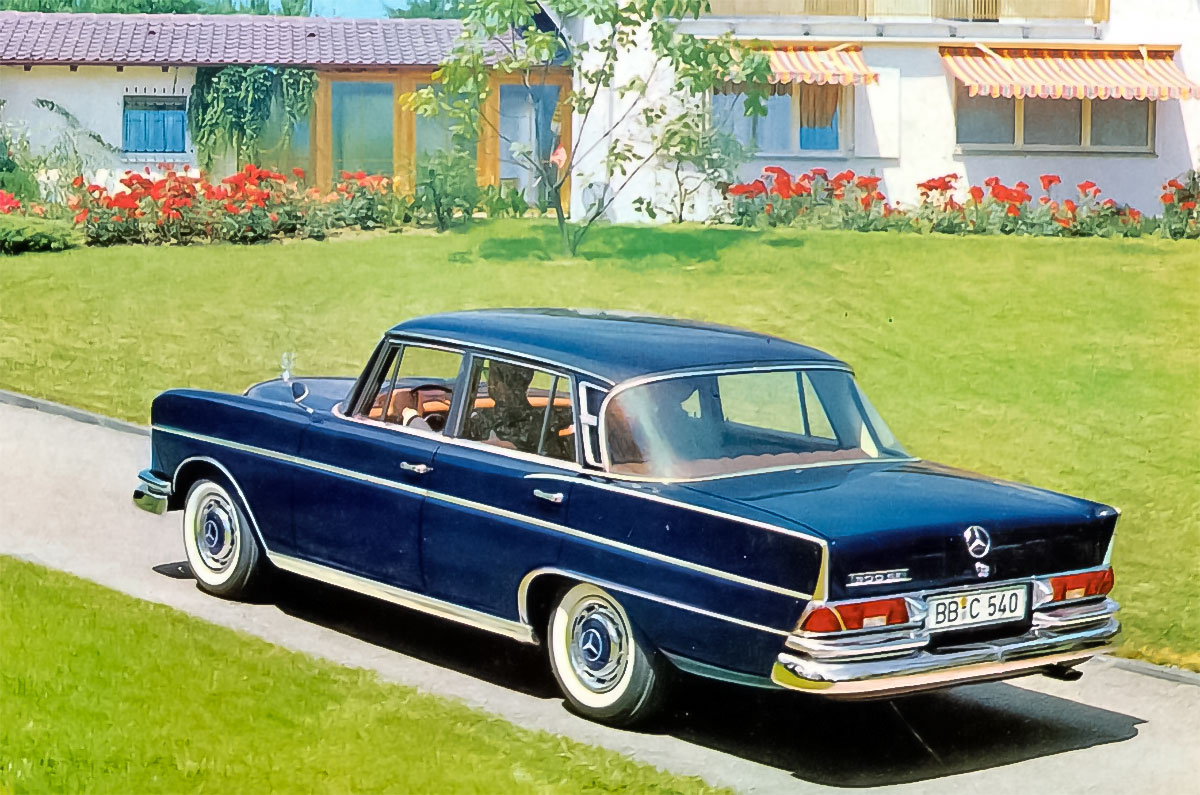
The W111 was the first Mercedes with what would become a classic look for the brand, with tall, vertical headlight units on either side of a prominent grille. At the back, there was a shorter-lived styling cue – tailfins which, though extremely modest by American standards of the time, were prominent in European terms.
All the early Fintail cars had six-cylinder engines, but the fins appeared on the four-cylinder W110 series in 1961. They began to look old-fashioned later in the decade, and were abandoned entirely in 1968.
Grosser Mercedes 600 (1964)
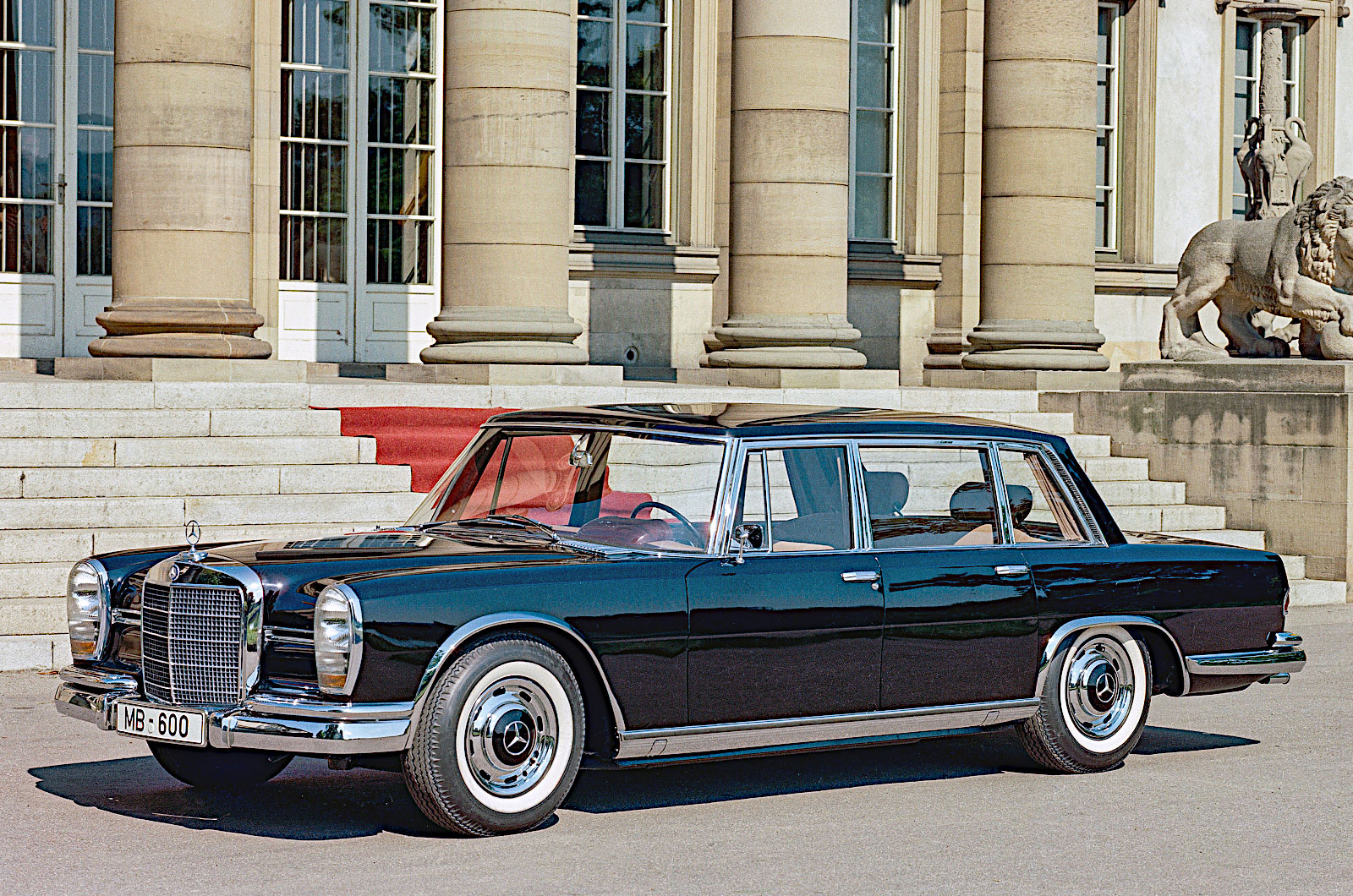
Introduced 34 years after the first Grosser, the 600 was powered by the first V8 engine ever fitted to a road-going Mercedes. Standard equipment included air suspension, central locking and electronic heating and ventilation – nothing special today, but a phenomenal specification for a car launched in the early years of the Beatles.
2677 examples were built before production ended in 1981. Of these, 429 were Pullman limousines, and 59 the even more exclusive landaulets. A particularly special landaulet, with a raised roof among other unique features, was built in 1965 for Giovanni Montini (1897-1978), better known as Pope Paul VI.
Mercedes C 111 (1969)
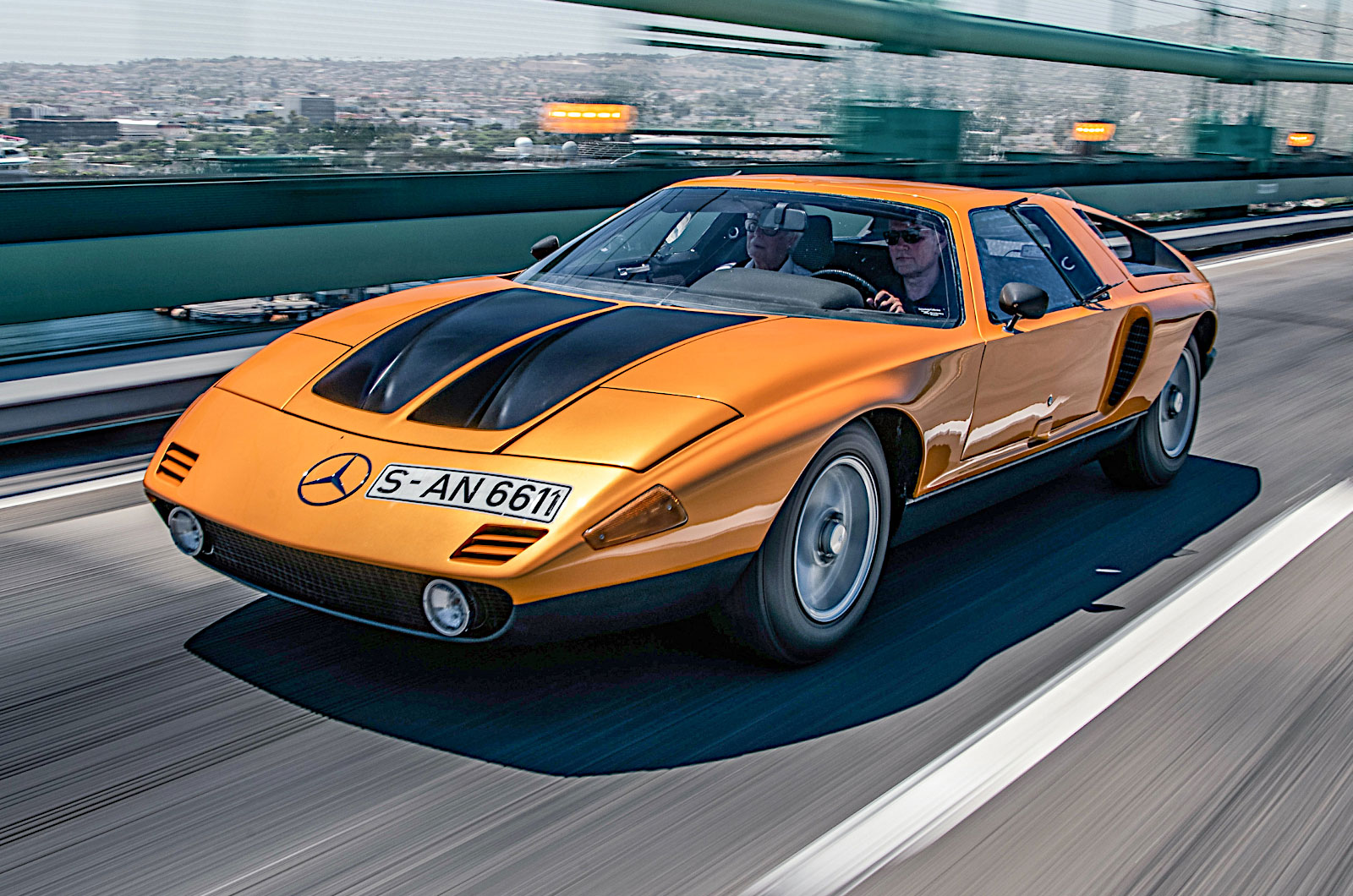
As is often the case with manufacturers, one of the most remarkable cars Mercedes ever devised was never sold to the public. In fact there were several of them, since the C 111 was a series, produced over several years. Like the 300 SL, they all had gullwing doors, but unlike the earlier production model they were mid-engined.
In most cases, the engine was a rotary of some sort, but Mercedes decided this wasn’t the way forward, and has never to this day sold a production car fitted with such a thing. Later C 111s had petrol V8s, or in one case a 3.0-litre diesel.
Mercedes G-Wagen (1979)
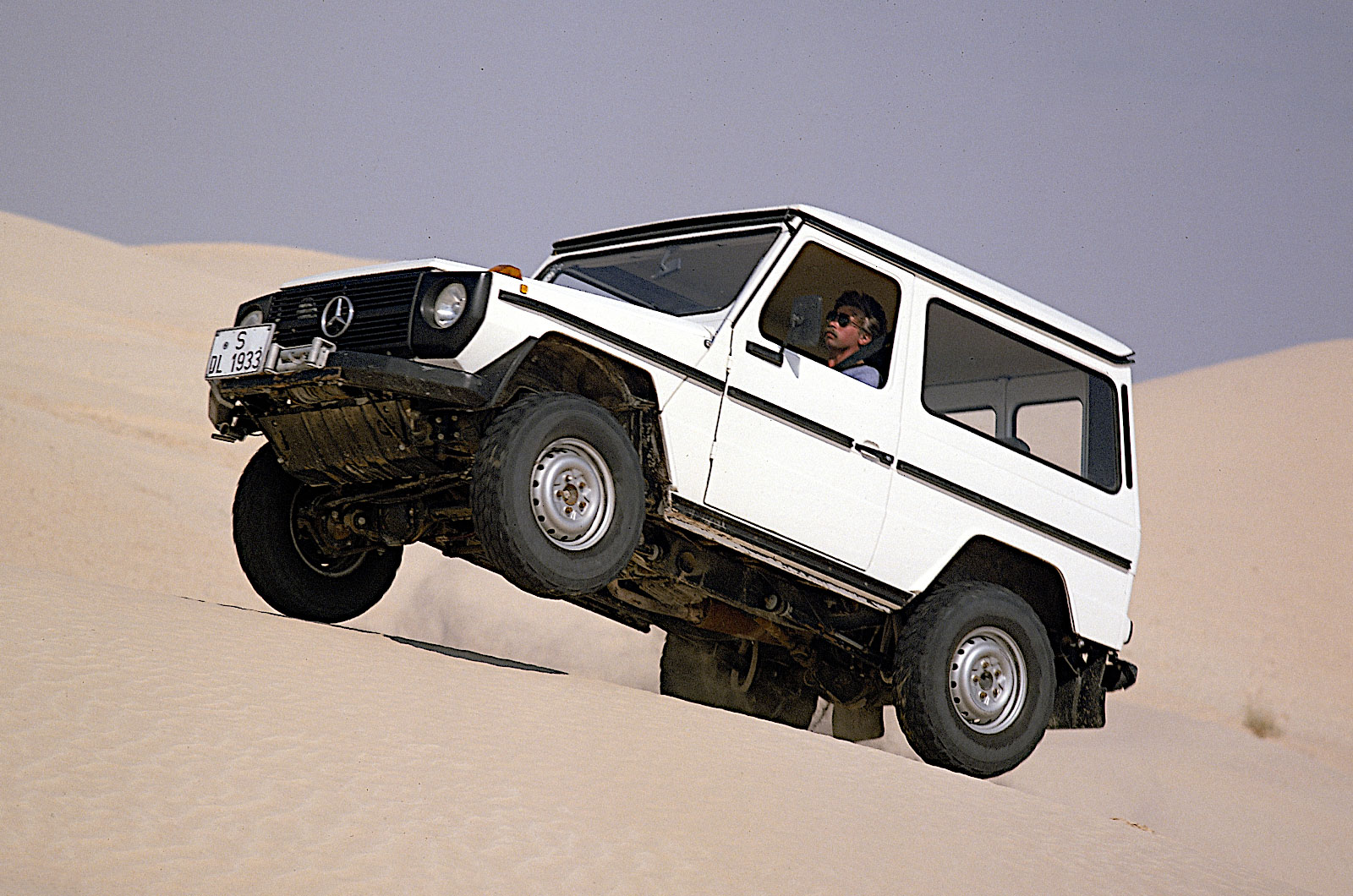
Later renamed G-Class, the Geländewagen was just what it said it was (in German) – an off-road vehicle which could also be driven on ordinary public roads, though not necessarily in great comfort.
As Mercedes itself says, the new model “broke completely new ground”, but quickly found a customer base. Available in various forms, it stuck around until 1992, and was replaced by something similar. Several generations later, you can still buy a G-Class today, and an all-electric version was revealed in April 2024.
Mercedes 190E (1982)
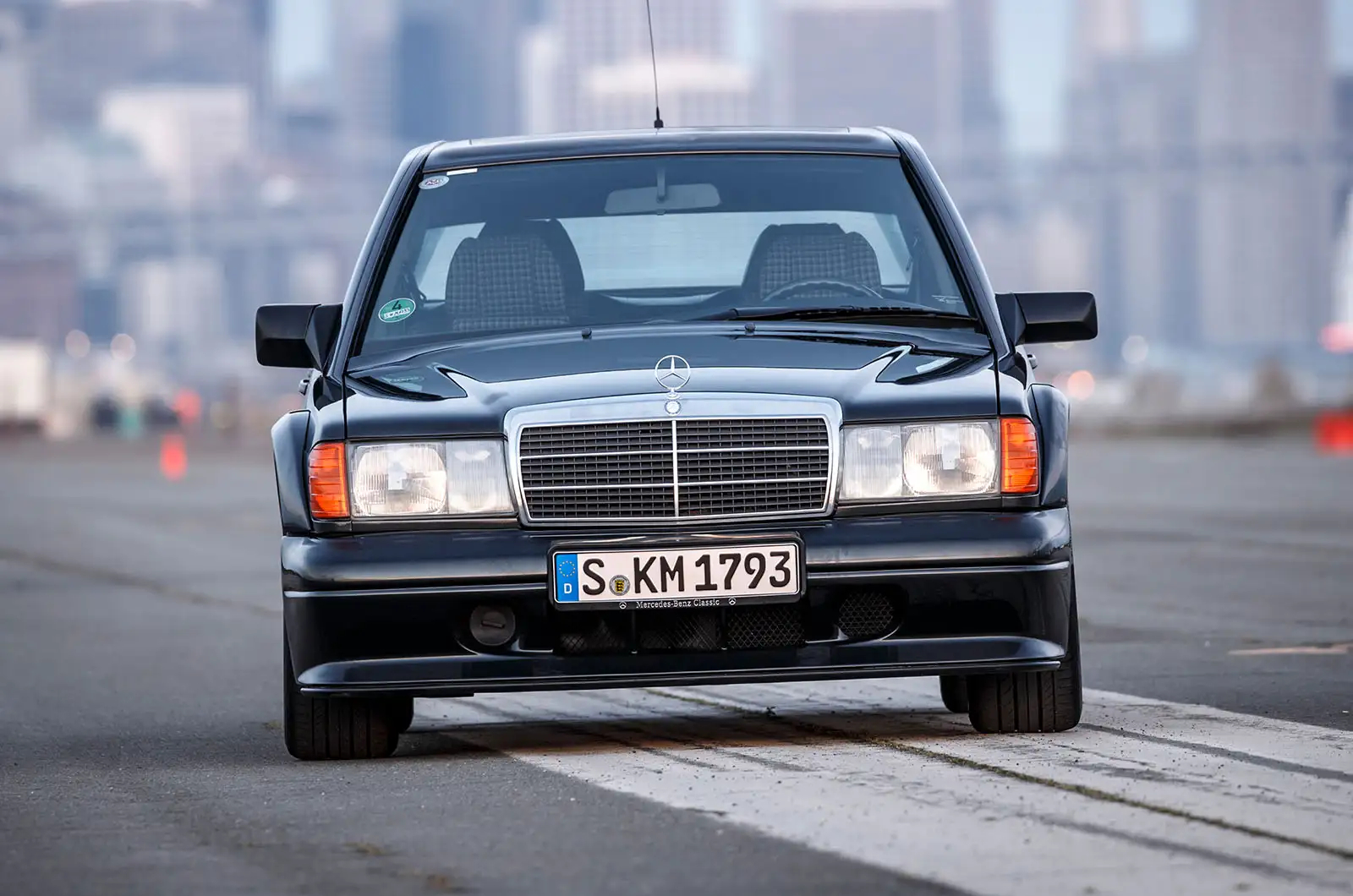
The W201 series consisted of the medium-sized Mercedes models immediately preceding the first C-Class. The most notable version was the 190E, especially when its 2.3-litre (and later 2.5-litre) engine was fitted with a 16-valve cylinder head developed by Cosworth.
Roughly analogous to the BMW M3, these were fine high-performance road cars, and the versions modified for competition use were deeply impressive. The most famous 190E of them all, though, was the one in which Ayrton Senna (1960-1994), new to Formula 1, beat his more experienced rivals, all of them driving similar cars, in a special race at Hockenheim in 1984.
Mercedes C 36 AMG (1993)
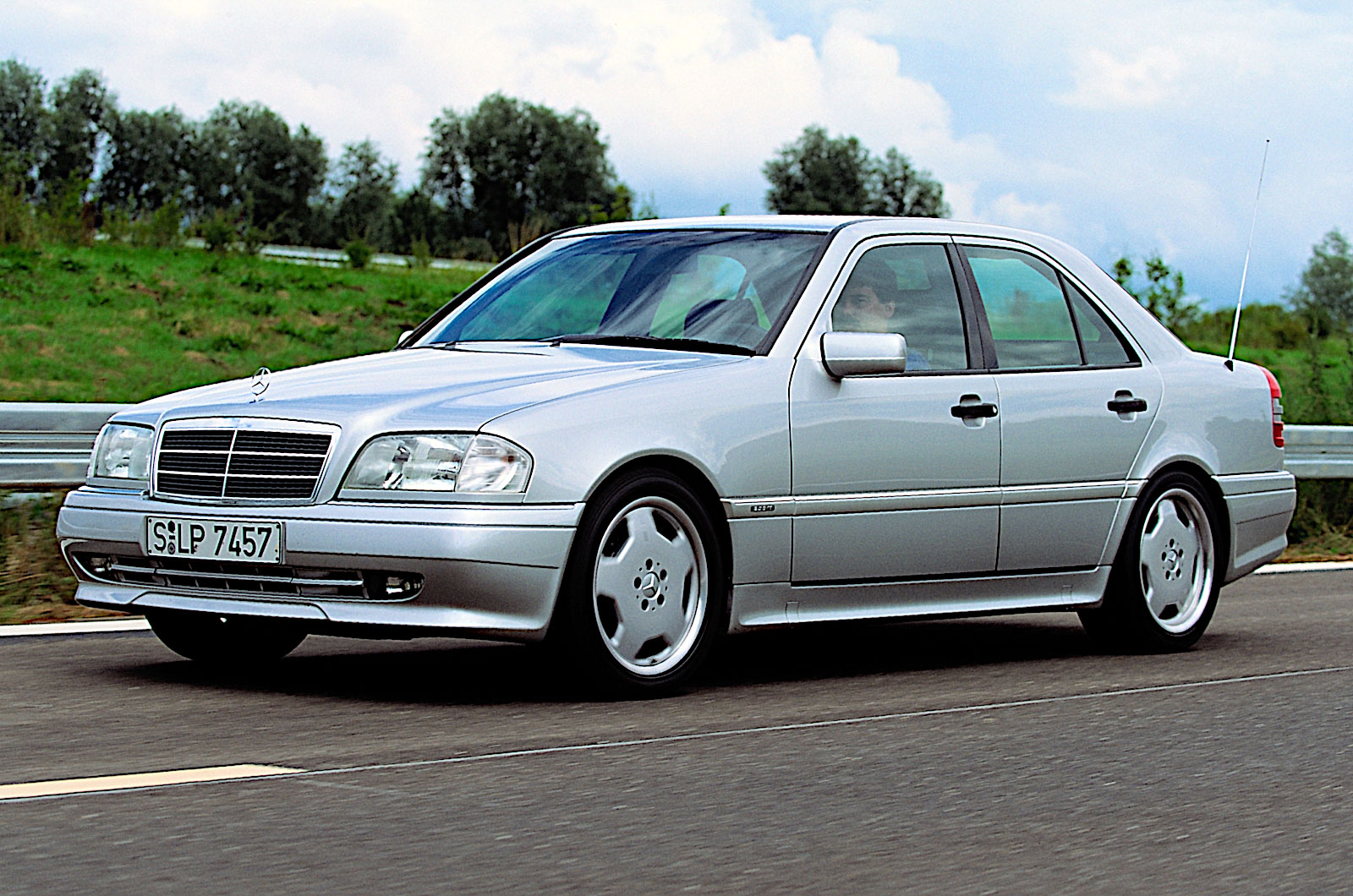
AMG started out as a tuning business specialising in parts for Mercedes vehicles, and was drawn into the company over a period of years. The first road-going collaboration was the C 36 AMG, which had a 3.6-litre straight six engine.
With a maximum output of only around 280bhp, it was far less powerful than future AMG models, but it was beautifully balanced, and a pleasure to drive on either road or track.
Mercedes SLK-Class (1996)
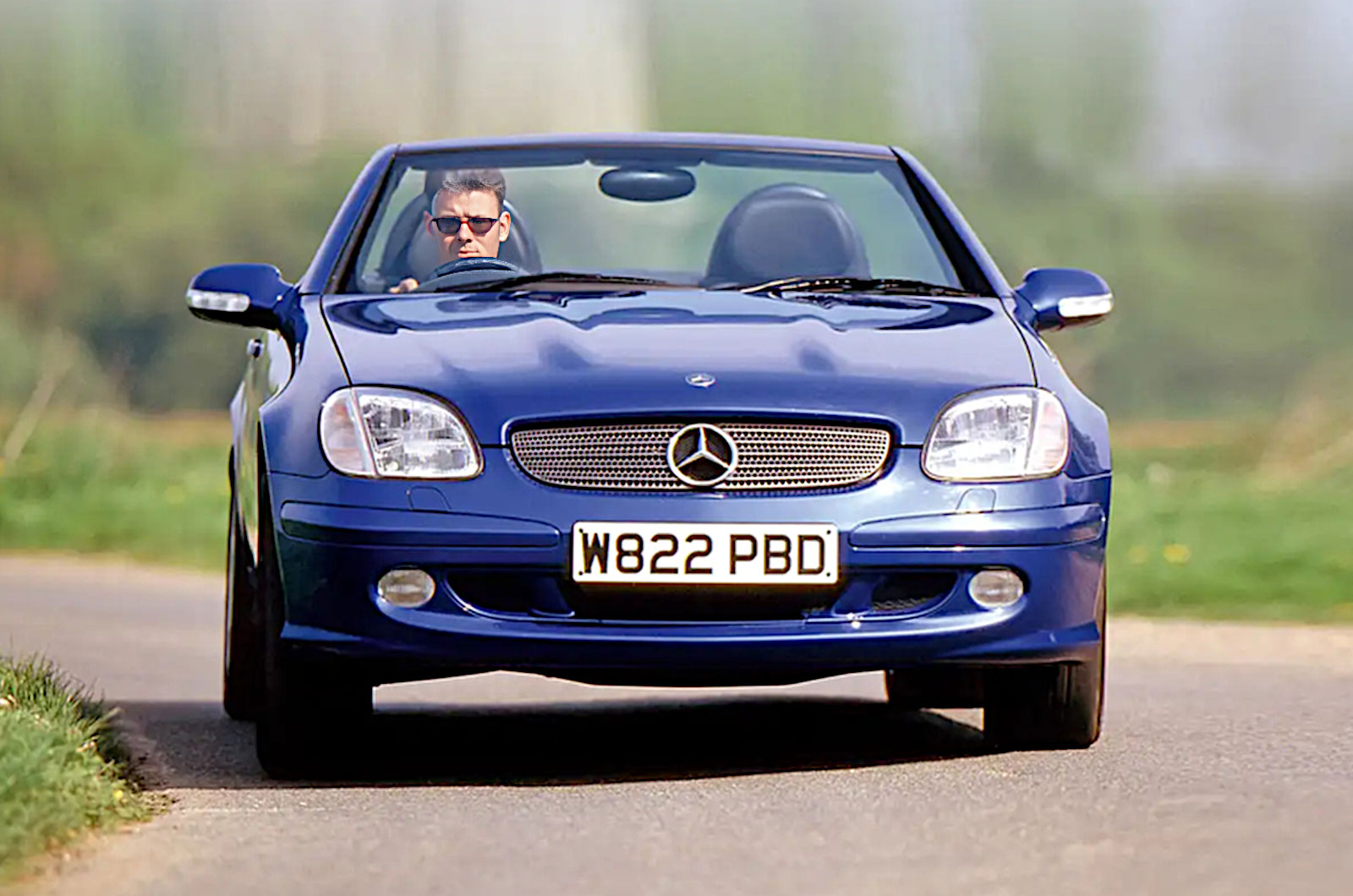
The original SLK was available with a variety of four-cylinder engines, sometimes supercharged, or a 3.2-litre V6. It was an unusual model for Mercedes to produce, but it did well enough for the company to decide it was worth moving on to a second generation in 2004.
When that happened, the first SLK was repurposed as the Chrysler Crossfire, an outcome of the merger of Daimler and Chrysler. The fact that one of the partners had taken on a model recently discarded by the other was controversial too.
Mercedes V-Class (1996)
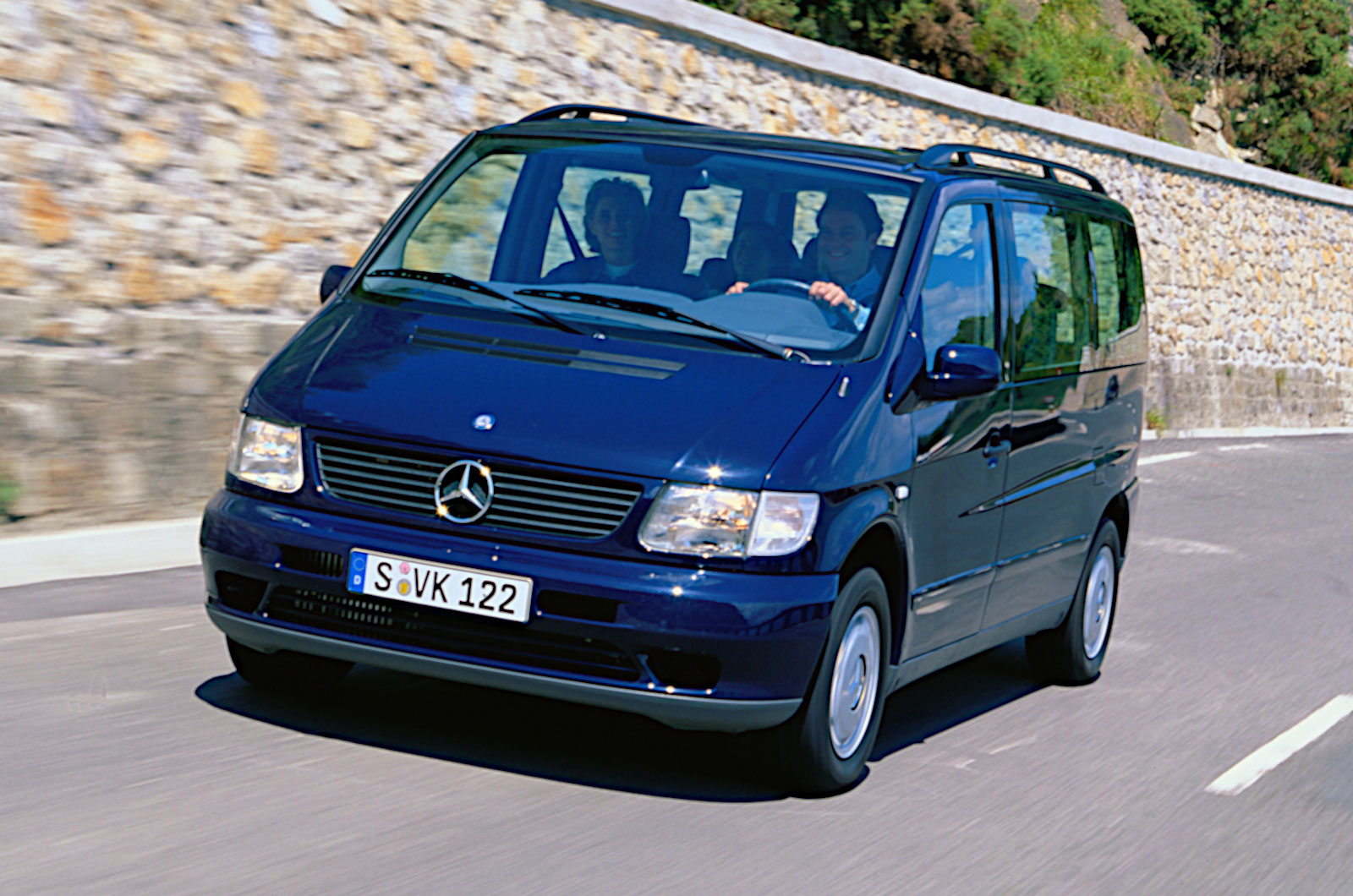
For nearly a century, it would have been almost unthinkable that Mercedes would create a passenger vehicle by adding extra seats and windows to a van. That, however, is what happened with the V-Class, the MPV version of what was otherwise known as the Vito.
Unusual though this seems, the plan worked, and there is still a V-Class today.
Mercedes A-Class (1997)
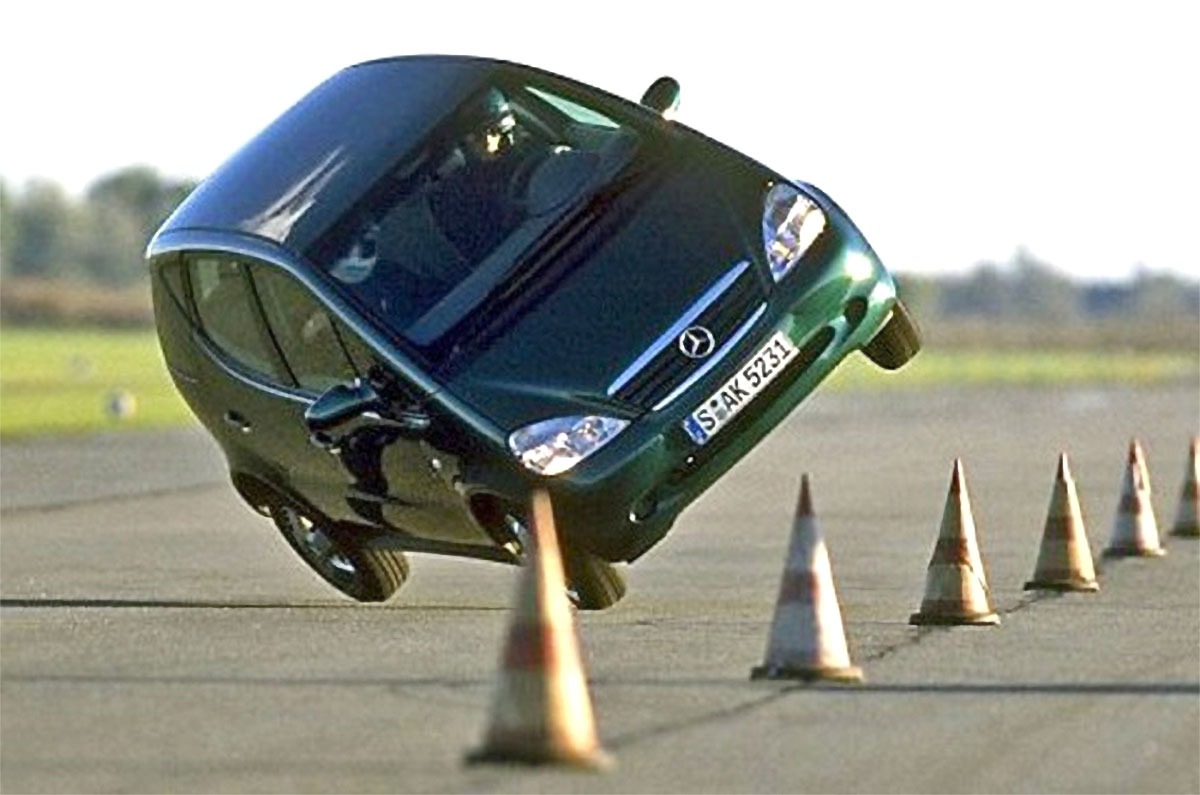
It all happened a long time ago, but for a while it was almost impossible to have a conversation about the first-generation A-Class without someone mentioning the elk test. This has been conducted for many years by the Swedish magazine Teknikens Värld, and in 1997 the A-Class failed it spectacularly, turning over before reaching the finish line.
All talk of the little hatchback’s ingenious double-floor layout was forgotten, and the incident led to a major controversy. After much discussion, Mercedes revised the suspension and added electronic stability control and in 1998 the A-Class became capable of avoiding elks with little trouble.
Mercedes M-Class (1997)
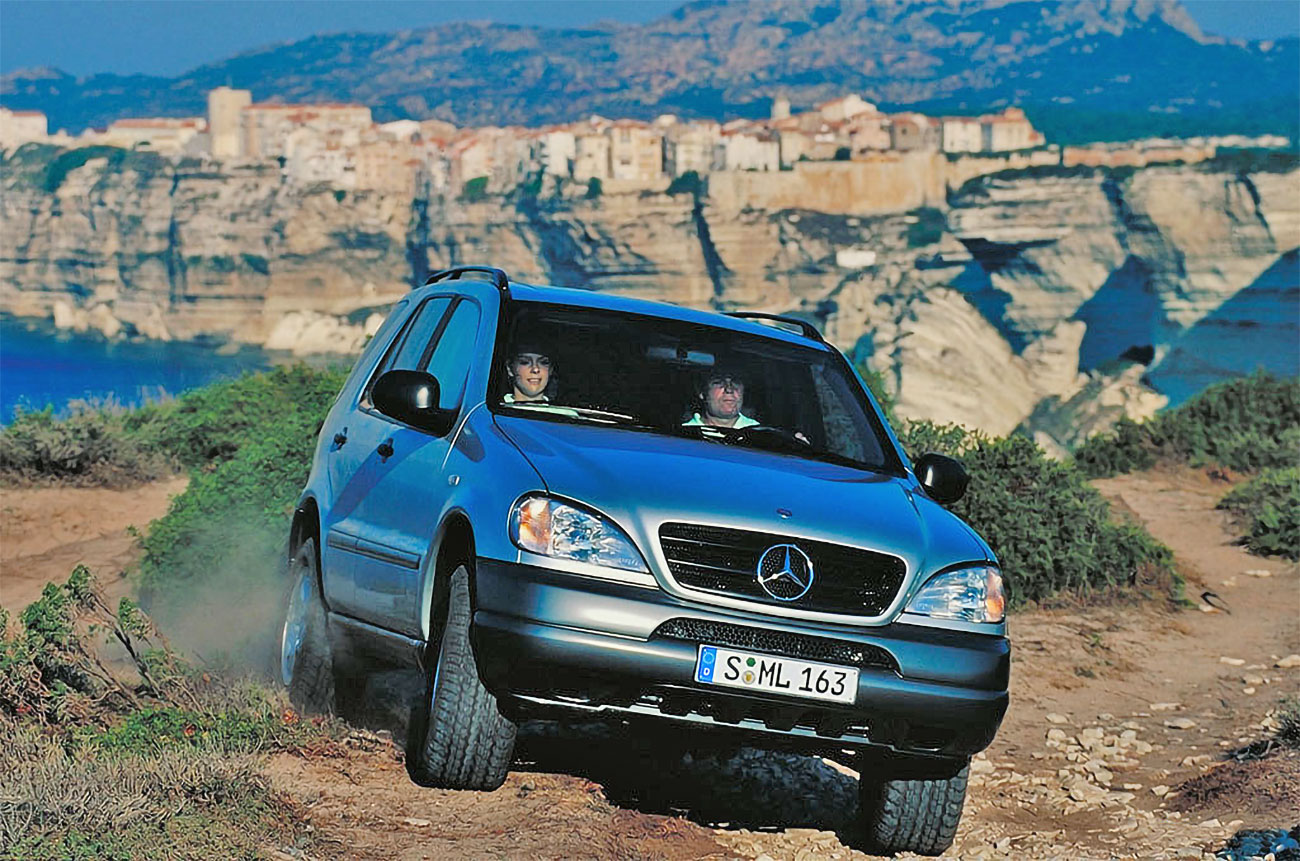
The M-Class was the first Mercedes crossover SUV, and was built at the company’s first American factory, located in Tuscaloosa, Alabama. Despite the name of the series as a whole, individual models were named ML (plus a number indicating engine size, such as ML 230), to avoid a possibly unlikely confusion with BMW M cars.
This problem was eventually eradicated completely when a new policy led to later versions being called GLE-Class.
Mercedes Vaneo (2001)
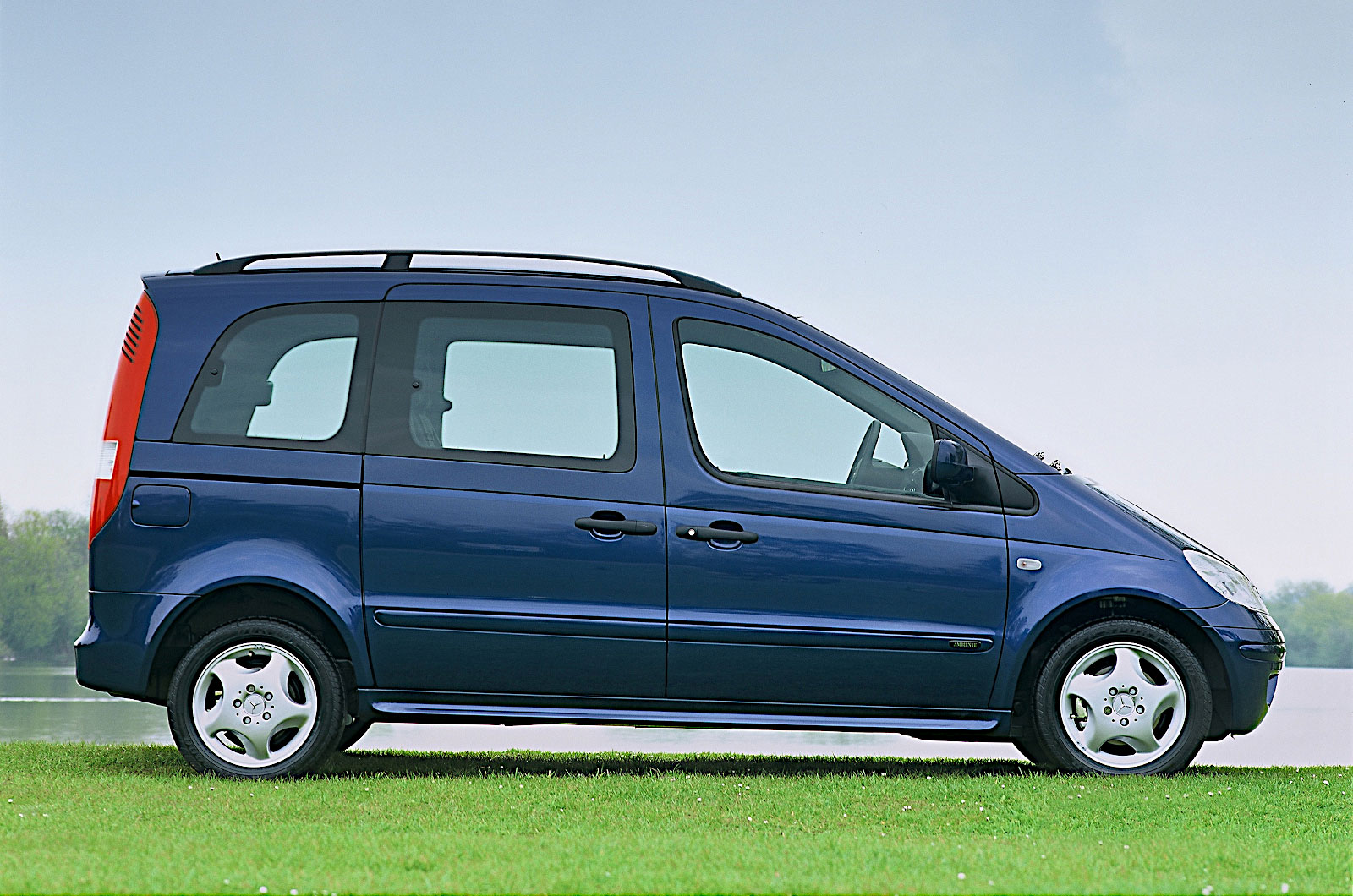
Mercedes described its little monospace vehicle as “a family saloon, recreational vehicle and spacious estate in one”. Although it looked like it was based on a van, it actually wasn’t (being in fact a relative of the A-Class), and Mercedes took pains to point this out, but didn’t help the situation by giving it a name whose first three letters spelled the word ‘van’.
This wasn’t the first vehicle to seem like an odd addition to the Mercedes line-up, but unlike others of which that could be said it wasn’t successful, and was withdrawn from the market in 2005.
Maybach (2002)
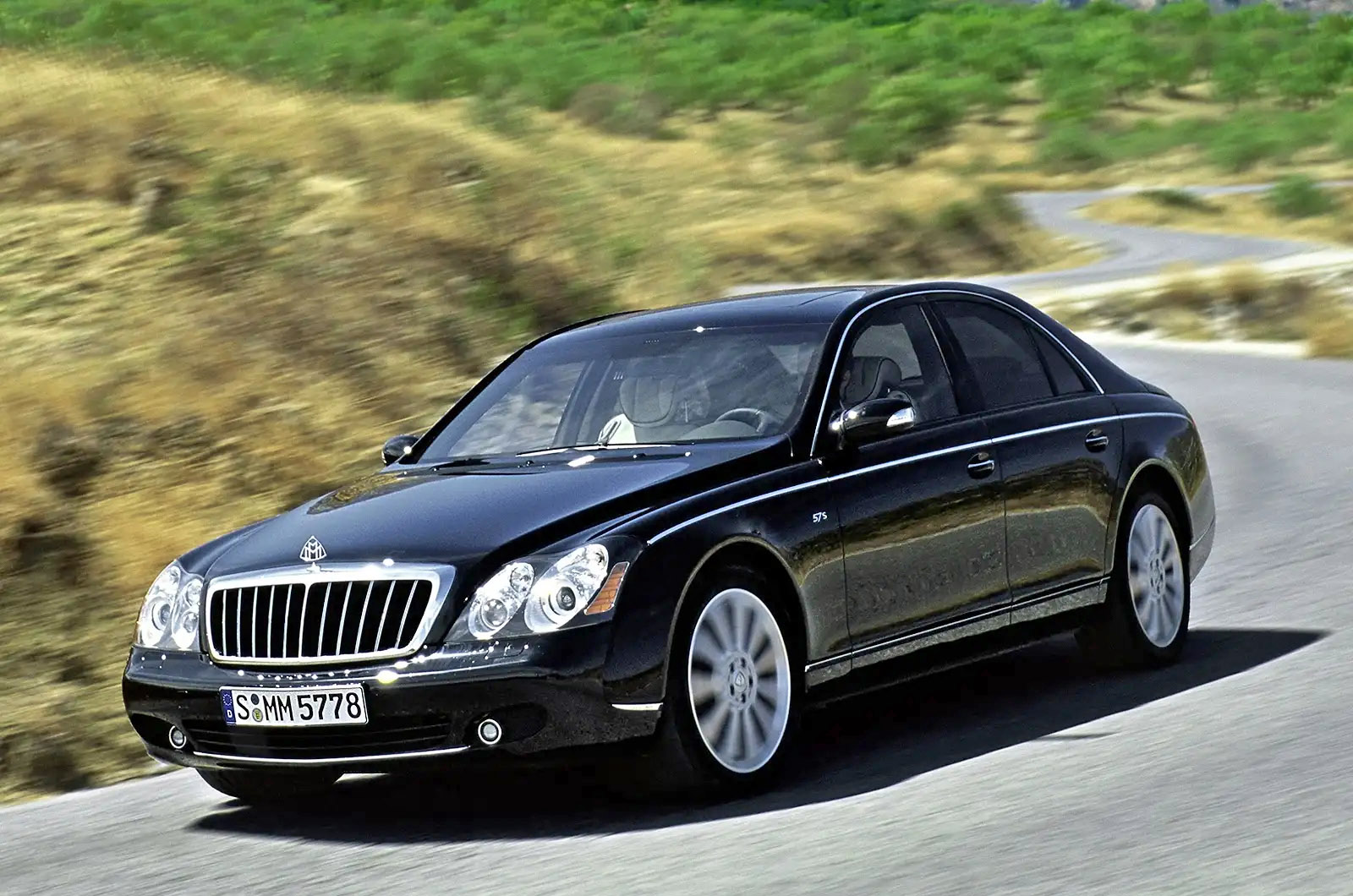
Named after Wilhelm Maybach (who, you’ll remember, had left Daimler nearly a century earlier), the Maybach luxury cars were certainly the work of Mercedes even if they didn’t carry that name. The 57 and the longer-wheelbase 62 were very expensive both to buy and to own – independent research once showed that their UK values fell more in the first year after purchase than those of any other car.
The sub-brand was discontinued in 2013, but ultra-luxury models are now known as Mercedes-Maybach on models like the S-Class and GLS-Class.
Mercedes SLR McLaren (2003)
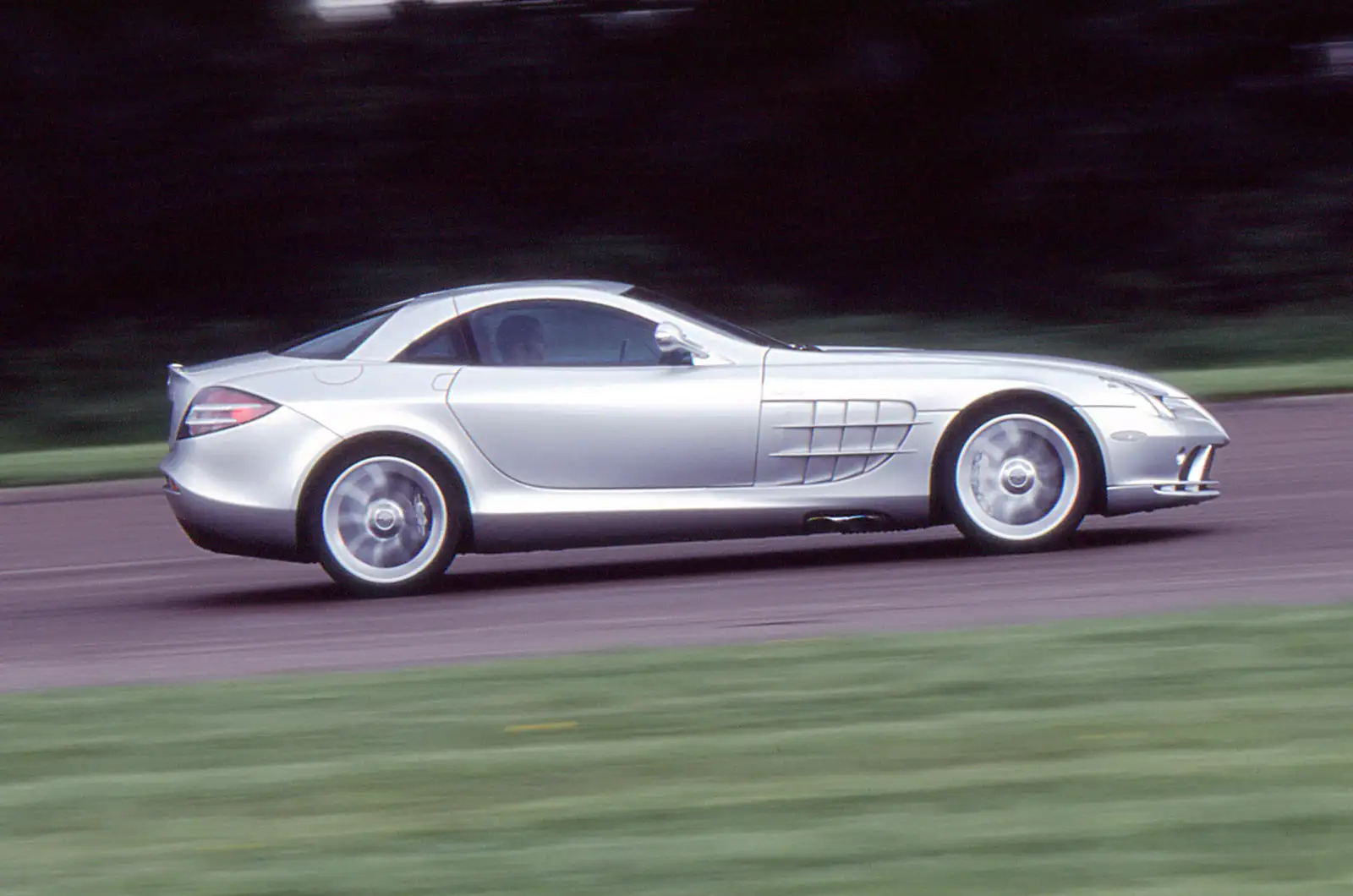
The SLR (for Sport Leicht Rennsport, or Sport Light Racing) was named after a race car of the 1950s, and as the other part of its name suggested it was developed partly by the McLaren Group. Its supercharged 5.4-litre V8 engine, developed by AMG and producing well over 600bhp, was mounted very far back, which meant that the passenger compartment had to be even further back, giving the car a resemblance, at least in profile, to a Funny Car dragster.
“Not quite the all-conquering hypercar we had expected from two of the industry’s greats,” we said, but added, “The SLR was nevertheless a unique and intoxicating beast.”
Mercedes R-Class (2005)
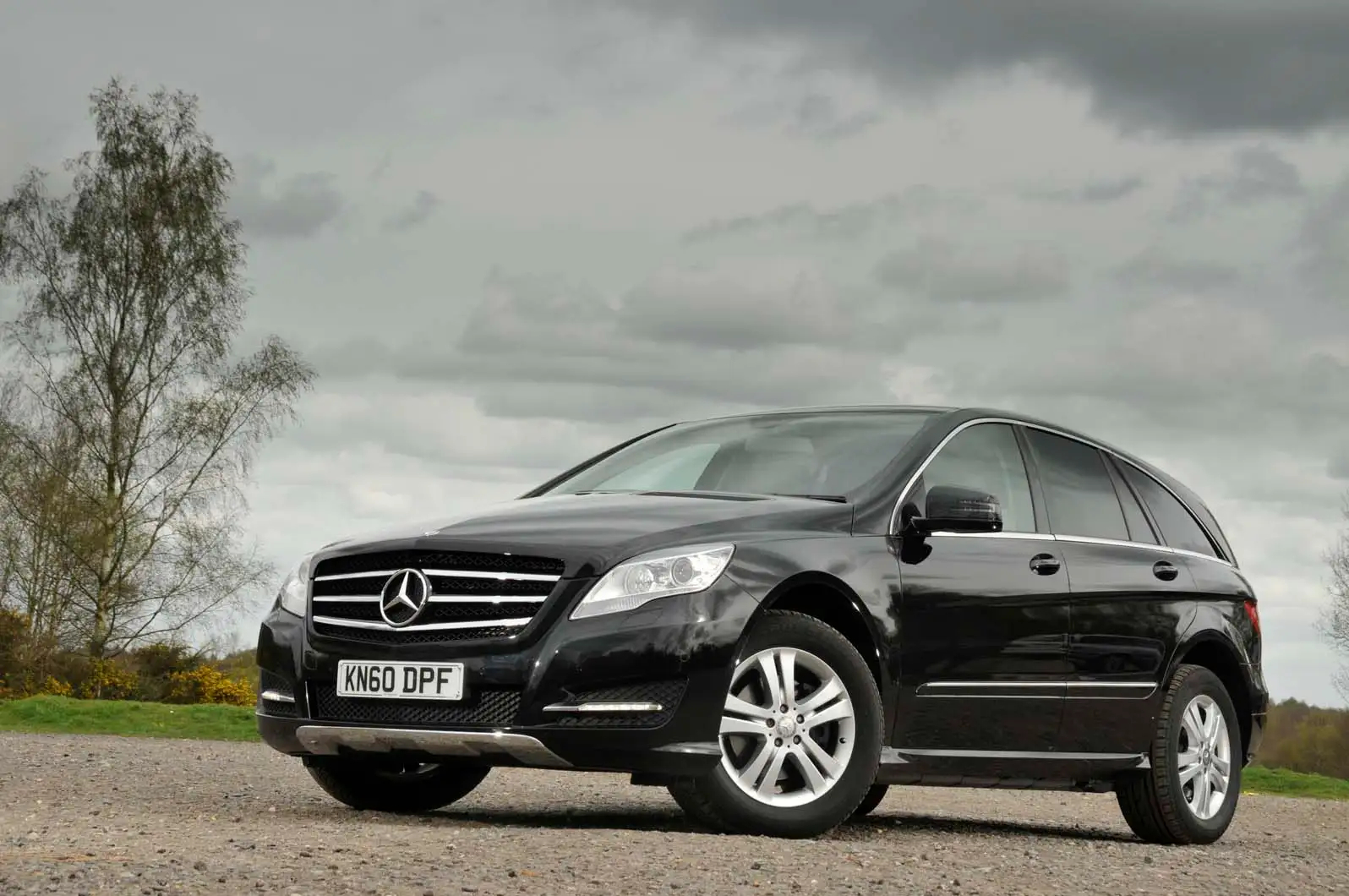
In another example of blurring the boundaries between market sectors, Mercedes combined the familiar ideas of a sporty saloon, an estate, a minivan and an SUV into the luxurious six-seat R-Class, which it described as a Grand Sports Tourer.
As such, it more or less occupied a category untouched by anyone else, though since production lasted for a dozen years there was obviously some demand for it. The 6.2-litre V8 R 63 AMG – “one of Mercedes’ crazier ideas”, we said – was perhaps a step too far, and didn’t last for long; just 200 or so R63s were sold.
Mercedes A 45 AMG (2013)
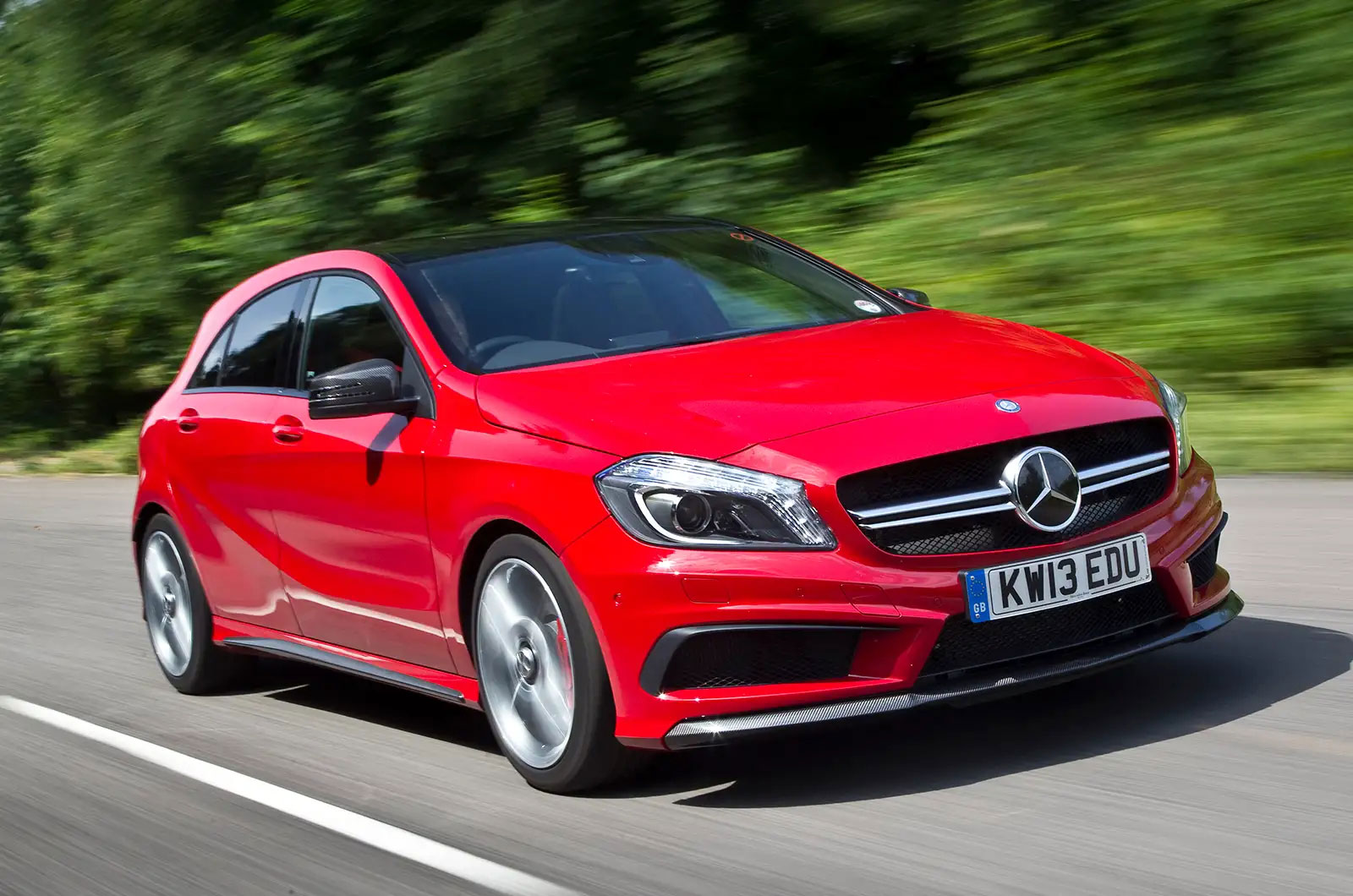
The outstanding feature of the A 45 AMG was its turbocharged 2.0-litre engine, whose output of 355bhp (as originally launched) was the highest of any production four-cylinder unit in the world.
At around the time the car was renamed Mercedes-AMG A 45, this rose further to 376bhp. The successor to this engine, still with the same basic layout, now exceeds 400bhp.
Mercedes G 63 AMG 6x6 (2013)
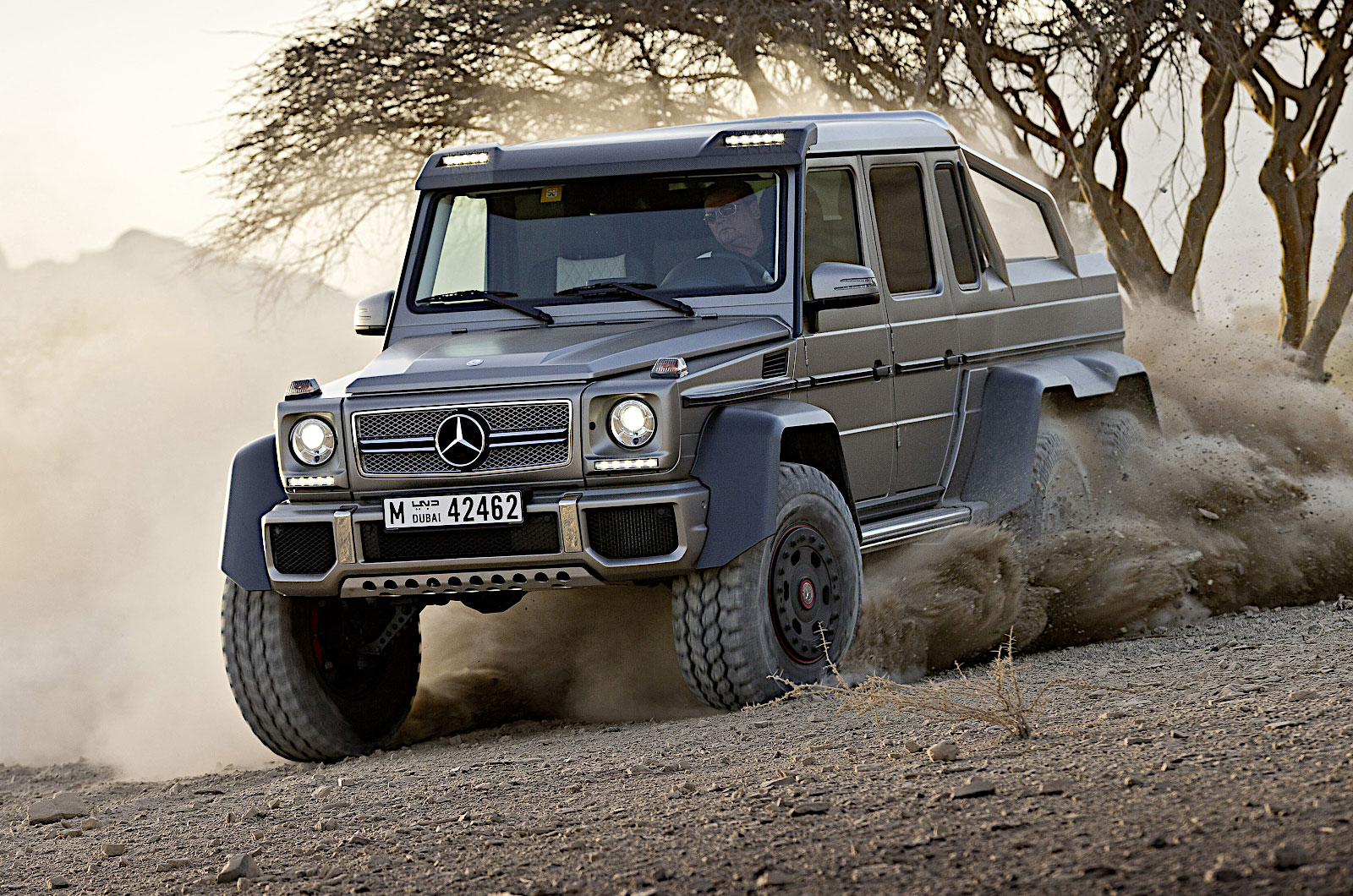
The most powerful G-Class of all has been the G 65 AMG, whose “spectacularly unnecessary twin-turbocharged 6.0-litre V12”, as we described it, produced 621bhp. In terms of craziness, though, it takes second place to the G 63 AMG 6x6, even though that vehicle’s 5.5-litre twin-turbo V8 produced a far more modest 536bhp.
As its name indicates, this one had six wheels, all of them driven. The existence of just one example would have been remarkable enough, but in fact Mercedes built and sold more than 100.
Mercedes-Maybach S-Class (2021)
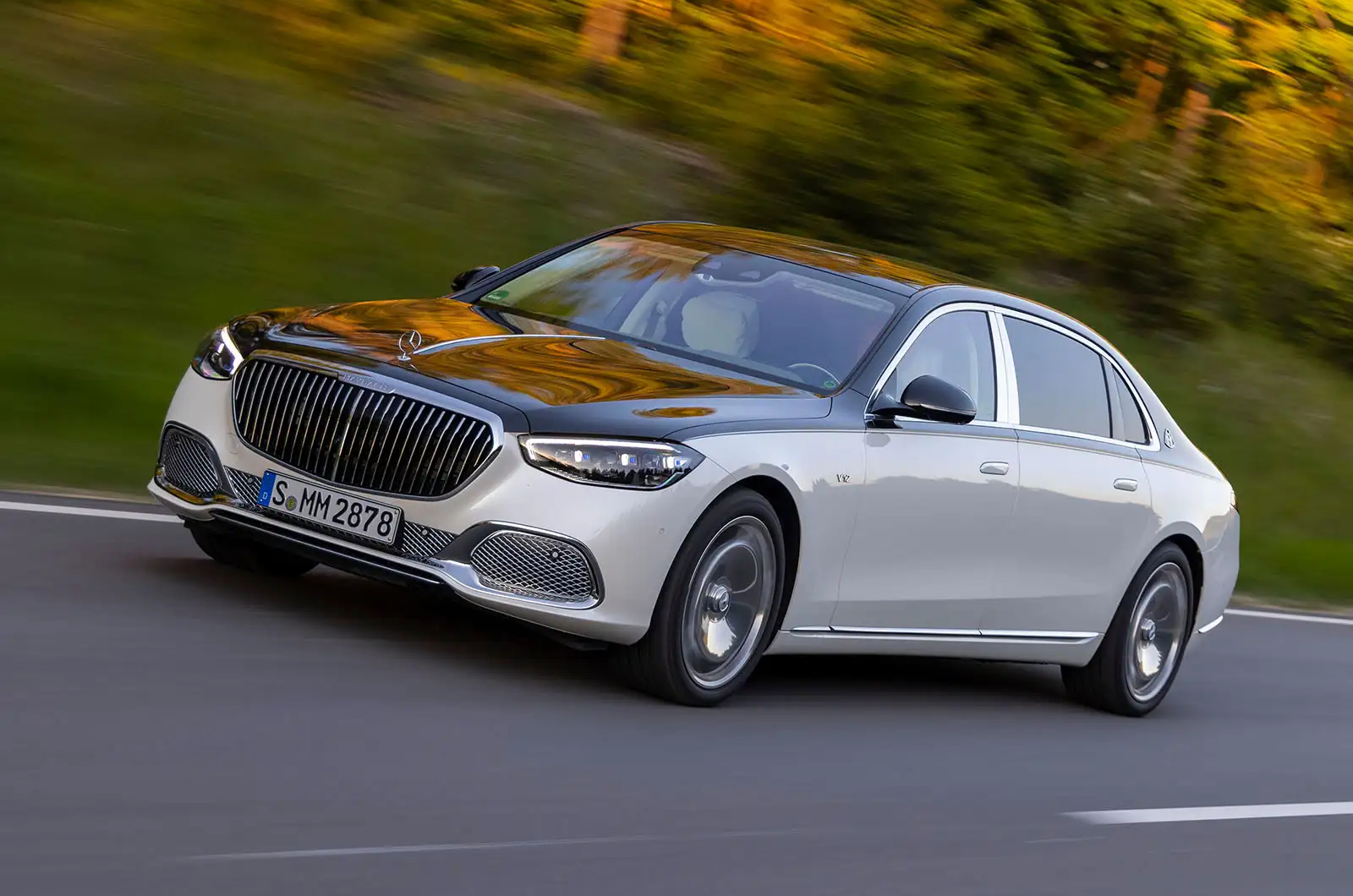
Today’s equivalent of the old Grosser Mercedes models is the top-level S-Class, a perhaps fitting tribute to the genius of Wilhelm Maybach.
Writing of the 603bhp V12 S680, we said it “delivers incredible refinement, strong performance, outstanding roadholding for such a large car, a world-class ride and a truly exclusive passenger experience”.