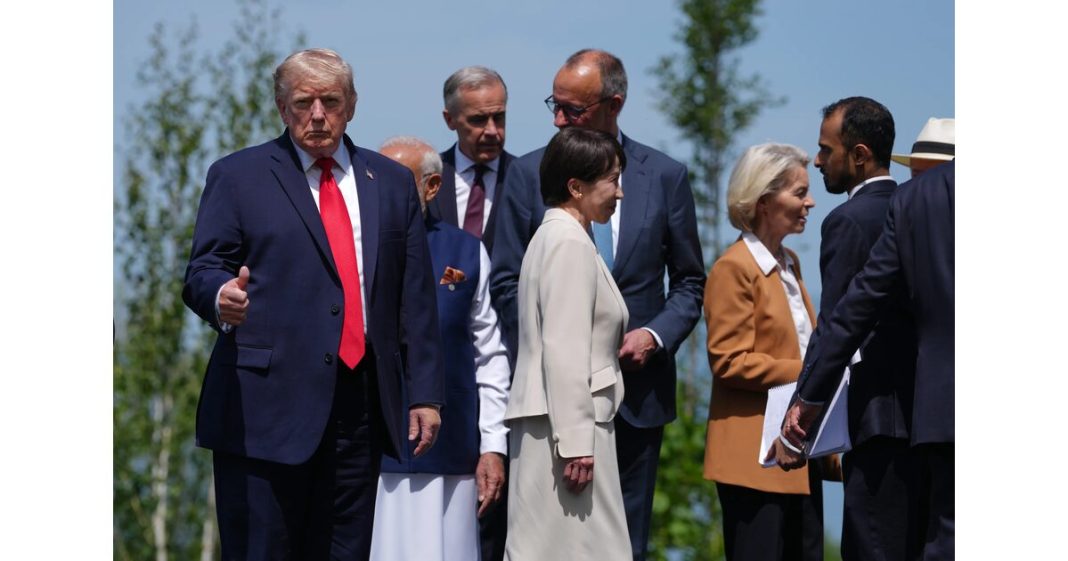
The G7 leaders reaffirmed their commitment to “unimpeded and free transit passage” in the Strait of Hormuz, believing that freedom of movement in this strategic waterway is a fundamental principle of international trade.
In a statement published overnight from Tuesday to Wednesday at the end of the Evian summit, the G7 heads of state and government also gave their support to the multinational, independent and defensive initiative led by France and the United Kingdom to facilitate the resumption of maritime traffic in the Strait of Hormuz.
According to the press release, this initiative could help protect merchant ships, reassure maritime transport operators and support verification operations for the removal of mines that could hinder navigation.
The statement comes nearly three days after the announcement of an agreement between the United States and Iran that led to a gradual resumption of traffic in the Strait. Several media outlets, however, have reported that Tehran is considering implementing fees for certain maritime services.
The G7 leaders also pledged to accelerate the diversification of energy supply routes to reduce the vulnerability of the global economy to the Strait of Hormuz, while strengthening their strategic energy reserves.
The G7 also welcomed the agreement announced between Washington and Tehran, believing that it opens a “historic opportunity” to prevent Iran from acquiring nuclear weapons and to address concerns related to its regional and ballistic activities.
Read more: The US is using an Iranian smuggling tactic to sneak oil out of the Gulf
Located between Iran and Oman, the Strait of Hormuz is one of the main transit points for the global hydrocarbon trade, with approximately a quarter of the world’s seaborne oil and gas volumes passing through it.
The peace agreement, which is to be formally signed this Friday in Geneva, includes Iranian commitments on nuclear issues in exchange for a gradual easing of US sanctions.