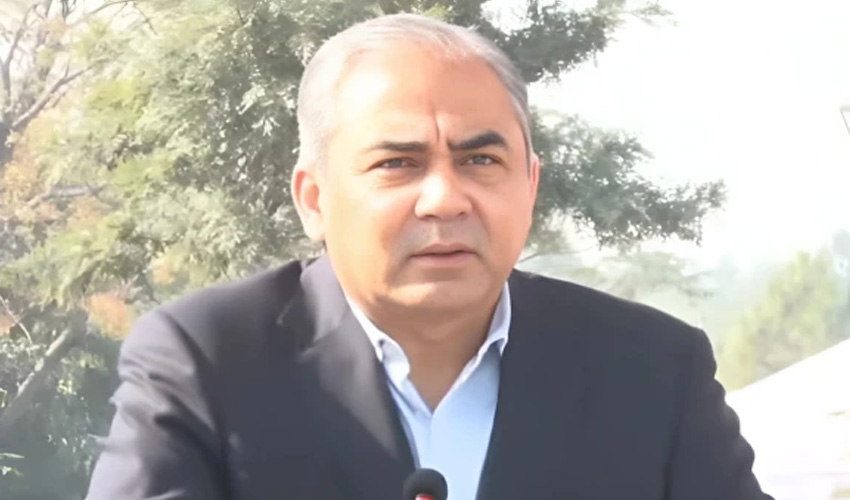
Interior Minister Mohsin Naqvi on Thursday declared that Pakistan’s existing governance system had “collapsed” and was no longer capable of addressing the country’s growing political, economic and administrative challenges, calling for sweeping structural reforms, including the creation of new administrative units and greater devolution of powers.
Mohsin Naqvi:
“The system in which we live, is collapsed. Either you agree or not” pic.twitter.com/kmbiN5n3td
— Ihtisham Ul Haq (@iihtishamm) July 30, 2026
Speaking at the Pakistan Economic Summit in Islamabad, Naqvi said the country’s longstanding problems could not be resolved under the current governance model, warning that Pakistan would continue to face the same challenges over the next decade unless fundamental reforms were introduced.
“The system we are living under has collapsed. Problems cannot be solved through it,” the interior minister said.
He cautioned that without structural changes, discussions about Pakistan’s economic and governance issues would remain unchanged for years to come.
“If this system continues, we will still be sitting here 10 years from now discussing the same issues,” he remarked.
Read more: Maryam Nawaz Tells PPP to Accept AJK Poll Defeat, Rejects Bilawal’s Rigging Allegations
Calls for administrative reforms
Naqvi stressed that Pakistan must address what he described as its basic structural shortcomings through administrative reforms aimed at improving governance and service delivery.
He advocated the creation of additional administrative units, saying the country should move towards a more decentralised system.
“You have to move towards administrative units. Call them provinces or give them any other name,” he said.
The interior minister argued that devolving powers to lower administrative levels would improve governance, accelerate development projects and make government institutions more responsive to public needs.
He maintained that administrative restructuring should not be viewed through a political lens but rather as a practical step towards improving state capacity.
Merit-based opportunities for youth
Highlighting the concerns of Pakistan’s young population, Naqvi said employment opportunities based on merit remained their foremost demand.
He said young people were not seeking financial assistance but wanted equal opportunities to compete for jobs.
“Young people have only one demand: they want jobs on merit,” he said.
Naqvi also remarked that vested interests could undermine progress if allowed to work together, warning that certain elements could disrupt reform efforts.
Economic reforms essential
The interior minister also expressed concern over Pakistan’s growing debt burden, warning that reliance on borrowing without structural reforms would further weaken the economy.
He said economic stability could not be achieved through short-term measures alone and required comprehensive institutional reforms.
Referring to Prime Minister Shehbaz Sharif’s work ethic, Naqvi said the premier regularly worked between 12 and 14 hours a day but argued that even longer working hours would not produce lasting results unless the governance system itself was improved.
“Even working 18 hours a day amounts to firefighting if the system remains unchanged,” he observed.
Naqvi also called for greater involvement of the business community in economic policymaking, saying sustainable economic growth would not be possible without active participation from the private sector.
“The economy cannot improve without the business community playing its role,” he said.
Urges political consensus
The minister urged political parties to rise above their differences and work together to strengthen Pakistan’s institutions.
While acknowledging that the current governance model was not entirely flawed, he said comprehensive reforms were necessary to ensure long-term stability and development.
Naqvi emphasised that governance reforms should become a national priority rather than a partisan issue.
He said political consensus would be essential for implementing meaningful institutional changes capable of addressing Pakistan’s persistent governance and economic challenges.
Governance key to CDF initiatives
Speaking informally to journalists after addressing the summit, Naqvi said the efforts of Chief of Army Staff and Chief of Defence Forces Field Marshal Syed Asim Munir to improve the country’s situation would not produce lasting results unless politicians also fulfilled their responsibility to reform the governance system.
“Unless politicians fix the country’s system, the Field Marshal’s hard work will be of no benefit,” he said.
Naqvi added that the CDF had repeatedly affirmed his commitment to democratic continuity and had made it clear that democracy would not be allowed to derail.
According to the interior minister, lasting national progress required cooperation among all major political parties.
“Not only the PML-N and the PPP, but the PTI should also join efforts to improve the system,” he said.
Rules out presidential system
Responding to questions from journalists, Naqvi dismissed speculation about replacing Pakistan’s parliamentary model with a presidential system.
He said the current government would complete its constitutional term and reiterated his support for democracy.
Although he acknowledged that democratic systems differ across countries, he maintained that reforms should be pursued within Pakistan’s constitutional framework rather than through any change in the form of government.
Naqvi also rejected speculation that he was being considered for the foreign affairs portfolio, saying he would continue serving as the country’s interior minister.
On the legal cases involving former prime minister Imran Khan, the minister declined to comment on their merits, saying the courts would decide the matter in accordance with the law.
His remarks come amid an ongoing debate over governance reforms, administrative restructuring and efforts to revive Pakistan’s economy through institutional changes and broader political consensus.