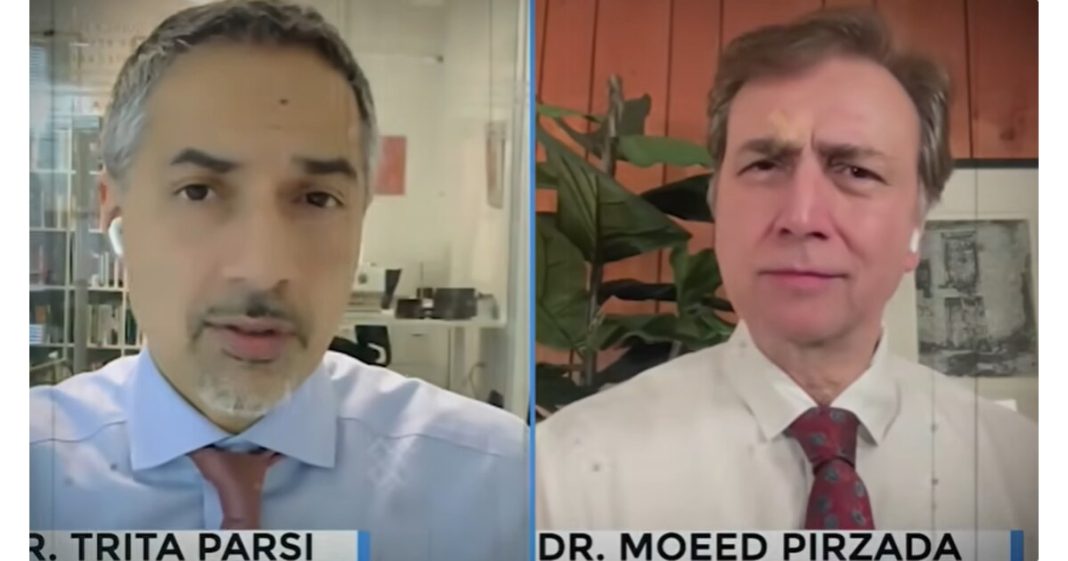
Dr. Trita Parsi, Executive Vice President of the Quincy Institute and one of America’s foremost experts on Iran, joins Dr. Moeed Pirzada, Editor of Global Village Space, for a deep analysis of the rapidly changing geopolitical landscape amid the Iran war crisis.
As Donald Trump meets Xi Jinping in Beijing during one of the most volatile moments in the Middle East, this discussion explores whether China will pressure Iran, whether Trump can secure a deal, and how the conflict is reshaping alliances across the Gulf and South Asia.
Title:WILL INDIA JOIN UAE AGAINST SAUDI ARABIA & PAKISTAN? | DR. TRITA PARSI & MOEED PIRZADA
Date: 14th May, 2026
Dr. Moeed Pirzada: Assalam-o-alaikum everyone. I have the privilege of requesting Dr. Trita Parsi to join me once again. Dr.Parsi, Thank you so much and warm welcome.
Dr. Trita Parsi: Thank you.
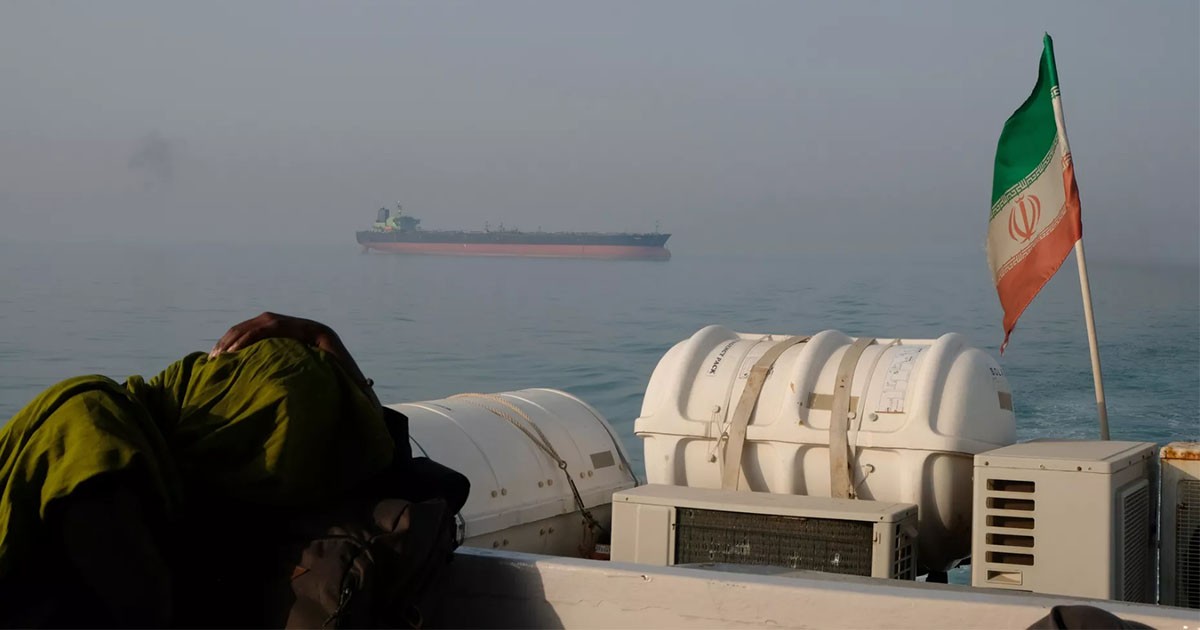
Dr. Pirzada: We are talking at a time when President of the United States Donald Trump is in China meeting President Xi Jinping along with a very heavy delegation. He has decided to take the secretary of war Pete Hegseth along with him. Before leaving for China,Trump said that he doesn’t need China’s help in terms of dealing with Iran. Iran has according to the reports further tightened its grip on the Strait of Hormuz. So how do you look at the whole situation?
Dr. Parsi: I think frankly Trump is showing up in Beijing from a position of weakness and embarrassment. He has started a war that he thought was going to be finished in 4 days. It has been more than 60 days he still does not have control over the situation. He cannot coerce the Iranians into agreeing to some form of a capitulation even if what they’re discussing now is increasingly a compromise. Nevertheless, on some variables, he wants complete capitulation from the Iranians. And this war has messed up the global economy.
The repercussions are felt far and wide. And much more so in Asia than it is in North America. And once again, the United States, intentionally or unintentionally, doesn’t matter, has been a source of instability. And the Chinese are being seen increasingly as a force for stability. So he’s showing up in Beijing not even having control of this situation. So I think that putting him in a bad situation is part of the reason why the trip has been delayed at least once because he didn’t want to go there earlier on hoping that by now it would have been resolved and it still isn’t. Trump may have the hope of being able to get the Chinese to come to his side a little bit at least and put pressure on Iran to agree to various American demands in the negotiations.
I find that somewhat unlikely. I think there is a likelihood that if there’s a very reasonable proposal on the table that the Chinese also think benefits them. Chinese will then use some of their leverage with Iran to push them not hard but push them a little bit.
But if there isn’t a reasonable proposition on the table then I find it very unlikely that the Chinese would agree to make themselves an instrument in what they would view as a failing American strategy. It’s much better for the Chinese to keep a distance, wash its hands of it, and not have anything to do with it than to get involved. So, for Trump to be able to succeed in getting the Chinese on board, it would require a change of his position to begin with in the negotiations.
Moreover, if he seeks to play hard ball with the Chinese and put pressure on them, potentially confiscate tankers with Iranian oil that has been purchased by China, we’ve already seen that the Chinese have taken pre steps to make sure that it’s illegal for Chinese companies to comply with American sanctions, which means that the Chinese are really stepping up their counter pressure. And this was probably done in preparation for this trip to make sure that Trump should not even try to go down that path of thinking that he can pressure the Chinese into playing on their own Trump’s team when it comes to Iran.
Dr. Pirzada: Dr. Parsi, but the summit meeting between Xi and Trump is not all about Iran. While Iran can actually be an important item on the agenda, this is also about trade, about technology, about Taiwan, about artificial intelligence, about rare earth metals. Do you think the Chinese will actually be looking after their own strategic interest with the United States or would they really be taking a stand for Iran?
Dr. Parsi: No, the Chinese are not going to take a stand for Iran, that is not part of their calculation. That’s not how they operate.
But some of the interest that Iran has coincides with China’s interest as well. So for instance, you note that the earlier draft resolution that Bahrain had put forward under chapter 7 that would have taken a very significant step against Iran’s control of the Strait of Hormuz. Not only did the Russians veto it, but the Chinese did as well. And in the past, the Chinese could have very easily just decided to hide behind the Russian veto, but they vetoed it themselves. And they did so partly because the Iranians had pushed them to do so and showed that if Iran falls in this war, then the United States will be in a very good position to also pressure the GCC states to completely stop all their oil sales to China.
And since China is getting 40% of its oil from the Persian Gulf, this would be a devastating position for the Chinese to be in. So the Chinese from their own standpoint of their own self-interest recognize that further escalation that would be potentially leading to the defeat of Iran would play very badly for China itself and as a result acted in this way. But they didn’t do so as a favor to the Iranians.
Dr. Pirzada: Dr. Parsi, 24 hours ago there was in fact some confusion in and a flash on Google AI as if the UN security council resolution put forward by Bahrain and supported by the United States has passed asking Iran to stop attacking the maritime trade. Now I cannot find it. Now Google says that it hasn’t really passed. It’s facing resistance from China and Russia. Previously Google basically said that Russia and China have decided to abstain. It is being co-sponsored resolution number 112 to 115. But right now the UN security council site is silent about it. What if such a resolution passes? What would be Iran’s position then?
Dr. Parsi: Well, looking at the draft of that resolution, it appeared that it had removed any reference to chapter 7, although others have seen other things, but the draft that I saw does not any longer work under chapter 7, which would be a significant change to it. It means that it would not be a chapter that could lead to the UN Security Council authorizing the use of force against Iran. Now whether that is sufficient to prevent the threat of a veto from Russia or China remains to be seen. I suspect that it would still be very difficult because the language I saw was nevertheless very much a preparatory step to put Iran on warning and if Iran did not paved the way for a new chapter 7 resolution. I would suspect that the Russians and the Chinese would put a stop to that as well because otherwise they’re just putting themselves in a corner in which within weeks or months they would be faced with another resolution and they would have to either cave on that or veto it. So I think they will push back very hard in order to even close the pathway for such a development.
But if it were to be passed that would be an indication that things have changed dramatically. It would indicate that Russia and China have lost their patience with Iran and that they believe that some sort of a counter pressure on the Iranians is needed that is not just coming from the US but also from the UN in order for the Iranians to shift their position. I don’t see them taking this right now because right now it is not so that there is a very reasonable proposal on the table and that it is Iran that is being stubborn and as a result refuses to agree to that proposal. That is not the perception of the Russians or the Chinese.
Dr. Pirzada: Trump and Xi meeting is an important milestone during this war. What do you think will be the outcome for Iran? What President Xi is going to advise Trump?
Dr. Parsi: I think the most likely outcome is that the US side will recognize or will realize that their ability to get the Chinese to do things for them on the Iranian side while the US continues to insist on some of the demands that it currently has is very slim and that as a result there’s going to have to be some sort of a change.
That change may be that the Trump administration concludes that some form of an additional military confrontation is needed, but it may also be a realization that there needs to be a renewed and more disciplined effort at a balanced outcome and compromise in the negotiations. I think either way they’re going to come back realizing that any belief that China is going to be the entity that puts pressure on Iran, which may happen in the future, is currently not in the cards.
Dr. Pirzada: Dr. Parsi, correct me if I’m wrong. My perception is that President Trump’s only interest is in opening up the Strait of Hormuz. If he manages to open up the hormuz, he will lose interest in this conflict. He’ll forget about it. But in the case of Iran, I mean the two ways this conflict can end. Iran can get some sort of deal or Iran would not get a deal. What happens if Iran gets a deal? What happens if Iran doesn’t get a deal?
Dr. Parsi: I think the strait is very important. But I think that Trump’s position on it is that a strait that is open is not necessarily a strait that is not controlled or partially controlled by Iran. Iran could very well be in control together with Oman for instance of the strait and from Trump’s perspective it would still be open because most traffic would still flow and as long as that traffic flows even though there’s a toll or some sort of other mechanism all prices will come down.
So counting on Trump to uphold the principle that there should be no toll, I think is a foolish bet. That is not where his interest is. The US itself is not going to be paying those tolls because the US is not importing a lot of oil from the Persian Gulf. I think right now much of the focus is actually on the stockpile of 60% enriched uranium to the extent that it frankly doesn’t make sense to me that the Iranians and the Americans have attached so much importance to that variable and that that is actually the thing that currently at least appears to be more likely to cause a collapse or at least the failure of the talks in the short term.
Dr. Pirzada: Dr. Parsi I was thinking on the contrary that this overexaggerated emphasis on the nuclear enrichment and the stockpile is actually a sort of a point on where agreement and consensus can take place. What if Trump says that Iranians have agreed to hand over the enriched material to the United States or to Pakistan or to Russia? They have guaranteed they’re never going to make a nuclear weapon. They’re not going to have an enrichment for the next 12 years. And here therefore, I mean, in view of all my success, I’m ready to lift off the primary and the secondary sanctions. I’m going to recommend and I’m going to release the $27 billion. I mean, will he probably sell at that point? He can probably sell that deal to his voter base. I mean, what do you think of that?
Dr. Parsi: Well, I think that is absolutely a very likely scenario within the scenarios of a deal that you have very significant sanctions relief if not total primary sanctions, very crucial and this is something Trump can do fast through executive orders. But I do think that currently the administration is not willing to go down that path unless the Iranians give up 100% of the HU and they can ship it to a third country.
But the US position is that they don’t want to see the Iranians down blending it or keeping a portion of it on their soil. It should be remembered that the Iranians shipped out 98% of their stockpile in the JCPOA. Perhaps Trump is asking for 100% because he wants to get a deal that is stronger than Obama’s and that that is the, you know, the real driving motivation for insisting on 100% because 98% is still very significant. It’s not a bad thing at all. But at this point, absent that I don’t see the rest happening.
But you’re quite right that if there is an agreement that also includes some sort of agreement perhaps both sides will show more flexibility on the stockpile that there can be a deal and that deal would entail significant amounts of sanctions relief and that Trump will have very little difficulty selling that to his base. He will have difficulty selling it to the Washington foreign policy elite who seems to love sanctions more than anything else in life. and is very upset about giving up any sanctions.
But for the American public, if this is ending the war, opening the straits, opening the pathway for American businesses to enter the Iranian market, all of those things are huge wins. And non significant constituencies will be like, well, we shouldn’t have lifted sanctions for this. That constituency only lives in Washington DC, and that’s not the constituency that Trump cares about.
Dr Pirzada: Dr. Parsi, this question is very important to my understanding and to many people if Iran doesn’t get a deal I mean Iran has suffered a lot in this war I mean many people across the Muslim world and the global south are very happy that Iran has targeted Israel. Iran has targeted the GCC countries. It has destroyed so many of the American aircraft and the bases but Iran has taken so much hit and it’s been destroyed if it emerges from this conflict without a deal what will be the political implications for the Iranian republic?
Read more:Will West’s “New Loyal Muslims” in GCC survive Trump’s War on Iran? Laith Marouf w Moeed Pirzada
That can only happen through some sort of diplomacy in a deal. Absent that, you may have a de facto new order, but it is contested. It is by definition unstable. It is by definition constantly under threat and it will not entail any sanctions relief formally at least. That is a suboptimal situation for Iran. It would mean that through the war the Iranians have managed to amass a large number of chips but they failed to cash in the chips. And this is where diplomacy is so critical to take those chips that have been gained in the war and cash them in into a new stable uncontested order.
Dr. Pizada: In the last 72 hours, Israel’s Prime Minister Benjamin Netanyahu appeared on 60 Minutes and among other things, he also said that the war with Iran is not over. What do you make of it?
Dr. Parsi: Well, from the Israeli standpoint, they want a forever war. They want to have a constant state of warfare that enables them to at any time continue their attacks on Iran. They were not in favor of the ceasefire. They wanted the United States to continue to bomb. So I think from his standpoint saying something like this reflects his interest in keeping the war alive.
I think it should be very clear of course that had it not been for Netanyahu I don’t think there would have been a war in the first place. Obviously, Trump is responsible for his own decisions, but absent that pressure from the Israelis, I don’t think he would have made this decision.
And from the Israeli standpoint, as long as Iran is still standing, they will also have an interest in continuing the war because their aim is to create a scenario in which Israel is so undisputed in its military dominance that the Iranians simply cannot challenge it. And right now, they still can. They still have deterrence against Israel. They may in some ways even have escalation dominance against Israel. So the outcome is short of optimal for the Israelis. And so it’s not surprising that Netanyahu is saying that the war is still going on.
Dr. Pirzada: But I’m surprised that Netanyahu is not talking of Iran’s drones and missile systems because strategically looking at it, Israel will be extremely uncomfortable with an Iran that has a huge stockpile of effective missiles, drones, you know. So what do you think? I mean, what is the exact Israeli interest at the moment?
Dr. Parsi: Well, I think at this point, one of the key things that they would like to prevent is a deal that lifts sanctions on Iran. From the Israeli standpoint, again, the aim is to keep Iran weak so that Israel is in a dominant position. You can do that by going to war in an intense manner, reduce Iran’s power. They tried. They did not fully succeed, but nevertheless, but you can also do it by having sanctions slowly but surely degrade Iran’s industrial base over decades. And if the Israelis are now faced with a situation in which war is over, there’s a ceasefire, which is bad enough for them, they will do everything they can, I believe, to resist any deal that allows sanctions on Iran to be lifted because that takes away that other pressure point they had to keep the Iranians as weak as possible. And we have seen the Israelis have opposed every deal that contains sanctions relief. And there is not going to be any deal possible with Iran that resolves this issue that does not contain sanctions relief.
“Have several countries basically manipulated social media with bot forms with fake addresses to break the American uh sympathy to Israel to break the American Israeli alliance because they think it’s in their interests. And they do it in a clever way. You know, it’s like you hear a text message. I’m a you know red-blooded Texan. I always supported Israel but I can’t stand what they’re doing. I’m turning against Israel. And then you trace the address to some basement in Pakistan.”
Dr. Pirzada: Dr. Parsi, you might have seen another digression or I would say or an interesting development of the past 48 hours that regards Pakistan. We believe that Pakistani present regime and the administration have done everything to please Donald Trump. They’re actually part of this negotiation for Donald Trump and the Donald Trump has used the Pakistani government and the prime minister for at least four times for bailing himself out in difficult situations. Yet a story was published on CBS citing the US officials that Pakistan is providing protection to Iranian reconnaissance planes and Iranian planes. It’s a betrayal. I mean what kind of ally a mediator Pakistan is. Then this issue was raised to Pete Hegseth and to Dan Caine in the Senate briefing by Lindsey Graham and then Lindsey Graham said this is why the war is not going anywhere and both of them were put into such a difficult situation that they couldn’t really say yes or no about it. Then in 60 minutes, Netanyahu also made very surprising comments about Pakistan that Pakistani social media is being used to target Israel. What do you think is happening?Why is Israel bringing Pakistan into it?
Dr. Parsi: So we’ve already seen that both the Israelis and the Emiratis have engaged in attacks on Pakistan. We’ve seen how they have expelled a large number of Pakistanis workers from the UAE. The majority of them appear to be Shia or the vast majority of them appear to be Shia. And I think frankly it is a way of pushing Pakistan out of seeking a mediated end to this war.
The Emiratis don’t want an end to the war. They want the United States to restart the war and go at Iran much much harder than they did before. They have now Iron Dome systems provided to them by the Israelis. So they believe that they are better protected than they were during the war and as a result more ready for that war. And if the Pakistanis are successful in getting a negotiated settlement, that goes against their interest just as much as it goes against the Israel the interest of the Israelis.
So it is not surprising although it is profoundly dishonest of Israel and the UAE to attack Pakistan on trumped up charges whereas the real opposition that they have right now is that Pakistan is trying to play a role to end this war.
Dr. Pirzada: Dr. Parsi, a totally new orientation alignment is emerging in the region. I mean I’m glad that you mentioned it. UAE is so upset from Pakistan. A few days ago when Pakistanis sent their air force squadron and a contingent of 13,000 combat troops to Saudi Arabia around 11th and 12th of April immediately the first reaction from UAE was to withdraw $3.5 billion which they had kept as reserves in the in the Pakistan’s state bank and since then the expulsion of the Pakistanis then the statements you’re referring to and a new excess is developing between the UAE and Israel and there have been more than one analysis published in New York Times or Washington Post that how UAE is now doubling up in its relationship with Israel and with United States. Do you see a new strategic alignment shaped in the region between Israel, UAE and also India being very close and the Indian prime minister is about to visit UAE? I wonder if he’s already in the UAE right now or not. Yes or no?
Dr. Parsi: First of all the alliance between Israel and the Emiratis goes back of course to the Abraham Accords. What we’re seeing now is the manifestation of what was the very intent of the Abraham Accords. It was supposed to be an anti-Iran alliance. It was not a peace deal. It had nothing to do with helping the Palestinians. Obviously, it was none of these things. It was just a new reiteration of an old idea, which is to organize the entire region-Arabs, Jews, against Iran. This has been at the center of American foreign policy for the last 30 years. It’s been called different things, dual containment, etc., etc., but at its core, it was the same idea.
But it’s a new iteration, some new elements to it, particularly the fact that the Israeli angle here is now explicit. And now we see what it actually means. It means that the Emiratis extremely foolishly made themselves frontline states in Israel’s enmity with Iran. The Emiratis attach themselves to Israel’s enmity Iran, even though the Emirates’s own enmity with Iran is much more resolvable, not at all as deep as the problems between Israel and Iran. But not only did it do so, it did so while it itself is geographically right across the waters to Iran, whereas Israel is more than a thousand miles away. So a country that is bordering Iran essentially made itself a part of Israel’s enmity with Iran whereas Israel is a thousand miles away. This is from a strategic standpoint just inexplicable.
And now the Emiratis are paying the price for it because they were hit harder during the war than the Iranians were. And at the end of the day, given the sensitivity of the entire Emirati model, which is to have this island of stability to be able to have these cities of Dubai, etc. That is, the Iranians don’t have to destroy the UAE or do even significant damage. They can just destroy the sense of security that is necessary to make that model work. and destroying that sense of security is not particularly difficult.
Now, where is India in all of this? India was moving in this direction. But I’m not entirely clear that India wanted it to be translated into what it is today. I don’t think the Indians are looking for a conflict with Iranians. They have historical civilizational ties to Iran. The Iran war is very unpopular in India, including amongst those who are very supportive of Modi and who otherwise have not been too critical of his shift towards Israel.
The Indians are also starting to see increasingly that the Israelis had zero consideration of what this war would mean for India, which has suffered tremendously because of these higher oil prices and the fuel shortages. That was not even a factor for the Israeli calculation. So this seems to be a partnership that is really one way in which the considerations are not particularly mutual and now they’re seeing what is happening to the UAE.
Now of course, India itself has this close relationship with the UAE but whether India really wants to walk deeply into this I find unlikely. I think there’s going to be strong resistance in India to that because India is too big and has too much of a decision making process, a process in which these decisions are weighed carefully compared to a small thiefdom like the UAE in which decision-making is all in the hands of one or two individuals.
So I think all of these factors point to a reality in which the Indians are going to continue to have the relationship with the UAE and and Israel, but it’s probably going to they’re probably going to resist getting dragged into this conflict in the same manner that the UAE failed to do or actually openly decided not to do.
Dr. Pirzada: Dr. Parsi, you’re right that India has a multi-layer decision process. You know, I was able to talk to someone who was sort of familiar with the decision-making in New Delhi and that source told me that in September 2025 Pakistan signed a mutual defense pact with Saudi Arabia. Muhammad Bin Zayed dashed to New Delhi within the same days and among other things, he first of all requested a similar mutual defense agreement with India and the Indians were at pains to politely explain to him that India is a nationalististic sort of nation state army.
It has never entered into defense packs with another country. It is not possible for India. India will support the UAE and all that but cannot have a defense. But the source tells me that MBZ also or his delegation also said to the Indians that they want to have more Indian human resources in the UAE and they want to get rid of the Pakistanis.
They don’t trust the Pakistanis anymore. This was like in September October 2025, and now we see a mass expulsion of Pakistanis from UAE. In the last few years the percentage of the Pakistani human resource in UAE is actually going down. The percentage of the Indian human resource is actually going up in the UAE.
So UAE is actually has some sort of ambitions you know and when they moved out of OPEC and OPEC+ the analysis which I read is that this is long due because UAE wants to end up the political leadership of Saudi Arabia they thought that they have an equation in which they will be the economic engine and Saudi Arabia will be the political leader. But when MBS also wanted to have a sort of an economic muscle with the NEOM city and Riyadh becoming the regional center of the multinational companies, the Emiratis wanted to have their own autonomy. So do you think that there’s a new kind of orientation and a new regional situation is taking place within the GCC and the region?
Dr. Parsi: Yes. I mean look, this war is an inflection point. I don’t even know if the GCC any longer is a functional entity or an entity through which we can understand the region. The divergence of interests between the UAE and Saudi Arabia, the UAE and Oman, the Qataris and the Kuwaitis, the Bahrainis. I mean the divergence of interest is now profound. There was already that trajectory before the war. The war has accelerated it and made it more open.
Again, this entity was created to deal with a specific geopolitical circumstance, an enduring one, but one that nevertheless does not exist any longer in the same way. And as a result, the very utility of the GCC in my view should be questioned. That’s not to say that these states should rush in and hug Iran or anything like that. The bottom line is if they’re continuing to try to achieve their security through an entity in which the divergence of interests between the states that are part of that entity are at this level, it is not going to succeed and it will probably cost them their security.
Within that, of course, the investment that many states have made in the GCC or in certain parts of the GCC are also going to have to be reassessed, not necessarily abandoned but there has to be a reassessment because the situation is profoundly changing.
Dr. Pirzada: The question is that there were statements from former Israeli top officials and also analysis in the Israeli media that Turkey, Pakistan, Qatar and Saudi Arabia are creating a Sunni alliance that is detrimental and dangerous for Israel. Right now we also see an alienation, a sort of alignment between UAE and Israel. Egypt has been brought in with its own air force into the UAE. What do you make of it? Turkey chose the Sunni alliance.
Dr. Parsi: So I think there are new constellations that are being formed precisely because the old constellations no longer are fit for purpose and one of course is emerging between Turkey, Egypt, Saudi and Pakistan. I’m not so sure that it is designed to be a Sunni alliance against Israel or a Sunni alliance against Iran.
There are some elements and at times reporting that suggests that Pakistan and Turkey in particular were pushing Iran to join this and that the focus is not a Sunni alliances against Israel but rather in a reaction to the fact that the Israelis as a result of the US completely lifting all constraints on Israel and allowing the Israelis to do whatever they wanted in Gaza to the point that the Israelis thought that they could either bomb Doha without any consequences has now led to a scenario in which the Israelis are openly talking about their hegemony in the region and these regional states are openly talking about how Israel is seeking hegemony.
These states had invested so much of their security in the American umbrella. Officially it was in order to balance against Iran but unofficially it was also a way for them to have a guarantee against Israel. But the Doha attack revealed that that alliance with the United States does not necessarily protect these states against Israel. And as a result, they have to form their own coalitions configurations in order to be able to deal with what they see as an increasingly aggressive and hegemonic Israel.
Dr. Pirzada: Dr. Parsi, this UAE desire to free itself to become autonomous of the influence of Saudi Arabia which was seen since the formation of the GCC in 1981 as the political leader of the region. What are the implications of this for Saudi Arabia and for the UAE?
Dr. Parsi: Again, I think this is reflective of the fact that there’s a centrifugal force right now that is spinning these countries away from this outdated view that they have some sort of a common enduring and profound interest, common interest against Iran. Now many of them have their own problems with Iran but there are various degrees in terms of how deep those problems are.
There is significant variation in terms of how they think they should deal with that problem. Some of them are more in favor particularly after the war that there needs to be more integration with Iran and others are more in favor of thinking that no there has to be a complete military defeat and if not a military defeat an alliance with Israel against Iran.
The Emiratis have very very strong ambitions and they’re not going to accept being second to Saudi Arabia. Walking out of the OPEC was a big sign of how they’re trying to walk out of Saudi Arabia’s shadow and no longer be subjected to the type of influence that Saudi Arabia has, particularly within OPEC.
This was a blow against OPEC itself and Saudi Arabia’s control over it. I think we’re going to see much more of this. There’s been so much latent tensions between some of these states in the GCC that have essentially been hidden or covered up by the fact that there was this other problem between the GCC and Iran. And now we’re seeing that while that problem still exists, it is nevertheless of a different variation. The situation is changing. The context is changing and a lot of these other latent tensions between the GCC states themselves are now coming up to the surface.
Dr. Pirzada: I know that you have a meeting afterwards and you have to rush just one set of questions. The last time we talked a few weeks ago, you were very clear that there is no desire and a political appetite for the use of force from the American side. Since then, skirmishes have happened. There was an operation project freedom, more attacks on Iranian cities. Do you think we expect a major escalation after Trump’s coming back from China?
Dr. Parsi: I think that the risk of a military confrontation has gone up and I think it has a lot to do with the fact that the United States chose to impose the blockade and that was a huge mistake and it’s backfired and now we’re in a situation in which the status quo is putting more tension and pressure on the US than it did on Iran.
Had Trump just gone for a ceasefire and not added the blockade to it, the pressure would have been more on Iran because the ceasefire disproportionately favored the United States. The blockade erased that edge for the United States. It was really counterproductive. This has then led to a scenario in which the risk of war is greater than what it otherwise would have been.
But I think at the same time, a cold analysis that the administration is capable of doing will show there really is no escalatory way out for the United States. It can escalate, but the Iranians can counter escalate in a manner that would be even more devastating for Trump. None of that has changed in the last couple of weeks.
So, a return to warfare would be a massive risk. And the Trump administration in many ways got lucky that there was a ceasefire, that they got that ceasefire. The Chinese helped with it. If they restart the war, they may not get lucky next time. And as a result, the war will go on far longer with far greater devastation on the economic situation, which immediately translates into a political crisis for Trump.
Dr. Pirzada: One last quick question. Why do you think the naval blockade has failed when the Trump administration thinks that it’s creating problems for Iran in terms of storage, it cannot shut down its oil wells, it has difficulty in storing the oil? Why do you think it has failed?
Dr. Parsi: Because all of those problems for Iran should have led to Iran’s collapse already 15 or 16 days ago and it hasn’t. Instead, what you have seen is that more oil is off the market. Tensions have risen and as a result, oil prices during the ceasefire are now higher than they were during the war.
So the reprieve that Trump achieved by taking away that pressure, getting oil prices to come down has been erased by the blockade that pushed up the pressure and pushed up oil prices.
Dr. Pirzada: Dr. Parsi, thank you so much for your time. Thank you so much.
Dr. Parsi: Thank you so much for having me. I appreciate it.