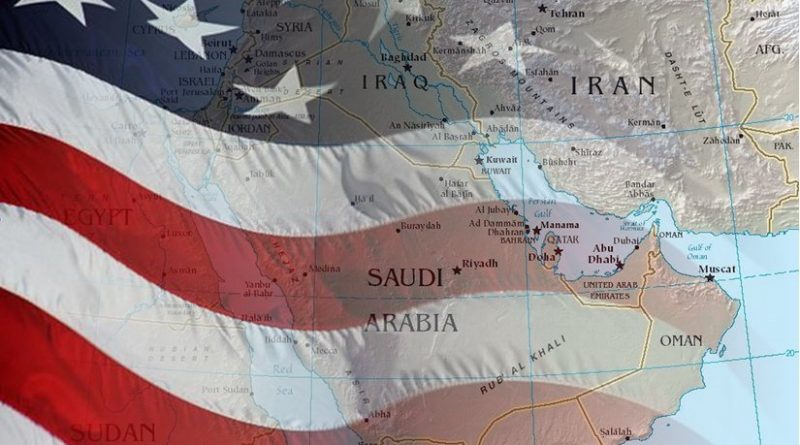
The recent US-Israel-Iran war has exposed the fragile structure of the Middle East, where Iran retaliated against attacks from US bases in GCC countries, not accepting their posture of neutrality. At the same time, GCC countries, especially those hosting large US bases, discovered that ironically, these facilities made the hosts bigger targets, instead of strengthening their defenses. However the fine points of the agreement ending the war are settled, the biggest transformation will be the withdrawal of US presence from the region.
President Trump, and the transactional global mindset that he is a part of, simply don’t need the Middle East anymore. The US presence there is a legacy of the 1970s and 1980s, when its energy dependence on the region was high. Now, the US itself is the world’s largest oil producer, thanks to the shale revolution (although the largest reserves are held by Venezuela, 303 billion barrels, followed by Saudi Arabia). And the world’s dependence on oil is tapering, driven by the negative impacts of climate change, and the diving costs of renewable energy, especially solar panels and batteries. These are the years of the dismantling of legacies. NATO is on its way out, and so will be the US presence in the Middle East.
Read more: Israel bombs Lebanon as Hezbollah rejects ‘shameless surrender’
Another legacy that must be dismantled is OPEC and OPEC+. There was a time when an oil-producing countries cartel made sense, although looking back at its history may reveal that it served powerful interests within and outside the region, rather than all members. Decartelization may strengthen the oil producers more. OPEC may have been the source of instability and insecurity within the region, rather than a strength. Moving beyond OPEC may also accelerate the region’s transformation into a future post-oil economy.
Economic strength is a more critical determinant of national security, and in these chaotic times, those countries working more effectively as regions will be able to better secure their trade interests, and build their economies. Open global trade is now a part of the glorious past. Now, a country’s battle-readiness to build trade rests on two fronts: 1) Be a member of a strong trade group; 2) Have effective and beneficial FTAs with the world’s largest trade groups and economies.
The first step for a region to be a strong player in global trade is to be unified within itself, and have extensive and open intra-regional trade. The Middle East must realize that if it wants to be a player, a strong regional trade group, then it must overcome internal squabbles.
The internal dynamics of the Middle East have certainly changed. While the Saudi Arabian economy was 3-4 times larger than the UAE economy in the 1980s and 1990s, now it is perhaps double, in nominal terms. While both economies have diversified, the UAE is ahead on that front. But while Saudi Arabia is the bigger economy, UAE is ahead in nominal per capita terms ($50,000 per capita GDP for UAE vs $35,000 per capita GDP for Saudi Arabia). The transforming regional economy means that the Middle East must be led by a partnership of its strong members, rather than by one member. If the region is to be strong and well-integrated, it must snap out of its zero-sum competitive outlook, and its members must complement each other.
Failure to rise above its internal conflicts will continue to invite external influences into the region. Ultimately, these influences will keep the region weak, and prevent it from becoming a strong and diversified trading group.
Read more: Germany fails to win UN Security Council seat for first time ever
The key is for GCC members to consult as equals, and to focus on and confirm on what they agree upon, before tackling disagreements. Ultimately, can the GCC see itself as transforming from a common market into a union of countries? Even if the GCC is not ready for this yet, there is no harm in dreaming about such an arrangement in the future.
How does the region move from being in a state of war to being economically well-integrated and strong? Must it wait for the war to end before moving onto such a transformation? Certainly not, for the war has been imposed by external actors, taking advantage of regional differences and rivalries. Starting the integration process immediately may even speed up the winding up of the war.
Realistically speaking, how can governments focus on integration within a hot regional conflict? Here, perhaps, citizens should lead the way. Citizens groups should be encouraged and allowed to form within the GCC member countries, focused on integration and economic interdependence. Member countries should allow such citizens groups space to develop and function. They should put aside their apprehensions that such groups would challenge governments. Instead, by emphasizing a regional focus, such groups would strengthen and knit-together GCC member countries and governments.
These citizens groups must have secretariats with strong information technology and economics expertise. The economies of GCC member countries must be modeled and extrapolated. How can they better complement each other? What factors can be tweaked to strengthen integration and interdependence?
As GCC member countries look to a more equal partnership within the group, each country must also look towards enhancing equality and opportunities for its citizens and residents. For a long time, the economies of GCC member countries have been built utilizing cheap foreign labor. While the foreign workers have benefited from the opportunities and sent valuable foreign exchange back to their homes, their work and living conditions have been substandard. You cannot extract productivity from unhappy workers. As GCC member countries begin to deal more harmoniously with their citizens and residents, this will bring about a culture change that in turn will enable the member countries to be better partners.
While the war has not ended, it is swiftly winding down. It is time to change the focus of the Middle East. It must come together, and become a global player. It must form partnerships of equals with major trading groups and countries. It must manage its own affairs, and drive out external influence and interference. Of course, partnerships with all countries are welcome, when sovereignty is respected. But the era of client states is over.
Either the Middle East transforms in this way, or it will remain a staging ground for great power conflicts, or the next Great Game. There are other economies, such as Singapore, Malaysia and Turkiye that stand their own ground, and are sovereign in their decisions and actions. There is no reason why the Middle East cannot be the same.
Let us look forward to a vibrant and economically prosperous and socially progressive regional economic bloc in the Middle East, in which membership is based on shared values and strong market structures rather than colonial legacies and external influences.
Mueen Batlay is the CEO of Think Build Scale (Pvt) Ltd and a member of the Economic Advisory Group (EAG).
The views expressed in this article are solely those of the author and do not necessarily reflect the position or editorial policy of the publication.