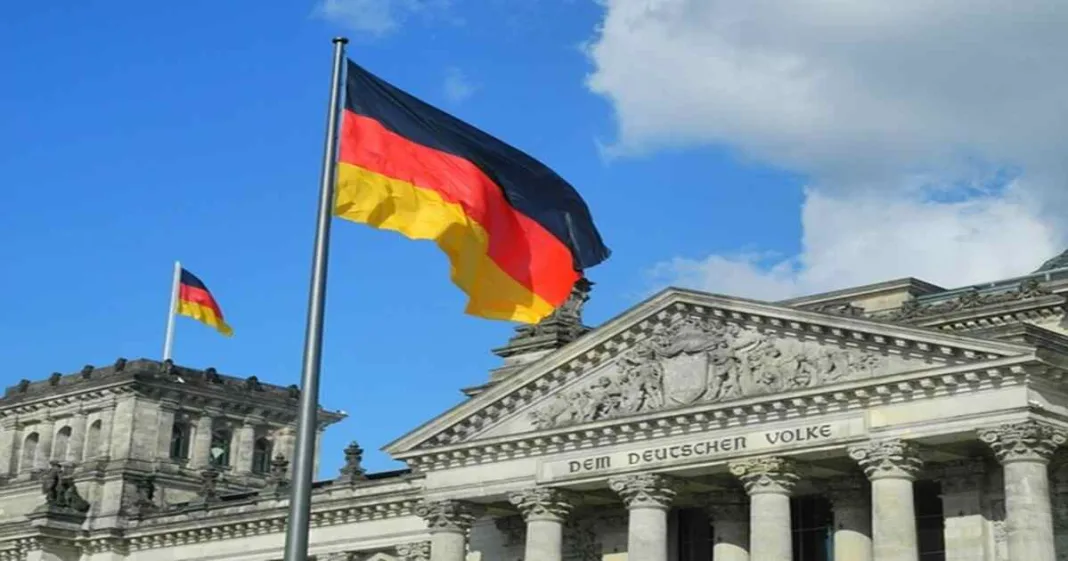
Germany has failed to win a temporary seat on the UN Security Council for the first time, losing a General Assembly vote to Austria and Portugal. Foreign Minister Johann Wadephul called the outcome “a real disappointment,” after Berlin had won all six of its previous bids.
Portugal won 134 votes and Austria 131 in the contest for two seats allocated to the Western Europe and Others group, while Germany received only 104 votes in a secret ballot on Wednesday.
Zimbabwe and Trinidad and Tobago were elected unopposed to seats reserved for Africa and Latin America and the Caribbean, respectively.
Read more: Hezbollah must withdraw from Israeli-occupied southern Lebanon – US
Kyrgyzstan secured the Asia-Pacific seat after defeating the Philippines. The five incoming elected members will replace Pakistan, Somalia, Greece, Denmark, and Panama for a two-year term beginning on January 1, 2027.
The vote was presided over by former German Foreign Minister Annalena Baerbock, who is serving as president of the UN General Assembly.
Germany has failed to win a temporary seat on the UN Security Council for the first time, losing a General Assembly vote to Austria and Portugal. Foreign Minister Johann Wadephul called the outcome “a real disappointment,” after Berlin had won all six of its previous bids.
Portugal won 134 votes and Austria 131 in the contest for two seats allocated to the Western Europe and Others group, while Germany received only 104 votes in a secret ballot on Wednesday.
Read more: Trump acknowledges calling Netanyahu ‘crazy’ and says Israel is complicating peace talks with Iran
Zimbabwe and Trinidad and Tobago were elected unopposed to seats reserved for Africa and Latin America and the Caribbean, respectively.
Kyrgyzstan secured the Asia-Pacific seat after defeating the Philippines. The five incoming elected members will replace Pakistan, Somalia, Greece, Denmark, and Panama for a two-year term beginning on January 1, 2027.
The vote was presided over by former German Foreign Minister Annalena Baerbock, who is serving as president of the UN General Assembly.
Germany has framed its push for a permanent seat as part of a wider Global South demand for reform of a body still dominated by Western powers.
African leaders have called for at least two permanent seats for the continent, while UN Secretary-General Antonio Guterres has described Africa’s exclusion from permanent membership as “indefensible.”
India has also pushed for permanent membership, saying it is “eminently suited” for the role and citing its population, economy, democratic system, and UN peacekeeping record. New Delhi is also using its Voice of Global South initiative to cast itself as a representative of developing nations in debates over global governance.
The Security Council has 15 members: five permanent veto-holders – Russia, China, the US, the UK, and France – and ten elected members, half of which are replaced each year for staggered two-year terms.