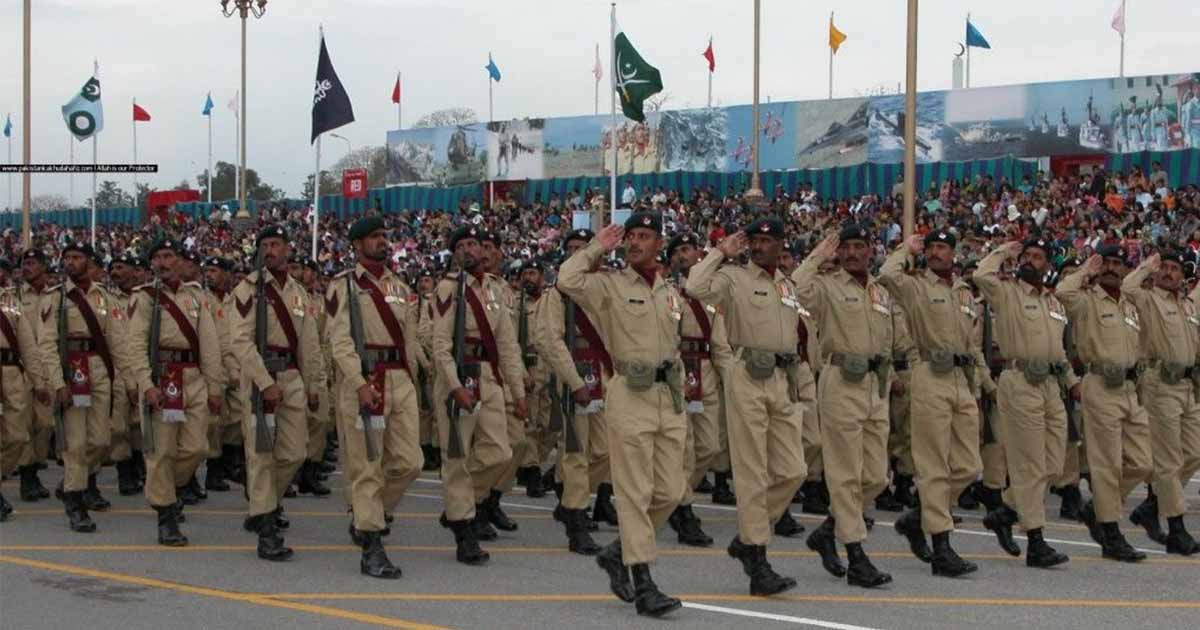
The federal government has proposed allocating Rs3 trillion for defence services in fiscal year 2026-27, a 17.65 per cent increase from the outgoing year’s original allocation of Rs2.55 trillion, as Islamabad seeks to maintain military readiness amid tensions with India, instability along the Afghan border and persistent militant violence inside the country.
Finance Minister Muhammad Aurangzeb announced the proposal while presenting the federal budget in the National Assembly on Friday. He said Pakistan’s armed forces had shown “decisive” capability in responding to Indian aggression, adding that their performance had enhanced the country’s international standing and demonstrated military preparedness.
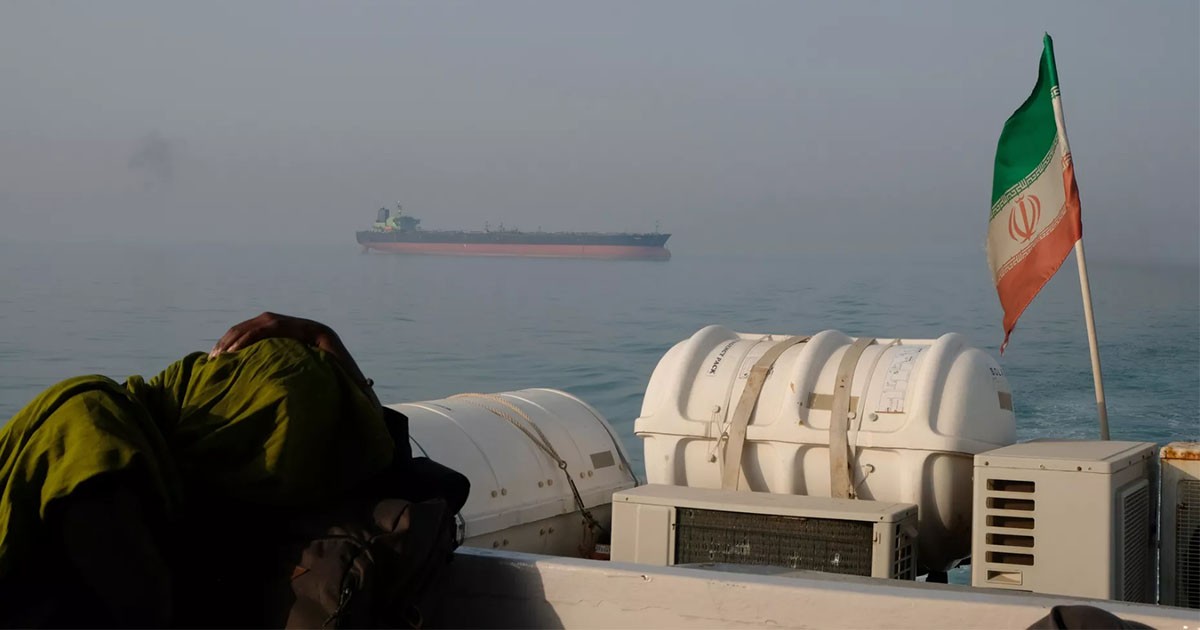
Read more: Analysis: Iran’s stranglehold on Strait of Hormuz loosens as Gulf Arab oil reaches market
The proposed defence outlay represents about 2.08 per cent of Pakistan’s projected gross domestic product of Rs143.6 trillion and nearly 16 per cent of the total federal budget of Rs18.77 trillion. The allocation would take defence spending back above the 2 per cent-of-GDP threshold after remaining slightly below it for several years.
The increase follows last year’s more than 20 per cent rise in military spending and underlines the government’s continuing prioritisation of defence and security in what officials describe as an increasingly difficult regional environment.
Rising expenditure and revised estimates
Budget documents show that the outgoing year’s original defence allocation of Rs2.55 trillion was later revised upward to Rs2.58 trillion, continuing a longstanding pattern in which actual military expenditure exceeds initial estimates.
Although the new increase is smaller than last year’s jump, it remains well above the average annual growth in defence spending over the previous five years.
The proposed expansion comes in the wake of Pakistan’s military confrontation with India last year, ongoing counterterrorism operations, and growing concerns about militant sanctuaries across the Afghan border.
Breakdown of the proposed defence budget
A functional breakdown of the allocation shows that employee-related expenses remain the largest component of military spending.
|
Category |
FY2026-27 allocation |
Share of defence budget |
|---|---|---|
|
Salaries and allowances |
Rs967.55bn |
32.25% |
|
Operating expenses |
Rs743.46bn |
24.78% |
|
Physical assets |
Rs925.83bn |
30.86% |
|
Civil works |
Rs363.16bn |
12.11% |
|
Total defence allocation |
Rs3tr |
100% |
An amount of Rs967.55 billion has been earmarked for salaries and allowances of serving military personnel and civilian employees, up 14.36 per cent from last year’s Rs846.03 billion. This category alone would consume almost one-third of the entire defence budget.
Operating expenses — including fuel, transport, rations, training, medical care and other day-to-day requirements — are projected to rise to Rs743.46 billion from Rs704.4 billion, an increase of 5.54 per cent.
The sharpest increase has been proposed under the “physical assets” head, which finances the procurement of weapons, ammunition, military equipment and related acquisitions. Funding for this category would jump 39.62 per cent to Rs925.83 billion from Rs663.08 billion.
Analysts view the surge as a sign of renewed emphasis on force modernisation and equipment acquisition after years in which personnel and operational costs absorbed an increasing share of defence spending. Major military imports and acquisitions, however, are typically handled separately and are not publicly disclosed.
Spending on civil works — covering maintenance of military infrastructure and construction of new facilities — is projected to rise 7.92 per cent to Rs363.16 billion from Rs336.49 billion.
Pensions, administration and nuclear programme
Military pensions are budgeted outside the defence services allocation. The government has set aside Rs822 billion under the federal pension head for retired military personnel.
An additional Rs10.9 billion has been allocated for defence administration, compared with an original allocation of Rs7.9 billion in the outgoing year, which was later revised upward to Rs11.75 billion.
As in previous years, the published budget does not disclose spending on Pakistan’s nuclear weapons programme. Such expenditures are widely believed to be financed through separate classified allocations.
According to the International Campaign to Abolish Nuclear Weapons, Pakistan spent about $1.5 billion on its nuclear programme in 2025 — roughly Rs418 billion at current exchange rates — though no official figure has been made public.
Balancing security and fiscal constraints
The proposed rise in defence spending comes despite continuing fiscal pressures. Inflation averaged 7.5 per cent during the outgoing fiscal year and is projected to reach 8.2 per cent in 2026-27. At the same time, the government is attempting to maintain fiscal discipline under its economic stabilisation programme.
Officials argue that the security environment leaves little room for reducing military expenditure. Pakistan continues to face militant attacks domestically while also navigating strained relations with India and concerns about instability spilling over from Afghanistan.
The decision nevertheless highlights the trade-off confronting policymakers. Even as demands grow for higher spending on development, healthcare and education, the government appears to have concluded that defence remains the overriding priority.
For comparison, the budget allocates Rs1 trillion for development projects overall, including Rs25.1 billion for healthcare under federal government-run institutions and Rs46 billion for higher education.