
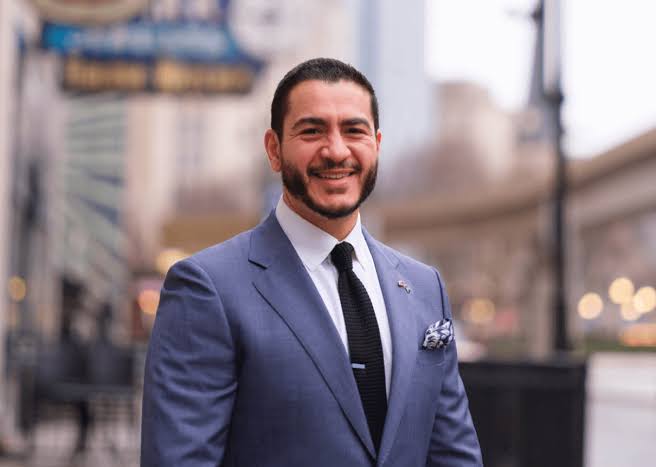
Michigan’s newly elected Democratic senator Abdul El-Sayed has called for greater scrutiny of American financial assistance to Pakistan, arguing that US taxpayers’ money should not be used to support governments that violate international law.
El-Sayed, who made history as the first Muslim elected to the United States Senate, said Washington should apply consistent standards to all countries receiving American assistance, including Pakistan, Jordan and Egypt.
🚨Newly elected US Senator Abdul-Sayed:
We will have to completely cut off financial aid to #Pakistan, #Israel and #Egypt because these countries are #violating international law.
https://t.co/cYoRDBWakU— Political Mirror (@PolMirror) November 8, 2026
Read more: Netanyahu says coalition with Arab parties would ‘dismantle’ State of Israel
His remarks have brought Pakistan into a wider debate over US foreign aid, military assistance and the use of American taxpayers’ money to support governments abroad.
Speaking following his victory in Michigan’s November 3 Senate election, El-Sayed said American foreign policy should be guided by international law and equal standards rather than political alliances.
He made the comments during a discussion about Israel, Palestine and Washington’s financial and military support for foreign governments.
Pakistan named in US foreign aid debate
El-Sayed specifically mentioned Pakistan while explaining his position on American assistance to countries accused of violating international law.
“I take the same approach to Pakistan and to Jordan,” he said, after referring to Egypt, where his family has its roots.
He argued that US financial assistance should be examined whenever a recipient government is “using our money to violate international law”.
However, the senator-elect did not identify any particular Pakistani government programme or provide specific evidence that American assistance had been used by Pakistan to commit an international law violation.
His remarks nevertheless place Pakistan among several countries whose relationships with Washington could face closer scrutiny under his proposed approach to foreign assistance.
According to the US government’s foreign assistance database, Washington recorded approximately $195.8 million in obligations for Pakistan during fiscal year 2025.
Around two per cent of the amount was classified as military assistance, while the remaining funding was categorised as economic assistance.
The figures highlight the financial dimension of the relationship between the two countries, which has historically involved cooperation in security, counterterrorism, development and regional stability.
El-Sayed backs proposal to end military aid to Israel
El-Sayed’s comments on Pakistan came amid his broader criticism of American military assistance to foreign governments.
The senator-elect has also questioned Washington’s military support for Egypt, Saudi Arabia and Jordan, arguing that American taxpayers’ money should prioritise domestic needs rather than subsidising overseas armed forces.
His position gained further attention following US President Donald Trump’s announcement of plans to end nearly $4 billion in annual military assistance to Israel by the end of 2026.
El-Sayed welcomed the proposal, describing it as a policy with which he agreed.
“I think the president is actually right on this policy,” he said.
The United States currently provides Israel with approximately $3.8 billion in annual military assistance under a 10-year agreement covering the 2019-2028 period.
El-Sayed has been particularly critical of American weapons sales and military support to Israel, arguing that such assistance could facilitate abuses against Palestinians.
He has maintained that Washington should not continue providing military resources to governments when those resources could contribute to violations of international law.
His position reflects a wider debate within American politics over the country’s role in overseas conflicts and whether military assistance should be conditional on human rights and international legal obligations.
Who is Abdul El-Sayed?
Abdul El-Sayed, 42, is a Democratic politician and former public health official who secured victory in Michigan’s November 3 Senate election, defeating Republican candidate Mike Rogers.
His election marks a historic milestone, making him the first Muslim elected to the United States Senate.
He will occupy the seat being vacated by Democratic Senator Gary Peters, who decided not to seek another term.
During his election campaign, El-Sayed advocated a government-funded universal healthcare programme, reforms to reduce the influence of money in politics and measures aimed at lowering household expenses.
He also made opposition to American military assistance to Israel a central part of his political platform, a position that generated disagreements with Rogers and some members of the Democratic Party.
His election victory is being viewed as significant for Muslim representation in American politics, particularly amid continuing disagreements over Washington’s policies in the Middle East.
What could his position mean for US foreign policy?
El-Sayed’s remarks signal his intention to challenge traditional approaches to American foreign assistance, particularly where military funding and international legal obligations intersect.
Although he has not outlined a specific proposal to suspend or reduce assistance to Pakistan, his comments suggest that he wants Washington to examine how its financial support is being used by recipient governments.
Pakistan and the United States have maintained a complex relationship shaped by security cooperation, regional developments, economic assistance and diplomatic interests.
Any future debate over American funding could therefore have implications for the broader bilateral relationship.
However, El-Sayed’s statements should not be interpreted as an announcement of an immediate change in US assistance to Pakistan. They represent his political position on foreign aid and the standards he believes Washington should apply to countries receiving American taxpayers’ money.