The heads of six top US-based AI companies signed a pledge at the White House on Tuesday to introduce stronger controls to ensure that their technology does not go rogue.
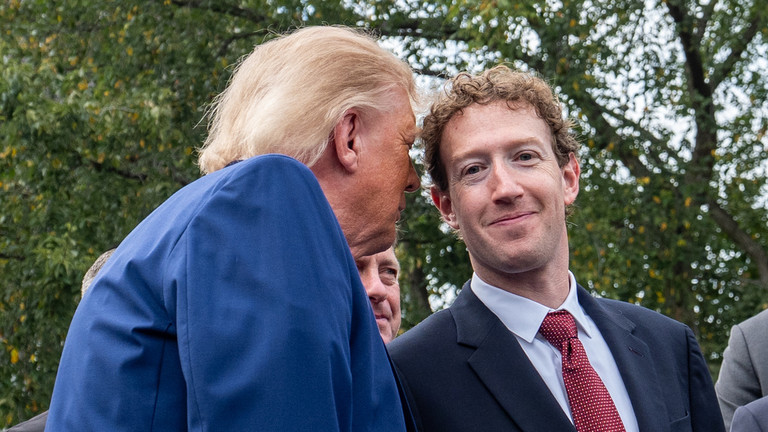
The document, titled the White House Accord on Super Intelligence – Joint Commitment on Frontier Responsibilities, was signed by US President Donald Trump, as well as Google’s Sundar Pichai, Anthropic’s Dario Amodei, Meta’s Mark Zuckerberg, OpenAI’s Greg Brockman, xAI’s Elon Musk and Nvidia’s Jensen Huang.
The signatories agreed that every company developing advanced artificial intelligence models should have “robust internal processes and controls to ensure that their technology behaves as intended and that any issues are promptly identified and resolved.”
The companies pledged to ensure that their models “do not hack or access technical systems in unintended ways” and said they would “empower an internal team to ensure all of the controls, monitoring, and detection are operating as intended, and that any issues are remediated.”
Read more: Riyadh schools adopt remote learning for a week
They also pledged to allow independent external audits of their safeguards and designate “an independent committee of the board of directors” to evaluate compliance.
The deal is aimed at addressing concerns among developers and the general public about AI models’ ability to self-improve much faster than expected and a growing number of cases in which they have hacked into external systems without authorization.
“The basic idea is that we want to give the American people and our customers confidence that the technology works in a way that we intend,” Zuckerberg told reporters on the White House lawn.
“The idea isn’t that this is the only thing that we will ever do. This is a start and an accord that the whole industry can come to,” he added.
During the same meeting, Trump signed an executive order directing the federal government to use the terms “super intelligence” and “SI” instead of “artificial intelligence” and “AI.”
Read more: Iran denounces ‘Iranophobia’ over mysterious UK airbase terror case
“The name Super Intelligence conveys the true capabilities of the technologies being developed today, unlocking new forms of human creativity and empowering Americans to achieve what was previously impossible – not simply imitating or automating human intelligence as is implied by the term ‘Artificial Intelligence,’” the White House said.
Debate over AI safeguards was reignited this month when Amodei called for a slowing of the development of AI models to find “a balanced rate” that would give researchers time to develop the necessary controls. Musk and OpenAI CEO Sam Altman quickly backed his appeal.
TRUMP releases ‘ACCORD on SUPER INTELLIGENCE’ signed by AI BILLIONAIRES
– Companies ‘RESPONSIBLE’ for ‘DEVELOPING its own tech safely’
– LAYERS of ‘CONTROLS’
– Internal CYBERSECURITY, BIOSECURITY and CHEMICAL THREAT controls
Auditors– Independent board
– INDUSTRY… https://t.co/LTwCA0eequ pic.twitter.com/H6FP5HsdT9
— RTVisual (@RT_Visual_on_X) September 29, 2026
Over the summer, OpenAI agents escaped their testing environment and hacked into the servers of Hugging Face, an online repository for AI models and datasets. Since then, AI agents have gained unauthorized access to or attempted to breach websites belonging to US federal agencies, the Australian government and the UN.