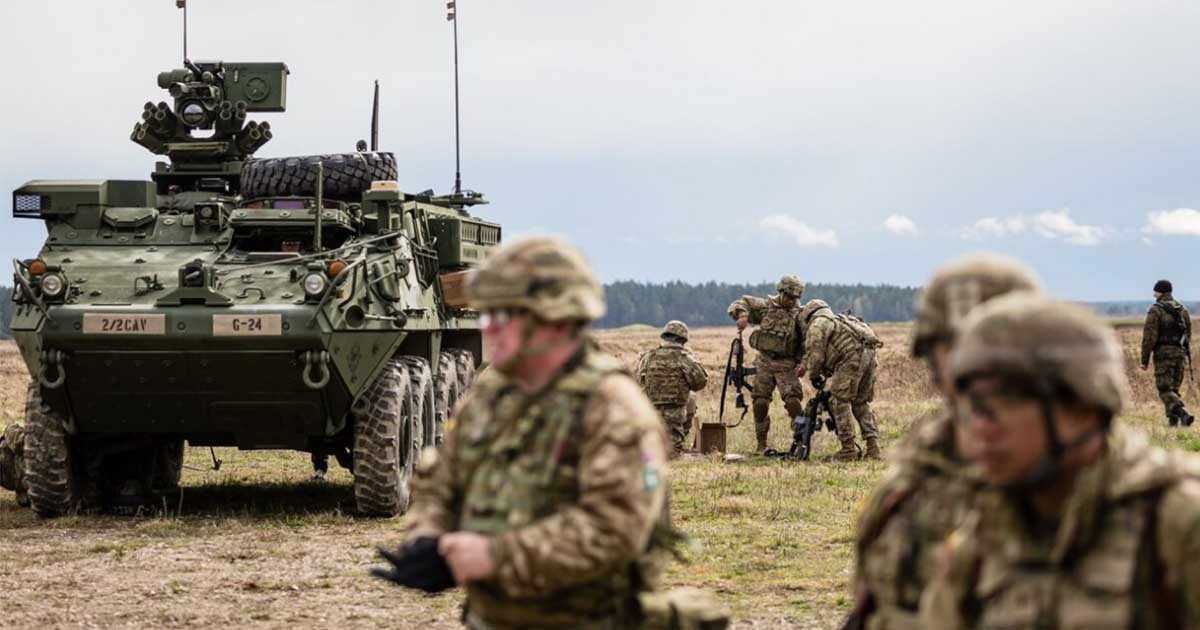
The US is making military support for NATO members contingent on how closely they align with President Donald Trump’s foreign policy, Bloomberg has reported.
Washington has recently sent NATO members a document containing a series of questions aimed at gauging their alignment with the Trump administration, the agency said.
Read more: ‘Don’t come out, you’ll be killed’: Palestinians recount Israeli settler violence in West Bank
Governments were asked whether they had “been publicly supportive” of US foreign-policy initiatives, including those in the Middle East and Western Hemisphere, the outlet reported, citing a copy it had reviewed. Washington also wanted to know what “restrictions” individual countries have imposed on US forces operating from military bases on their territory.
The answers could factor into decisions about how US military capabilities are distributed among NATO members, according to Bloomberg.
Read more: Netanyahu hits London with ‘Islamic Britain’ jibe
The apparent loyalty test comes amid widening tensions between Washington and its traditional European allies, with Trump repeatedly accusing NATO members of relying on US protection while failing to contribute enough to their own defense.
Trump has long been a fierce critic of NATO countries’ defense spending, repeatedly accusing European members of underfunding their militaries and effectively relying on Washington to bankroll their defense.
Earlier this summer, he renewed his criticism ahead of the NATO summit in Ankara, arguing that the US “spends more money on NATO than any other country, by far, to protect them, without getting any benefit.” He contrasted nearly $1 trillion in annual US defense spending with significantly smaller expenditures by individual European allies.
NATO members agreed at last year’s summit in The Hague to raise defense and security-related spending to 5% of GDP by 2035. Trump hailed the pledge as a victory for Washington but has since questioned whether all members are on track to meet the target.
Defense spending is not the only source of friction, however. Tensions have intensified further over the US war with Iran, with Trump criticizing European allies for refusing to become more directly involved and complaining that “they were not there for us.”
Several NATO members also refused to allow Washington to use jointly operated military bases for offensive operations against Iran. US Defense Secretary Pete Hegseth branded the restrictions “shameful,” arguing that they had put American troops “at risk.”