A few days ago, pictures of six tied-up, half-naked bodies along a roadside in Balochistan circulated on social media, bringing the terms fitna al-Khawarij and fitna al-Hindustan- oft used by Pakistan’s ISPR- to mind, alongside historical mentions of the Khawarij’s own brutality.
When Pakistan’s military adopts “Fitna al-Khawarij,” it isn’t merely describing a threat-it invokes a religious narrative placing the state on the side of orthodoxy while casting its enemies as heretics. But here, those labelled fitna al-Khawarij were displayed exactly as the Khawarij once displayed their own enemies.
Who were the “Kharijites”
The word Khawarij carries deep weight in Islamic tradition. In the 7th century, a sect broke from Caliph Ali over the arbitration at the Battle of Siffin (657 CE / 37 AH) and pioneered takfir-declaring fellow Muslims kafir (apostates) as a pretext for killing them. Their actions were worse than the theology itself: they killed Abdullah ibn Khabbab, son of a companion of the Prophet (pbuh), alongside his pregnant wife-her body cut open-for giving the “wrong” answer about Ali’s legitimacy, and killed anyone else they deemed a major sinner, excommunicating them and taking the law into their own hands. Calling someone a “Kharijite,” then, has never been a casual accusation- it’s a theological judgment implying deviation from Islam itself.
The Response of the One with Knowledge
As always, there is no clarity on who did the killing and who was killed-BLA fighters, some say, as if that justifies dumping bodies roadside; Baloch victims of enforced disappearance, others say-either way, left there to terrify the rest.
The brutality of that display should give us pause-not to ask who deserves the label “Khawarij,” but who is acting in its spirit. In a dispute, it is not the label you attach to an opponent that reveals who you are-it’s how you treat them. No one demonstrates that more clearly than Ali, known as Bab al-‘Ilm, the Gate of Knowledge, who faced the actual Khawarij.
Despite their rebellion-murdering his companions, relatives, and eventually him-his followers, bewildered by people who read the Quran yet acted so ungodly, asked whether they were disbelievers or hypocrites. Ali, who had suffered more from them than anyone, replied, “rather they are our brothers who have transgressed against us,” hesitating to excommunicate them to avoid further bloodshed. The companion who showed them the most mercy became their most prominent target. To Ali, they remained his brothers, even in failing to be brotherly.
“Fitna al-Hind” and the Ghazwa-e-Hind undercurrent
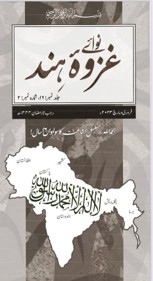
Since 2025, Pakistani military propaganda has introduced a new term, Fitna al-Hind, to target the Baloch linking them to getting support from India. But it is possible that it connects to a longer pattern of religious framing around Ghazwa-e-Hind: religious framing long given to any military conflict with neighboring India. The framing rhymes with Ghazwa-e-Hind-the debated end-times saying of the Prophet Muhammad (pbuh), a prophesied conquest of “Hind”-lending an eschatological, quasi-sanctified register to a modern geopolitical conflict. Unfortunately, I only found polemical explanations instead of an academic discussion from Pakistani scholars online, though it is possible that some scholars have written about it and provided a more solid argument.
Scholars outside the subcontinent have referred it to a chain of historical expeditions that have already happened: Muhammad bin Qasim’s conquest of Sindh (711–712 CE), then the Habbarid dynasty (roughly 854–1024 CE), then Mahmud of Ghazni’s raids into India (1001–1027 CE), then the Ghurid dynasty’s victory at Tarain (1192 CE), which became the Delhi Sultanate (founded 1206 CE), then Babur’s victory at Panipat (1526 CE) and the Mughals, who ruled until 1857-a chain that changed the course of Hind – the Indian subcontinent and is the reason most readers’ ancestors are Muslim. Many use Dr. Israr’s video clips to justify the counter-viewpoint without analyzing the whole context of his position, and what is meant by “Hind” at the time of the Prophet (pbuh) is not the Hindustan of today, geographically. His opinion, though respected, does not cite direct evidence; rather, he explicitly states that this is his own opinion-that the event is yet to come, when the final messiah arrives, as described in Islamic eschatology.
A Familiar Playbook
Pakistan’s military is hardly alone in this-states throughout history have reached for religious vocabulary to license cruelty, declaring a victim outside the faith community before violence against them becomes permissible. The mechanism converts political opponents into targets by labeling them Khawarij- “those who went out”-or, more commonly, “Ghaddar”: traitors not just of the state, but of Islam itself.
Pakistan does face serious security challenges, and many militant groups themselves invoke religion to justify violence-condemning that violence is legitimate. But why does a military institution with immense political influence frame these conflicts theologically?
Pakistan’s history offers clues: under General Zia-ul-Haq in the 1980s, the state promoted Islamization as a tool of legitimacy, and jihadist narratives were encouraged during the Afghan war. Those policies didn’t disappear-they created a political culture in which religion could be mobilized whenever the state needed moral legitimacy. Today’s Asim Munir’s regime use of “Fitna al-Khawarij” and “Fitna al-Hind” must be understood within that history: by invoking sacred terminology, the military claims religious authority over the conflict’s narrative itself.
What Sacralizing Security Costs
This move carries real costs. It reduces a complex political and security problem to a simplified struggle between orthodoxy and deviance, blurs the line between insurgency and political dissent-since religious accusations become powerful weapons against dissenters too-and undermines centuries of independent Islamic scholarship, replacing it with state doctrine.
The deeper cost is to religion itself. The same policy that militarizes faith disillusions people from it-a slide toward internalized Islamophobia rooted in the sectarian hatred the Zia and Afghan-war years sowed, and which Asim Munir’s tenure has dialed up further. Ironically, Pakistan now battles forces born of its own earlier religious mobilization, yet keeps reaching for the same tool. Faith should remain moral guidance-not a weapon wielded by power.
Retiring the Language
Until Pakistanis learn that distinction, the language of religion will continue to be drawn into conflicts that are ultimately political in nature. That responsibility rests with the civil society to push back against these narratives precisely when they take on religious cover, because that is when they are hardest to argue with and easiest to weaponize. Pakistan’s liberal class has too often used this pattern as a cudgel against religion itself, while religious scholars have too rarely offered a serious, textual refutation of a state using their own tradition to justify barbarity. Both failures leave the field open to whoever reaches for the label next.
This pattern is not confined to Balochistan or to India. As this piece went to print, Saudi Arabia said it had intercepted a drone headed toward Mecca and declared the holy city a “red line,” while Ansar Allah (the Houthis) denied targeting it at all. Pakistan, bound to Saudia through the weeks-old Mecca Pact, has not yet been formally asked to act, but for now the rhetoric of “attack on holy sites” is starting to take shape. The shape of the claim is worth noticing: a war on Yemen, if it comes, would be framed as defense of the Kaaba-a strange inversion of the very story that gave Mecca’s defense its religious weight in the first place.
Zoobia W. Chaudhry is a Baltimore-based physician, human rights advocate, and Communications Director at First Pakistan Global (FPG). She has been actively engaged in advocacy related to Palestine and Pakistan.
The views expressed in this article are solely those of the author and do not necessarily reflect the views of GVS.