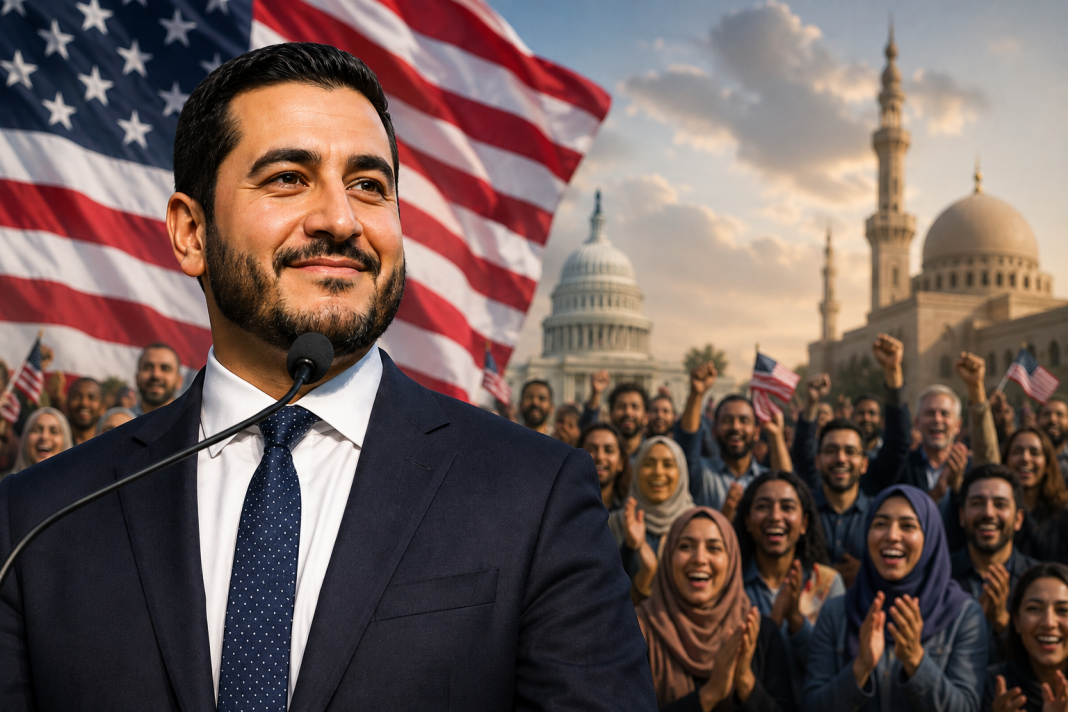
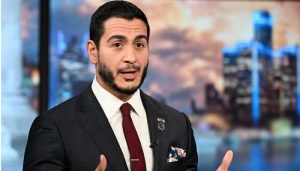
On Wednesday, Abdul El-Sayed won Michigan’s Democratic Senate primary by about a single percentage point, beating Congresswoman Haley Stevens after a race that drew more than $70 million in outside spending, most of it from pro-Israel groups trying to stop him. He now heads into a general election against former Republican Congressman Mike Rogers. If he wins in November, he will be the first Muslim ever elected to the United States Senate.
Abdul El-Sayed also terrifies right-wing politicians because, unlike Mamdani, he was born in the US and could run for president in future.
His primary win means he defeated not only $30 million from AIPAC and $40 million from other special interest groups, but also millions of dollars spent on Islamophobia campaigns since 9/11 to facilitate the War on Terror and genocide of Palestinians.
A Historic Win for Muslim Representation
Politics is shaped by its times. Before 2016, I don’t remember a Muslim in Congress ever being conceived of the way it is today. Keith Ellison and André Carson, though Muslim, were not known for being Muslim, but the elections of Ilhan Omar and Rashida Tlaib put them in the crosshairs of Islamophobes, who used it as a disqualifier and a slur against Obama under false pretenses over a decade earlier.
It is not a coincidence that since 2019 — amid Trump’s first term and its rising anti-immigrant and Islamophobic rhetoric — 200 Muslims have been elected across different seats in federal and state legislatures. And since October 2023, as the lobby’s influence has declined, it has emboldened increasingly Muslim and anti-genocide candidates to run — and win in midterms.
But there is more to it than that: over a decade of organization and community engagement behind these wins that no one sees.
Read more: Abdul El-Sayed, the Michigan doctor who wants to lead the left to the US Senate
From Medicine to Politics
Dr. El Sayed shares this story at almost all public meetings. As a medical student, he was dismayed by how insufficient the healthcare system was, and that pushed him toward public service.
Then President, Bill Clinton, impressed by his communication skills after his commencement speech, encouraged him to run for office. At the time, he downplayed it by jokingly telling Clinton that his name — Abdul Rehman Mohammad El Sayed — is funny and has ten syllables, joking that it used to have “Muhammad” twice before his father dropped the second one, right before he started school.
When he saw Barack Obama — another politician with a Muslim father and a funny name — get elected, it sparked hope in him. I’m sure many Muslim kids in the US today feel part of the same hope he felt in 2008.
Beyond Identity, Principles Will Matter
I would argue faith isn’t the barrier it used to be for Americans — especially the new generation, who’ve had Muslim friends, doctors, colleagues, and neighbors, and who have watched Muslims being slaughtered in Gaza while still carrying themselves with composure in the face of that horror.
Fortunately, second generation kids of immigrants in the US don’t carry the burden that immigrant parents brought with them, so their identity is well blended into the American society.
One can also argue that just being Muslim is not enough, either — what really matters is what they stand for. If he becomes the first Muslim senator but is not able to hold onto his principles, then what’s the point?
As many compare his communication style to Obama’s, I raised this with him at one of these kitchen-table meetings: getting elected is not the finish line — it’s what you do with the office that matters.
I used Obama as the cautionary example, pointing out how campaign rhetoric so often fades once politicians get into power, because the system only lets you go so far. His answer was long-winded; talking about building coalitions to be effective while holding on to its ideals, and the lessons he learned from his 2018 gubernatorial run.
Read more: El-Sayed holds narrow Michigan primary lead in test for US Democrats
A Possible Path to the Presidency
As the political climate is changing, America is at war with itself. We hope that it comes out strong after this process and Muslim community and politicians must do their part to make it stronger and that is what it seems like that Abdul is trying to do.
If he does not win, he will have pushed the boundary as far as he could. The way Obama stood on the shoulders of Jesse Jackson, the civil rights leader and two-time presidential candidate, he will have paved the path for a future Muslim Senator or a President.
What El-Sayed’s Rise Means for Pakistani Americans
Now, what does this mean for Pakistani Americans?
Here is someone who proclaims himself an honorary desi (having married into an Indian Muslim family), someone who understands the geopolitics of US hegemony and belongs to the people who live under the weight of neocolonialism — he could be a champion of their cause.
The question is whether he would be able, or willing, to use his political capital to bring positive change in US policy toward Pakistan. The answer depends on how much the community can invest in any candidate — including Abdul — even after they’re elected.
Pakistani Americans Need a Clearer Political Strategy
Observing the political ecosystem in DC up close, it’s clear that what gets other advocacy organizations’ and politicians’ attention depends on our ability to organize and raise funds.
Two events I attended during this primary race were organized by members of the Pakistani diaspora. In both, especially the later meeting, where the majority in attendance were first-generation Pakistanis, there was no coherent messaging about the crisis in Pakistan.
Yes, he knows who Imran Khan is, and is aware why US supports dictators that are entrenched in the system, but we ought to have a more coherent argument about what we think US policy towards Pakistan should be.
Political Influence Requires Sustained Engagement
I am sure community members from the Pakistani embassy ecosystem have already been in contact with him too — he alluded to this himself in one of our meetings. It shouldn’t surprise us.
Another example is my own senator from Maryland, Chris Van Hollen: no doubt his understanding and articulation of the problem in Pakistan is sophisticated. I’ve seen Pakistani businessmen hold at least three fundraisers for him this year, raising $50,000 to $100,000 each time.
If he becomes Senate majority leader (should Democrats win the majority) or chair of the Foreign Relations Committee, would he use that position to raise concerns about Pakistan — or would it slide so far down the list that it never gets any attention at all?
Same is true for Abdul.
We like to see them as leaders who are driven by their morality, but they are politicians, and engagement after the election means something different than engagement during the campaign — it means holding them accountable, not disappearing once the votes are counted.
Grassroots Organizing Takes Years
Another lesson we ought to take from his campaign is that success comes slowly.
For the progressive movement, Bernie failed when he challenged the Democratic establishment machine in 2016; but ten years later, Mamdani and El-Sayed won.
But that didn’t happen in a vacuum: there are community organizers who have been at work for over a decade to get them elected.
We may not be able to raise as much money as the entrenched Pakistani establishment ecosystem, but we should be able to ratio them — one to ten, one to twenty!
We have the examples of Mamdani and El-Sayed in front of us, but it still took a huge effort to beat the machine.
It was once Obama who also beat the establishment opponent Clinton by 1% in his primary. So we see this again and again: it is not easy to tip the system, but it is possible.
Zoobia W. Chaudhry is a Baltimore-based physician, human rights advocate, and Communications Director at First Pakistan Global (FPG). She has been actively engaged in advocacy related to Palestine and Pakistan.
The views expressed in this article are solely those of the author and do not necessarily reflect the views of global village space