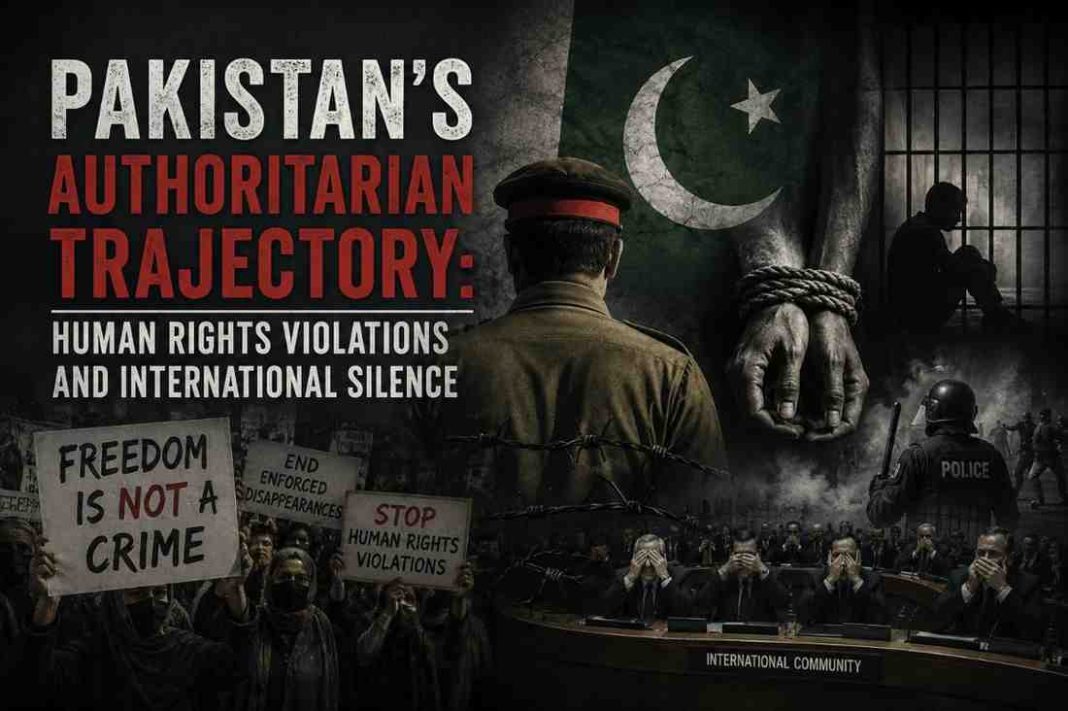
For decades, Pakistan has remained among the lowest-ranked countries in global assessments of human rights, reflecting persistent and systemic violations. These violations were often framed through ethnic and religious lenses, whether in relation to Bengalis, Baloch and Pashtun populations, or religious minorities such as Shia Muslims and Ahmadis. Today, however, the scope of repression has expanded beyond identity-based persecution to the systematic criminalisation of ‘political’ dissent.
Read more: The Dark Side Of Remittances
Colonial Laws and the Architecture of Contemporary Authoritarianism
While Pakistan’s experience is distinctive, it also reflects a broader challenge confronting many postcolonial states across South Asia, the Middle East, Africa, and Latin America, where incomplete processes of state formation have enabled the persistence and adaptation of coercive institutions inherited from colonial rule.Situated within this broader postcolonial context, Pakistan’s contemporary authoritarian trajectory is sustained through the continued deployment of colonial-era legal, bureaucratic, and security structures that facilitate political control and systemic repression.
The decolonisation of the Indian subcontinent in August 1947 created two sovereign states, Pakistan and India. Both inherited not only the territorial and administrative machinery of the British Raj but also the deep structural anxieties embedded within colonial governance.While India has largely maintained electoral continuity, albeit with growing concerns over democratic backsliding, Pakistan has repeatedly oscillated between military rule and tightly managed civilian governments. Having governed directly for extended periods under military dictators, the military has remained the country’s most powerful political institution, exercising decisive influence even during nominally democratic periods.
Another key argument is that although major powers routinely champion democracy, human rights, and the rule of law as universal principles, but their commitments are often subordinated to strategic and geopolitical interests. International responses reveal a sustained pattern of selective engagement in which concerns about democratic governance and human rights are eclipsed by geopolitical calculations.
To understand how this diplomatic paradox operates in practice, it is necessary to examine the contemporary trajectory of authoritarian governance in Pakistan and I am focussing largely post April 2022 era when the former Prime Minister Imran Khan was ousted from PM Office through a highly contested vote of no confidence, since then Pakistan entered into an increasingly coercive political phase characterised by escalating state violence.Central to this authoritarian turn has been the continued deployment of colonial-era legal instruments originally designed to suppress anti-colonial resistance.
Rather than being dismantled after independence, these laws have been reconfigured to regulate contemporary political opposition. Section 144 of the Criminal Procedure Code and the Maintenance of Public Order (MPO) framework—both rooted in colonial emergency governance—have been repeatedly invoked to prohibit political gatherings. The selective application of these two colonial-era legal instruments became central to the state’s crackdown on political dissent. The repression intensified after the events of 9 May 2023, when thousands protested the arrest of Imran Khan, continued throughout the 2024 electoral period, and persists today. Throughout this period, these legal provisions have been used disproportionately against the Pakistan Tehreek-e-Insaf (PTI), illustrating the instrumentalisation of colonial laws in Pakistan’s continued democratic regression.
Read more: Communication with Mojtaba ‘very difficult at moment’: Iran president
From the Periphery to the Heartland: a systemic intensification of authoritarian control
What distinguishes this contemporary architecture of repression is the breadth and intensity of its reach, which cuts across class, gender, ethnicity, sect, social status, and urban-rural divides, signalling a systemic intensification of authoritarian control and an increasingly zero-tolerance approach toward dissent. Arbitrary detentions, enforced disappearances, military trials of civilians, custodial torture, forced confessions, intrusive surveillance, media censorship, prolonged internet shutdowns, and the demolition or confiscation of property belonging to political opponents have become increasingly common features of governance. Notably, coercive practices once largely associated with peripheral regions such as Balochistan and the former Federally Administered Tribal Areas (FATA) have increasingly been deployed in central Punjab, Pakistan’s political and demographic heartland. This shift challenges the long-standing perception that state repression primarily targets marginalised ethnic and regional communities and instead suggests the nationwide normalisation of coercive governance. The same coercive tools are applied in Azad Jammu and Kashmir and Gilgit Baltistan during their recent elections.
In addition to colonial controlling tactics, new laws are introduced in Pakistan where dissent itself is increasingly treated as a national security threat. Executive and security institutions have relied extensively on anti-terrorism legislation, sedition provisions, cybercrime laws, and the heavily amended Prevention of Electronic Crimes Act (PECA) to criminalise political opposition. These powers have been further strengthened through the National Cyber Crime Investigation Agency (NCCIA), which exercises extensive authority over online expression.
The experiences of prominent critics, journalists, and human rights defenders illustrate this broader trend. Human rights lawyer Imaan Zainab Mazari-Hazir and her husband, Hadi Ali Chattha, were each convicted on multiple charges and received concurrent prison sentences totalling 17 years, including a 10-year sentence for cyber-terrorism. Journalists such as Arshad Sharif, who was killed in Kenya in 2022 after leaving Pakistan amid mounting pressure, and Imran Riaz Khan, Moeed Pirzada, and Sabir Shakir, who left the country citing threats and intimidation, exemplify the increasingly hostile environment facing critical voices. Similarly, Baloch human rights activist Dr. Mahrang Baloch has recently been sentenced to life imprisonment, further highlighting the state’s intensified crackdown on dissent. Through digital surveillance, selective prosecution, enforced disappearances, and aggressive online policing, freedom of expression has increasingly been transformed into a punishable offence.
State Coercion against PTI and Its Leadership
The criminalisation of dissent is perhaps most visible in the treatment of PTI and its supporters. Senior party figures, including Shah Mahmood Qureshi, Ijaz Chaudhry, Omar Sarfraz Cheema and Mahmood ur Rasheed, have faced arrest and prolonged detention, while others, such as Murad Saeed and Qasim Suri, have been forced into hiding or exile. Alongside them, thousands of political workers, including prominent women activists such as Sanam Javed, Dr Yasmin Rashid, and Aliya Hamza, have been detained for extended periods while facing repeated procedural delays. More than one hundred civilians have faced military trials following the events of 9 May 2023, including Imran Khans nephew, Barrister Hassan Niazi.Beyond prolonged detention, concerns have also been raised regarding prison conditions and access to medical care. Several PTI prisoners have reportedly experienced serious health deterioration while in custody, and some have died shortly after their release, further highlighting the human cost of Pakistan’s expanding crackdown on political dissent.
Former Prime Minister Imran Khan has faced more than 300 criminal charges across multiple cases and remains incarcerated following convictions in several proceedings. He is currently serving a cumulative sentence of 31 years imprisonment. His wife, Bushra Bibi, is serving a 17-year prison sentence. Both continue to be held under highly restrictive conditions, including prolonged solitary confinement, limited access to legal counsel, and restrictions on family visitation. Reports have also raised concerns about their deteriorating health, with Khan reportedly having spent more than seven months in solitary confinement.
Dismantling Judicial Independence and Institutionalising Extrajudicial Violence
Perhaps most concerning, is the systematic weakening of judiciary, which is designed to constrain executive and military power but has been progressively undermined through both formal and informal mechanisms. Judges perceived as independent have reportedly faced pressure to resign or retire prematurely, while others have been subjected to disciplinary proceedings viewed by critics as politically motivated, contributing to growing concerns over executive interference in the judiciary. Constitutional interventions through the 26th and 27th Amendments have further expanded executive influence over judicial appointments, transfers, and promotions. Defence lawyers like Intizar Hussain Panjhuta have themselves faced intimidation, harassment, abduction, and arrest, further constraining access to justice.
Beyond legal and political repression, Pakistan has also witnessed a troubling expansion of coercive policing practices. The creation of the Punjab Polices Crime Control Department (CCD) has coincided with a dramatic rise in allegations of extrajudicial killing. According to the Human Rights Commission of Pakistan, hundreds of staged police encounters have resulted in an extraordinary number of deaths relative to police casualties, raising serious concerns regarding the normalisation of force outside judicial oversight. The recent killing of nine-year-old Australian citizen Hania Ahmed and the serious injury of her father and brother has further internationalised concerns regarding police accountability and the use of excessive force.
The Diplomatic Paradox: Geopolitical Interests over Human Rights
Having established the architecture of repression, the final question is why such extensive democratic backsliding and human rights violations have generated so little international opposition.
Despite overwhelming evidence of serious human rights violations, the international community has largely refrained from meaningful condemnation or corrective action. This silence is not incidental but reflects a broader diplomatic paradox in which strategic interests consistently outweigh commitments to democracy, human rights, and the rule of law.
Pakistan’s contemporary experience is not an anomaly but part of a long-standing pattern of transactional engagement between powerful states and authoritarian partners. During the Cold War, General Ayub Khan was embraced as a reliable anti-communist ally through Pakistan’s participation in SEATO and CENTO. General Zia-ul-Haq received extensive Western support as a frontline partner in the anti-Soviet campaign in Afghanistan despite severe domestic repression. Following the attacks of 9/11, General Pervez Musharraf became a central ally in the War on Terror and was rewarded with substantial military and economic assistance despite suspending constitutional rule.
Today, a similar pattern appears to be unfolding under the hybrid regime with Shehbaz Sharif as Prime Minister and Asim Munir with multiple titles like, Field Marital and Chief of Defence Forces. Unlike earlier periods of direct military rule under Ayub Khan, Zia-ul-Haq, or Pervez Musharraf, the contemporary system operates through a hybrid political arrangement in which civilian institutions provide a formal democratic façade while effective political authority is widely perceived to rest with the military establishment.
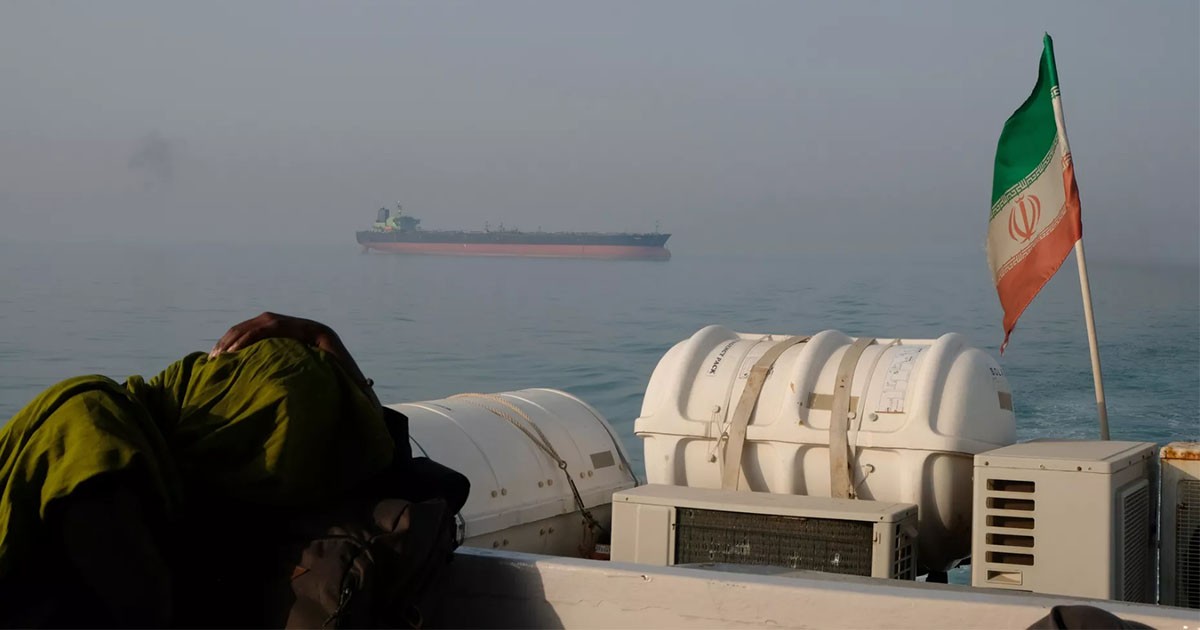
The prominence accorded to Field Marshal Munir in international diplomacy, including public praise from senior US officials such as President Donald Trump and Vice President JD Vance, reinforces perceptions that external actors increasingly view the military leadership as the principal interlocutor in Pakistan’s political order. Pakistan’s role as a mediator in US-Iran engagement has consequently elevated its diplomatic value at a time when concerns regarding human rights and democratic governance continue to mount.
This tacit support has been particularly evident since the deeply contested February 2024 general elections. Rather than demanding accountability for widespread allegations of electoral manipulation and the suppression of political opposition, international actors have largely prioritised political stability and economic continuity.
Continued IMF support, alongside the limited international scrutiny directed toward electoral irregularities, has reinforced perceptions that geopolitical considerations outweigh democratic concerns. Equally significant has been the prolonged delay in the publication of the Commonwealth observer groups election assessment report, which reportedly identified serious irregularities and the involvement of state institutions in influencing electoral outcomes. This delay has fuelled concerns that external actors are more invested in preserving a manufactured political stability than defending democratic accountability. By limiting scrutiny of electoral irregularities and continuing diplomatic engagement with the post-election political order, international actors have effectively contributed to the external legitimisation of an increasingly coercive regime.
The Pakistani case therefore exposes a broader contradiction at the heart of contemporary international politics. Democratic norms are celebrated rhetorically as universal principles, yet their application remains highly selective. Authoritarian practices that would trigger strong international criticism elsewhere are frequently tolerated, overlooked, or strategically accommodated when governments serve important geopolitical, security, or economic interests. International silence, therefore, should not be understood as neutrality. Rather, it functions as a form of tacit accommodation that enables authoritarian governance to persist under the protection of strategic necessity.
Dr. Seema Khan is an Australia-based academic whose research focuses on South Asian politics, regional security, and the strategic implications of U.S.–China power competition.
The opinions expressed in this article are those of the author alone and do not necessarily represent the views or editorial stance of the publication