
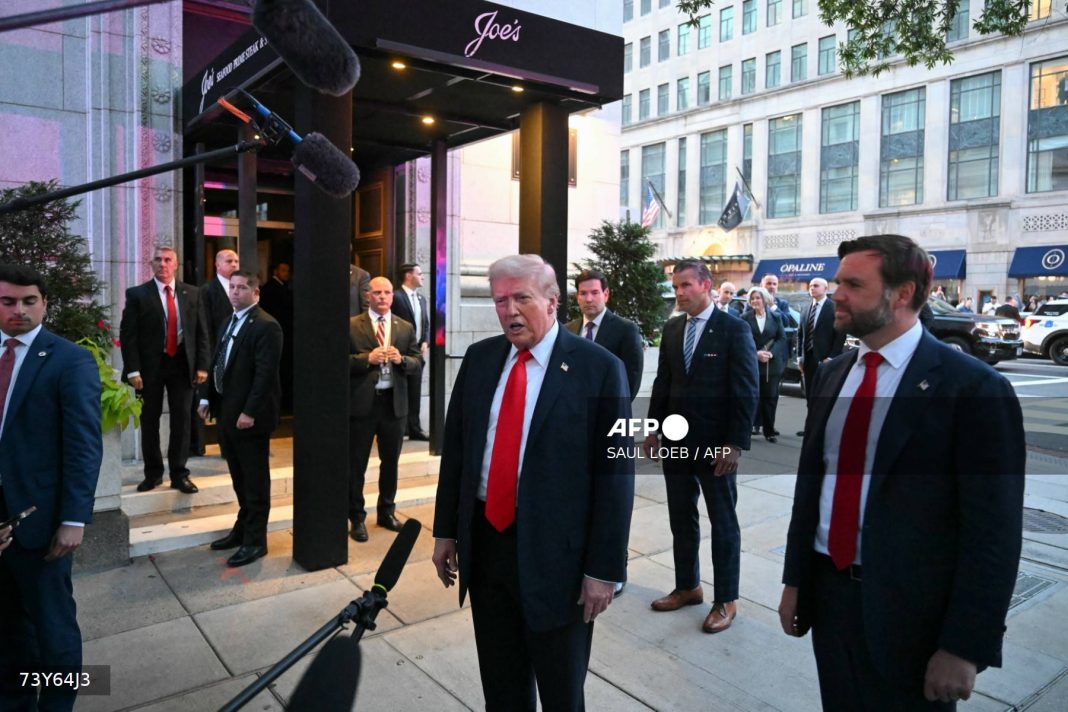
US President Donald Trump concedes that the war he ordered on Iran was partly to blame for his Republican Party’s sweeping midterm losses — but even as he comes under pressure, analysts said Wednesday that he has few good options ahead.
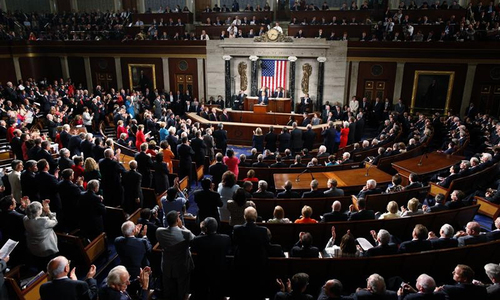
It remains to be seen what path Trump will take after emerging politically weakened as Democrats seized control of both the Senate and House of Representatives in Tuesday’s vote.
Read more: What the US midterms mean for ties with China
The US leader also remains caught between a desire to diplomatically end the war with Iran — which has sharply driven up gasoline costs for American voters — and his threats to “finish it off” with Tehran.
“Trump is now in a bind: Escalation offers no clear path to victory and risks further wrecking his presidency, while diplomacy offers a potential way out,” said Sina Toossi, senior non-resident fellow at the Centre for International Policy.
“The new Democratic Congress will also have significant oversight and funding powers come January, further constraining his options,” Toossi told AFP.
Trump acknowledged Wednesday that “it’s largely true” that Iran and the high fuel prices provoked by the conflict had led to the massive defeat for Republicans.
Still, he maintained, echoing a similar statement after polls closed Tuesday, that he’d “do it again” despite the election hammering.
Vice President JD Vance, a potential contender to succeed Trump in the 2028 presidential election, was more definitive.
Read more: Iran’s supreme leader threatens wider war if US resumes strikes
“The reason we lost is the war. The president himself said so last night,” Vance wrote in a post on X.
A ‘clear’ message
Many American voters cited high costs of living and the Iran war as reasons behind their vote.
For usually reliable Republican voters, like farmers, steep energy costs are “really just leading to despair,” Charles Hall, executive director of the North Carolina Soybean Producers Association, told AFP.
Hall, a North Carolina voter himself, noted huge shifts towards Democrats in his state: “That tells me that they’re voting against something.”
“If they’re farmers, they’re probably voting against high diesel prices,” Hall said.
Tehran retaliated against US-Israel strikes on Iran since late February by blocking off the Strait of Hormuz, a vital waterway for global energy transit. This sent oil prices soaring.
But Council on Foreign Relations senior fellow James Lindsay told AFP that “the historic drubbing that Republicans took on election day happened for reasons that go well beyond Iran.”
He called the “blue tsunami” a repudiation of much of Trump’s agenda, with the president being elected in 2024 on a pledge to make life more affordable.
“What we’ve seen over the past two years is that Americans believe that life has become even more unaffordable,” Lindsay told AFP. “The Iran war clearly played into that by driving up the price of gas and diesel.”
Adding fuel to the fire, Trump has “often behaved in ways that suggested he was indifferent to the pain and suffering of Americans,” he said.
Toossi added: “The message from voters is clear: They want relief from the war’s economic costs, not more war.”
‘Difficult position’
Already, top Senate Democrat Chuck Schumer said on Wednesday that the Iran war “must end,” with prospective Speaker of the House Hakeem Jeffries echoing a similar message.
But it remains unclear if Trump will listen to voters and try to end the conflict quickly, or push on with it.
“Putting aside the election, doubling down on Iran was always a dangerous strategy,” Lindsay of CFR said.
A new round of intense attacks — even if designed to be short-term — could backfire with Iranians responding by targeting installations across the Gulf.
“This could spiral out of control,” he added, although acknowledging that Trump’s other options “aren’t terribly good either.”
Meanwhile, maintaining the US naval blockade in the Middle East is a strain on the country’s military, while negotiations have so far failed to yield clear progress.
“The president’s in a difficult position regardless,” Lindsay said.
And if Vance’s comments on the war are widely held by other Republican lawmakers, he added, Trump faces new political risks if he were to double down on Iran.
Hegseth doing ‘a very good job’
Trump backed Defence Secretary Pete Hegseth on Wednesday, a day after Democrats won control of both chambers of Congress in midterm elections that reflected voter anger over the Iran war.
Asked whether he was considering replacing Hegseth, whom he has described as a champion of the war, Trump told reporters: “No, I think he’s doing a very good job.”
The response contrasted with then-President George Bush, who fired Defence Secretary Donald Rumsfeld the morning after the 2006 midterm elections, when voter discontent over the Iraq war helped Democrats win control of Congress.
But sources said Trump could still replace Hegseth as Republicans assess their losses.