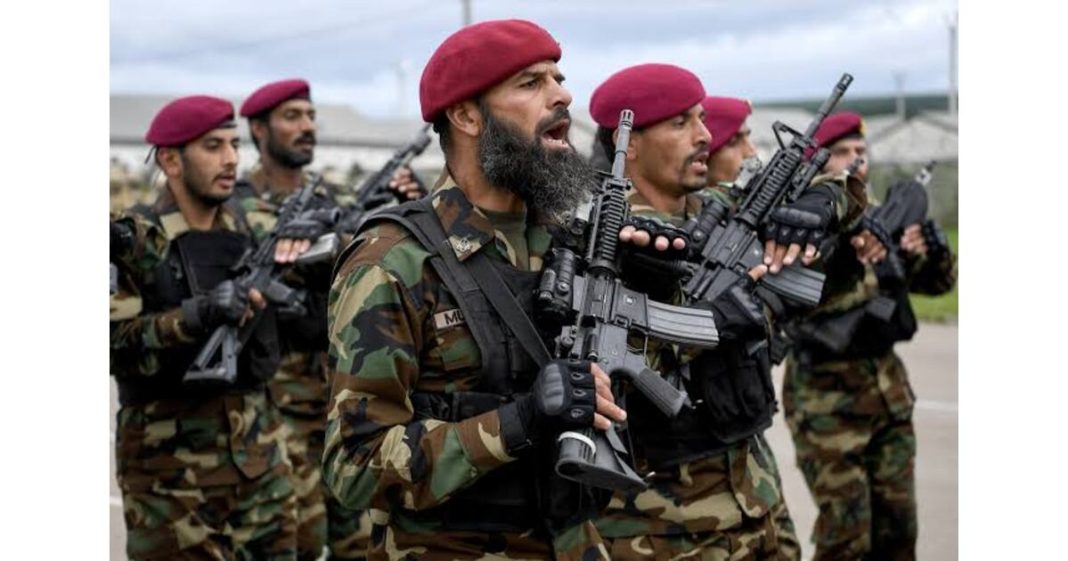
In November 2024, Pakistani security forces opened fire on tens of thousands of unarmed supporters of jailed former Prime Minister Imran Khan as they approached Islamabad’s D-Chowk. Amnesty International called for an “urgent and transparent investigation” into reports of live ammunition and “shoot at sight” orders issued during a total communications blackout. Doctors told the media that hospital officials confiscated medical records of the dead and injured and forbade staff from speaking. While the opposition put the death toll far higher, the state initially claimed nobody had died at all. Western front pages, by contrast, moved on within a news cycle.
This is not an isolated failure of coverage. It is a pattern — and understanding why the world’s most powerful newsrooms have gone quiet on Pakistan’s military state tells us as much about geopolitics as it does about journalism.
A Ledger of Silence
Consider the accumulation of evidence that would, in almost any other country, constitute a five-alarm human rights crisis. In November 2022, Imran Khan survived what his own party called a “meticulously planned” assassination attempt during a protest march, an event the military’s media wing quickly dismissed. Today, Khan sits in solitary confinement in Adiala Jail, cut off from his lawyers and family since late 2025. According to medical reports, he has lost nearly 85 percent of the vision in his right eye after jail authorities ignored his medical complaints for months. The UN’s human rights office has called his prolonged isolation “unlawful,” warning of severe consequences for his physical and mental health.
Add to this the events of May 9, 2023, when over 100 civilians were swept up and tried by military courts under legislation that Amnesty International says gave them no meaningful right to appeal. A five-judge Supreme Court bench initially struck these trials down as unconstitutional in October 2023, only for a reconstituted constitutional bench to overturn that ruling in May 2025 — validating the military trials while parliament, a year on, still has not passed the appeal legislation the Court itself demanded. Add the sweeping midnight raids by Punjab police on May 23, arresting dozens of political workers ahead of peaceful marches, a tactic ripped straight from martial law playbooks.
Add the stolen mandate of the February 2024 general election, marred by blatant, real-time military manipulation and an EU election observation report that has been suspiciously withheld from the public. And add the perpetual tragedy of Balochistan, where the state’s own toothless Commission of Inquiry on Enforced Disappearances has closed thousands of cases without a single prosecution, leaving families in a permanent state of grief.
None of this is secret. Human rights organizations have documented all of it in real time. Yet almost none of it registers in the sustained, agenda-setting way that comparable abuses in other nations register in the Western press.
The Military’s Information Bottleneck
Part of the answer lies in how tightly Pakistan’s military controls the pipes through which information flows to the outside world. Reporters Without Borders has documented how the army “quietly yet effectively” imposes restrictions on reporting. Foreign correspondents based in Islamabad routinely find their movement outside the capital restricted, their local fixers intimidated, and their access to Balochistan effectively denied.
Pakistani embassies abroad function less as diplomatic missions than as extensions of the military’s messaging operation, cultivating friendly foreign correspondents and discouraging critical coverage through the weaponization of visas. The result is a controlled narrative bottleneck: by the time a story about a “security operation” reaches a foreign newsroom, it has already been laundered of words like massacre, disappearance, or assassination.
A Generation That Has Forgotten How to Protest
But institutional censorship alone doesn’t explain the silence. Censorship can be broken by outrage, and outrage requires people willing to risk something for a principle. Here, Pakistan’s civil society, and particularly its student class, faces an uncomfortable reckoning — one that implicates not just the students themselves, but the very legal establishment meant to give their grievances a voice.
History’s clearest lesson is that students, not politicians, are the engine of democratic transitions. It was students who toppled Suharto in Jakarta, students who forced South Korea’s generals from power, and students in Bangladesh who, just recently, drove out an entrenched autocrat. The contrast next door is instructive and immediate: in the summer of 2026, India’s youth-led “Cockroach” movement — born from a satirical rebuke after the country’s Chief Justice dismissed unemployed young people as “cockroaches” — swelled from a viral meme into sit-in protests across more than thirty Indian cities, forcing the resignation of the federal education minister within weeks over a leaked medical entrance exam. The movement’s leaders camped in New Delhi for over a month, joined by a hunger-striking activist, and did not disperse until they had extracted a scalp from the government.
Pakistani students, facing an almost identical grievance — leaked papers in their own medical college admission test (MDCAT) in multiple recent cycles — have mounted no comparable movement. There has been no sustained encampment, no viral mobilization, no resignation forced, and certainly no mass student movement demanding the release of political prisoners or accountability for the November 2024 killings. Part of this silence traces back to the very institutions meant to model civic courage for young Pakistanis: a legal fraternity trained at Oxford, Cambridge, and other elite Western institutions that has, with some honorable exceptions, largely acquiesced to the dismantling of judicial independence rather than resisting it. When Pakistan’s parliament rushed through the 27th Constitutional Amendment in November 2025 — stripping the Supreme Court of its constitutional jurisdiction, creating a new Federal Constitutional Court stacked by executive appointment, and granting lifetime immunity from prosecution to the president and the military’s top brass — only two sitting justices, Mansoor Ali Shah and Athar Minallah, resigned in protest. The wider legal community’s response was comparatively muted, a stark departure from the lawyers’ movement of 2007-2009, when black-robed advocates marched in the streets against a military dictator and helped force his resignation. A student body cannot be faulted for failing to find its moral voice when the Cambridge- and Oxford-trained judges and senior counsel who once marched against martial law now largely defend, or quietly accept, its modern successor.
Elite Complicity Behind Cantonment Walls
The silence is also structural, sustained by a parallel society that has every incentive to look away. Pakistan’s cantonments and Defence Housing Authorities are some of the most manicured, secure enclaves in South Asia — walled communities with wide boulevards that would not look out of place in Beverly Hills, standing in stark contrast to the crumbling public infrastructure just beyond their gates.
Generations of intermarriage between senior military families, industrialist dynasties, and the upper bureaucracy have fused these classes together. Pakistan’s business and administrative elite have a direct personal stake in the survival of the very system whose victims they otherwise claim to mourn. This is the load-bearing architecture of the state: an elite consensus that trades civil liberties for gated stability, curated within walls the rest of the country cannot enter.
A Country the World Doesn’t Need
The most uncomfortable truth is economic, and it becomes clearer when Pakistan is set against the handful of chokepoints that actually run the global economy. Consider Taiwan, which manufactures roughly 60 percent of the world’s semiconductors and whose dominant firm, TSMC, is so central to global technology that a full-scale conflict over the island could cost the world economy an estimated ten trillion dollars. Consider China’s near-total grip on rare earth minerals and permanent magnets — inputs essential to everything from electric vehicles to fighter jets — a dominance so complete that a single set of Chinese export controls in 2025 sent shockwaves through global manufacturing. Consider the Gulf states’ oil, whose disruption moves markets within hours.
Pakistan controls none of these levers. It produces no advanced semiconductors, hosts no globally significant data infrastructure, exports no critical minerals or rare earths, and its agricultural output — while vital domestically — carries no leverage over international prices or supply chains the way, say, Ukrainian grain or Brazilian soy does. It is a consumer economy of roughly 240 million people, heavily reliant on remittances and IMF bailouts rather than an exporter of anything the rest of the world cannot live without. When Taiwan or the Gulf faces instability, world capitals convene emergency sessions. When Pakistan’s military jails an opposition leader, rigs an election, or disappears activists in Balochistan, the reaction from the same capitals is a mild statement of “concern,” if that. There is no chip, no barrel, no magnet, and no bushel of wheat riding on Pakistan’s civil liberties record — and so there is no urgent global constituency demanding one.
A Diaspora Without a Seat at the Table
This external indifference is compounded by the Pakistani diaspora’s absence from the levers of Western political and economic power. Compare them to the broader South Asian diaspora. Indian-run grocery chains and Bangladeshi franchises have become woven into the civic fabric of American and British cities. Indian Americans are politically organized and were widely credited as a decisive voting bloc in key swing states like Pennsylvania, Georgia, and Michigan during the 2024 US presidential election.
Pakistani Americans, despite comparable population numbers and immense professional success in medicine and engineering, remain politically invisible. They do not possess the congressional representation, the grassroots organizing, or the lobbying infrastructure that translates into real influence. A community without a seat at the table cannot generate the sustained pressure required to make Washington or London scrutinize the atrocities happening in their homeland.
Read more: The Rooster and the Wolves of the Border Forest
The Cost of Looking Away
None of these dynamics operate in a vacuum, and history offers a grim warning about where this leads. We have seen what happens when the international community accepts the “stability” of the barracks over the messy reality of civilian mandates. Look at Myanmar, where the world watched the Tatmadaw violently reverse a democratic transition in 2021, plunging the nation into a forgotten, bloody civil war that barely registers in Western headlines anymore. Look at Sudan, where global indifference empowered rival generals to tear a fragile democratic revolution to shreds, leaving millions to starve in the shadows of a conflict most of the world has stopped counting the dead from.
Pakistan is hurtling down this same dark path, joining the ranks of the world’s “forgotten” authoritarian crises. When Western capitals avert their eyes from a military hijacking an election and shooting unarmed protesters in a nuclear-armed nation, they send a chilling message to autocrats everywhere: impunity is available, provided you are strategically compliant and economically peripheral.
The cost of this global silence is not abstract. It is paid in the fading vision of a jailed former prime minister in Adiala, the uncounted graves of young protesters in Muridke and D-Chowk, the stolen futures of civilians dragged through military courts with no functioning right of appeal, and the agonizing wait of Baloch mothers hoping for sons who will never return.
Tyrannies that persist longest are rarely the ones that hide best; they are the ones the outside world has no economic or strategic incentive to expose. Until Pakistan’s students find their voice, until its Cambridge- and Oxford-trained judges and lawyers rediscover the courage their predecessors showed in 2007, and until its diaspora builds real political leverage, the generals in Rawalpindi will continue to act with total impunity. And the democratic world, to its enduring shame, will continue to let them.
Under the pen name Patience Quill, the author explores the intersection of global politics and economics, where national ambitions collide with financial realities.
The views expressed in this article are solely those of the author and may not necessarily reflect the position or editorial policy of the publication.