Iran says it struck an oil tanker trying to transit the Strait of Hormuz, while hundreds of thousands of people rallied in Tehran in the largest show of support for the government since the United States and Israel launched attacks in February.
Meanwhile, South Korea says it is considering expanding a naval operation in the Gulf of Aden to protect its ships and oil-shipping routes, but it will not send troops to intervene in the Iran war.
Here is the latest news from the Middle East on Friday. Full coverage is available here.
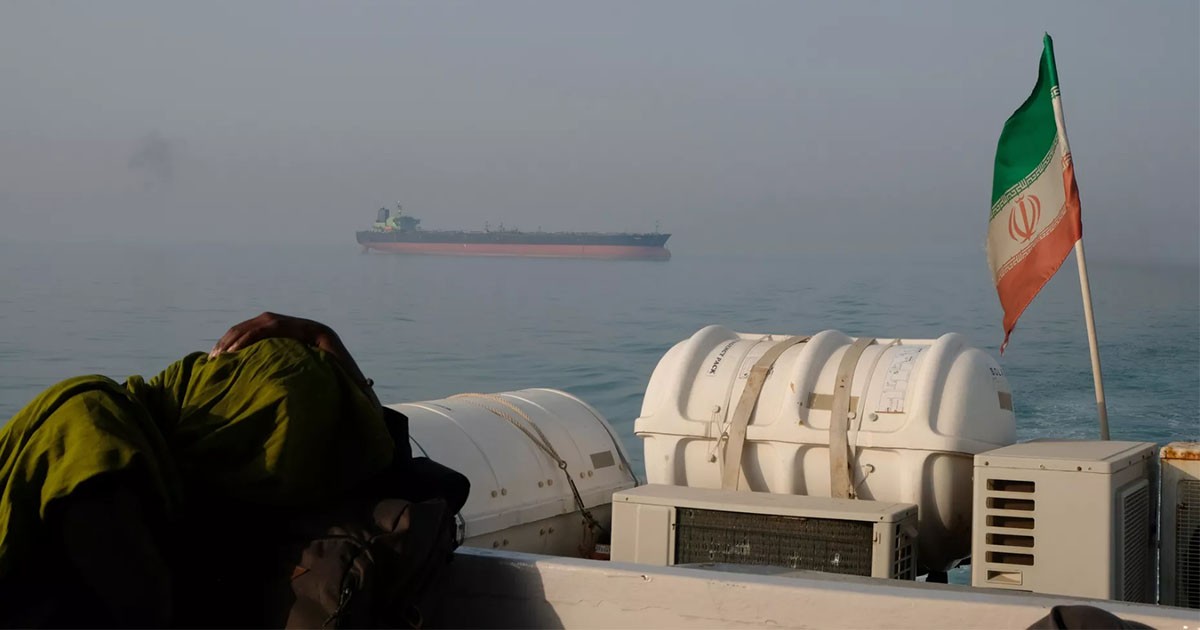
Iran says it struck an oil tanker in the Strait of Hormuz
Iran said it struck the Togo-flagged oil tanker Trend over what it described as an “illegal attempt” to pass through the Strait of Hormuz on Thursday night, according to the state broadcaster, which cited the Revolutionary Guard Corps.
The Associated Press could not immediately confirm the report.
The Guard’s navy warned that vessels attempting to pass through the strait without authorization would face “destruction,” the broadcaster said. Tehran has asserted control over much of the waterway since the U.S. and Israel launched the war on Feb. 28.
Separately, the United Kingdom Maritime Trade Operations, which alerts about attacks or military operations, said another tanker was struck Wednesday by an “unknown projectile” while transiting out of the strait, with the crew reported safe. No other details were available.
Shipping continues after Houthis take islands
Container ships and oil tankers continued to transit the Bab el-Mandeb Strait after Yemen’s Iran-backed Houthi rebels said they are only targeting Saudi-linked vessels. But a dip in traffic has been reported over the last week after a lightning advance by Houthis on islands in the waterway.
About 26-35 vessels per day have transited this week, down from the 35-40 daily average of the prior eight weeks, according to Dimitris Ampatzidis, Maritime Risk & Compliance Manager at Kpler.
Many shipping companies abandoned the route after Houthi attacks on Israeli-linked vessels began in 2023, though vessels from Russia and China appear to have no trouble.
“Traffic remains severely impaired and increasingly selective,” said Mohamed Kotb with United Insurance Brokers in London.
Read more: Saudi Arabia cancels oil shipments to Europe after pipeline attack
UN Security Council condemns Houthi attacks
In a statement issued Friday night, the 15 members of the U.N. Security Council reiterated their condemnation of the Houthis’ attacks on Saudi Arabia and threats against ships in the Red Sea and Bab el-Mandeb Strait.
The U.N.’s most powerful body also “condemned in the strongest terms ongoing Houthi military escalation in Yemen,” and warned that continued escalation will exacerbate the already dire humanitarian situation in the country.
The Houthis are fighting Saudi-backed Yemeni forces, and the conflict recently has fueled mass displacement of more than 100,000 people.
Members called for “practical cooperation” to prevent the Houthis from acquiring arms, military training, financing and other military-related assistance needed to carry out their attacks.
Read more: Netanyahu deliberately enabled Hamas October 7 attack – victims
Earlier Friday, of people rallied in northern areas of Yemen in support of the Houthis and to protest Saudi Arabia’s accusation that the rebels targeted Islam’s holiest site, Mecca. The Saudis said they intercepted a Houthi drone targeting Mecca earlier this week. The Houthi leadership has denied responsibility.
Houthi-controlled Al-Masirah TV showed protesters carrying pictures of the Kaaba, a landmark in Mecca, along with Yemeni, Iranian, Lebanese and Palestinian flags.