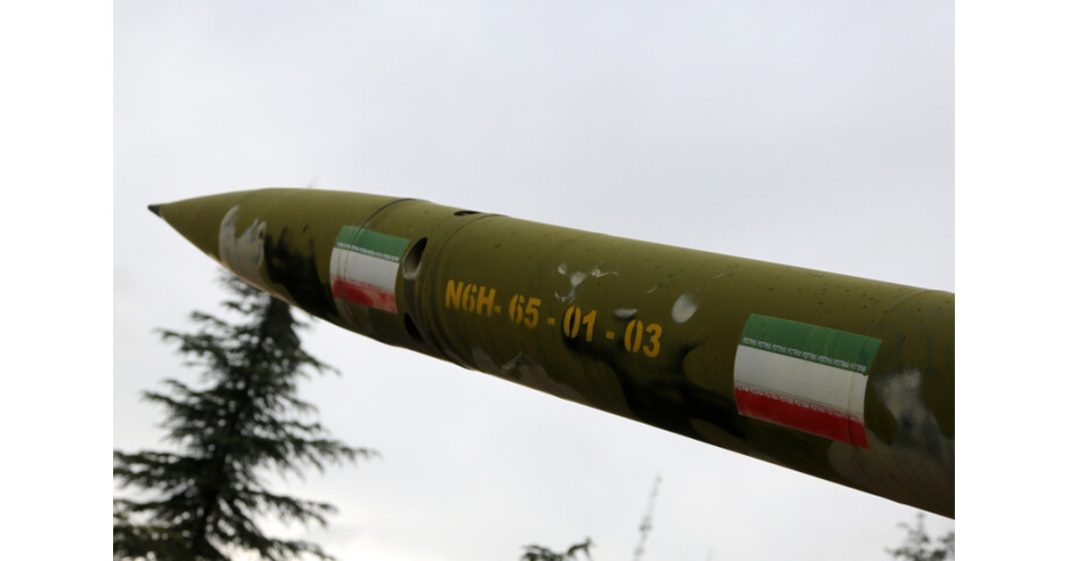
A spokesman for Islamic Revolutionary Guard Corps of Iran (IRGC) said Tuesday that the readiness of the country’s armed forces today “is more than in the past,” claiming Tehran will use “different” types of weapons in case of a renewed war with the US and Israel, following an attack on Kuwait Airport.
“The best reason for this issue is that despite the use of its vast capacity on land, sea and air, America could not remove the Strait of Hormuz from Iran’s control even for a few minutes,”
Sardar Mohebbi said in a statement carried by the semi-official news agency Tasnim.
Mohebbi said Tehran is ready for “all possible scenarios,” adding that Washington “failed to achieve its goals” in the Strait of Hormuz during the latest round of the conflict.
Tensions in the Middle East have escalated since the US and Israel launched strikes on Iran in February. Tehran retaliated with attacks targeting Israel and US allies in the Gulf, alongside the closure of the Strait of Hormuz.
A ceasefire took effect on April 8 through Pakistani mediation, but subsequent talks in Islamabad failed to produce a lasting agreement. Efforts for a solution, however, have continued since.
Iran’s Islamic Revolutionary Guard Corps (IRGC) said early Wednesday that attacks targeting US bases in Kuwait were launched after the US carried out strikes near the Strait of Hormuz and on the island of Qeshm in southern Iran.
In a statement, the IRGC said an Iranian oil tanker near the Strait of Hormuz was hit by an aerial projectile late Tuesday, causing damage to the engine section of the vessel.
It also claimed that US forces later targeted a communications tower belonging to the Guard south of Qeshm island.
Read more: Iranian drone attacks hits Kuwait airport, wounding people
The IRGC said its Aerospace Force subsequently carried out missile and drone attacks targeting US military positions in the region, including facilities linked to the US Fifth Fleet.
It warned that any further attack against Iran would elicit a “decisive” response, adding that forces involved in actions against Iran would face consequences.
The statement came shortly after Iran’s state broadcaster IRIB reported several explosions near the areas of Suza and Masen on the island of Qeshm.
Regional tensions have escalated since late February after the US and Israel launched airstrikes on Iran, killing more than 3,000 people, including then-Supreme Leader Ayatollah Ali Khamenei and several senior military commanders and government officials.