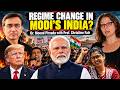
Iran’s nationwide protests have turned into the deadliest unrest in decades, with activists reporting more than 2,500 deaths as authorities enforce internet blackouts and mass arrests. The violence has drawn international concern and sharp rhetoric from U.S. President Donald Trump.
Saudi Arabia and other Gulf states are quietly pressing U.S. President Donald Trump to avoid military action against Iran, warning that regime change could trigger regional instability, oil supply disruptions, and economic fallout for the United States.
Former US President Bill Clinton and former Secretary of State Hillary Clinton have refused to comply with subpoenas to testify before the House Oversight Committee’s investigation into the government’s handling of the Jeffrey Epstein case.
The West is seeking regime change in Iran and is using the color-revolution playbook, Russian Foreign Ministry spokeswoman Maria Zakharova has said, commenting on the ongoing protests in the Islamic Republic.
US President Donald Trump has called for protesters in Iran to seize control of state institutions, issuing a cryptic promise of American assistance and threatening severe consequences for Iranian officials.
Over two weeks of protests mark the most serious challenge in years to Iran's theocratic leadership in their scale and nature but it is too early to predict the immediate demise of the Islamic republic, analysts say.
US President Donald Trump announced a 25 percent tariff on any country doing business with Iran, ramping up pressure as a crackdown on protests continues.
Despite renewed diplomatic activity, Iran’s influence in Central Asia remains limited, with cultural ties failing to translate into strategic power. Decades of sanctions, policy inconsistency, and competition from stronger actors have left Tehran a secondary regional player.
India’s growing use of Oman’s Duqm port provides a politically safer, sanctions-insulated hub for its western Indian Ocean operations, reducing reliance on Iran’s Chabahar without replacing its unique overland access to Central Asia.
Iran’s BRICS membership has given Tehran symbolic legitimacy but little practical economic relief, as sanctions, dependency on China, and limited access to BRICS financial mechanisms continue to constrain its leverage.
Dubai is set to host the 2025 Asian Youth Para Games from December 10–13, bringing together 1,500 young para-athletes from 35 nations in a powerful celebration of resilience and inclusion
Authors takes a closer look at how the 27th Amendment created a five-star defense post without tenure, rules, safeguards, or global precedent — and why the delayed notification threatens constitutional coherence.
A new quiet resistance is emerging, one that honors lives over slogans and truth over heroism, as Iranians increasingly refuse to participate in the state’s staged remembrance.
Iran’s geographic advantage has been offset by sanctions, regulatory instability, and logistics concerns, leading Central Asian states to quietly pivot toward more predictable trade networks.